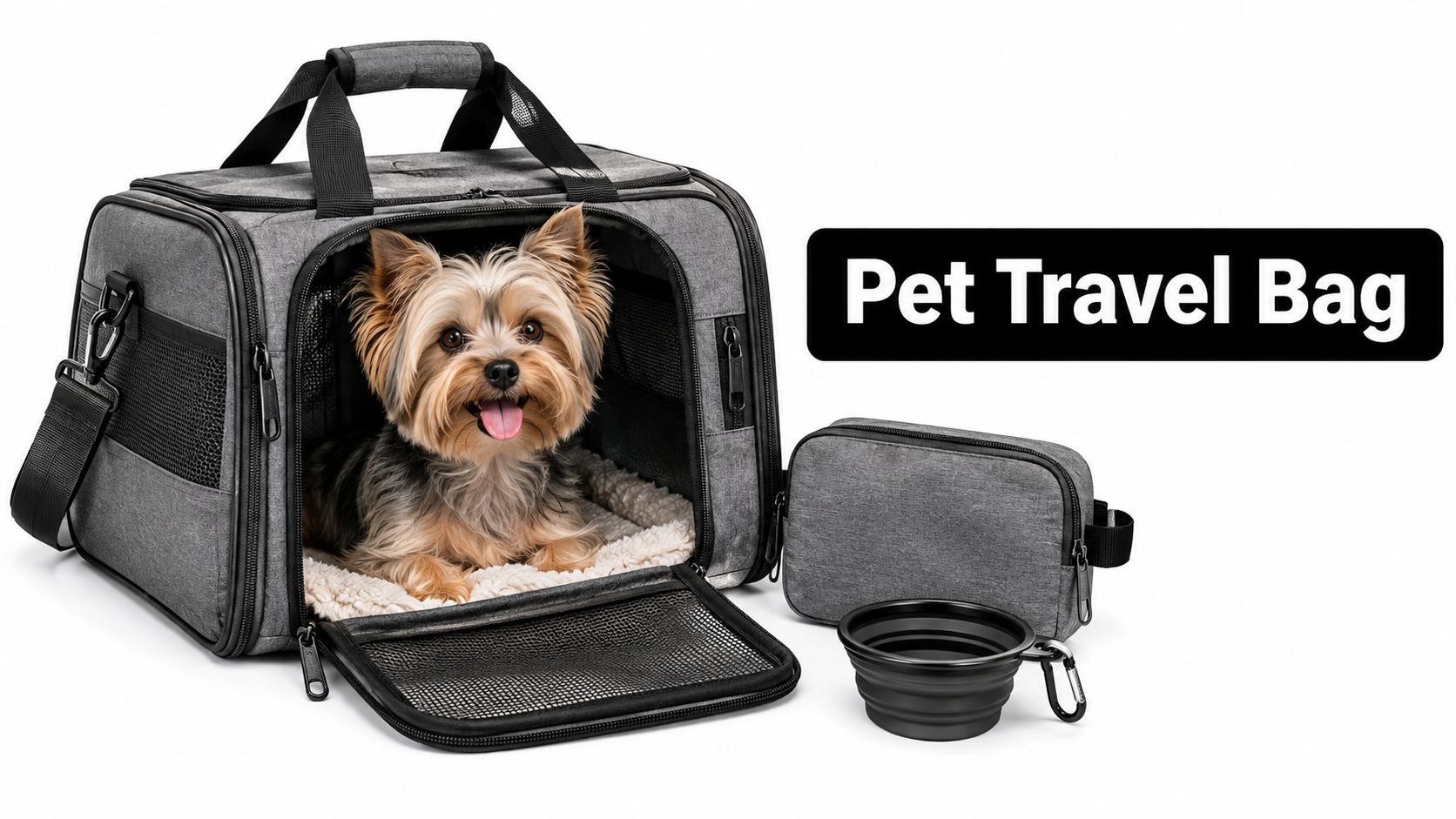
On moving morning, the car is half packed, the suitcases are by the door, and your pet is watching every trip back and forth. Maybe the cat's carrier is wedged between duffel bags, or your dog is waiting in a soft-sided tote while you check the route and the airline's latest instructions. It's easy to focus on where you're going. But the carrier will shape how safely your pet gets there.
A pet travel bag isn't just luggage with mesh panels. It needs to keep your pet contained, allow useful airflow, and suit the rules and conditions of the trip. A bag that works for a short cabin flight might be the wrong choice for a long drive or an international cargo move. A practical way to choose is to work through four questions: How will your pet travel? Does the bag fit your pet? Can air circulate in the conditions you expect? And does the carrier meet the relevant airline's requirements?
Table of Contents
- Test the Carrier Before Moving Day
- What a Pet Travel Bag Actually Is
- The Features That Actually Matter
- Sizing the Bag to the Pet, Not the Breed
- Matching the Bag to the Trip
- Packing Checklist for the Day of Travel
- Three Myths That Can Put Your Pet at Risk
- Putting It All Together for a Smooth Journey
Test the Carrier Before Moving Day
Before you load a single suitcase, run a simple test in the car. Place the carrier exactly where it will ride, take a corner at normal speed, and watch what it does. Does it tip? Does the soft-sided tote sag until a mesh panel presses against the seat? Slide a suitcase next to it the way your luggage will sit, then check whether the ventilation panels stay clear of seat belts and bags.
That two-minute rehearsal tells you more than any product photo will. A carrier that collapses under light pressure in your driveway will do the same under real pressure at the airport, when a gate agent is waiting and a line is forming behind you. The difference is that in your driveway, you can fix it.

Airline rules add a second layer to the test. A cabin carrier works like reserved seating: the space is fixed before you arrive, and the bag either fits beneath the seat or it does not. A carrier that looks roomy on a shelf can end up too tall once your pet is inside, and discovering that at the gate is a much harder problem than discovering it in your living room.
So start with three checks. First, containment: zippers close fully and seams hold when you lift the loaded bag. Second, airflow: mesh panels sit clear of luggage, seat belts, and your pet's own bedding. Third, stability: the carrier stays upright through a turn and a stop.
Families relocating from Virginia, or moving anywhere across the country, often face more than one kind of travel in a single move. A car ride to the airport, a cabin flight, and ground transport at the destination each place different demands on the same bag. Treat the carrier as safety equipment from the start, and the style questions become much easier to answer.
What a Pet Travel Bag Actually Is
A pet travel bag is a portable, enclosed carrier designed to transport an animal while keeping them contained and allowing airflow. It's commonly used for small pets traveling by car or in an aircraft cabin. The phrase can also appear on product listings for totes or backpacks, so don't assume every item marketed as a pet travel bag is suitable for air travel.

The first distinction to understand is cabin carrier versus cargo kennel. In the United States, the FAA lets each airline decide whether pets may travel in the passenger cabin. When an airline allows it, the carrier is treated as carry-on baggage under 14 CFR §121.589 and FAA pet travel guidance. The bag must fit beneath the seat without blocking the aisle, and it must remain stowed during the required phases of movement and flight. Airlines can set additional policies about accepted animals, pet limits, and whether the pet must remain inside the carrier throughout the flight.
That makes a flexible, soft-sided carrier a possible choice for some cabin trips, but not a universal one. Flexible material may help a carrier fit the space under a seat, yet it can also lose its shape if compressed. A bag designed for cabin use should not automatically be treated as suitable for checked or cargo transport, where sturdier construction may be required.
Portability is only one part of the job. A proper carrier must also stay closed, retain its shape well enough to protect the animal, and let air reach the pet. The International Air Transport Association's history of its Live Animals Regulations shows why live-animal transport is governed by handling and container standards, not by appearance alone. Airline approval and current IATA requirements are separate checks, especially for international relocation.
The Features That Actually Matter
Start with failure prevention, not the product listing's adjectives. Ask what each feature does when the bag is lifted, bumped, or used for a long wait. If you can't connect a feature to a real travel need, it may be less important than secure construction and useful ventilation.

Ventilation panels help fresh air reach your pet, but their placement matters. IATA guidance for air transport calls for ventilation on at least three sides of applicable containers, with most openings in the upper portion; its technical guidance also sets a minimum ventilated area of 16% of the combined surface area of four sides for applicable containers. Those requirements are described in IATA's instructions for selecting an animal container. In everyday terms, mesh panels don't help much if a blanket, luggage, or the carrier's own structure blocks them.
Escape-resistant zippers and closures reduce the chance that a pet can push out when the bag shifts or someone opens it. Check how the zipper meets at the corner and whether the pulls can be secured. Don't rely on a clip or closure that the pet can nudge aside.
A reinforced base and semi-rigid sides help the carrier keep its shape under your pet's weight. That matters when you lift it by a handle or place it on the car seat. A sagging floor can cause your pet to slide and can distort mesh openings. A removable absorbent liner gives you a more manageable way to deal with spills or accidents; a leak-resistant lining can help contain moisture, but it shouldn't be treated as a substitute for cleaning or checking the bag.
Keep heat in mind as you compare padding with airflow. Insulation may feel useful in cold weather, but heavily padded walls can become a poor choice in warm conditions if the design restricts fresh air. A ventilation opening is also not the same as effective cross-flow: check whether air can move through the bag when it's in the position you'll carry or place it.
For journeys that need a rigid kennel rather than a soft carrier, the Petmate Sky Kennel is described as suitable for domestic and international flights when properly assembled with metal hardware and airline-compliant accessories. Confirm the exact requirements with the airline before travel.
Sizing the Bag to the Pet, Not the Breed
Breed and weight can be useful for narrowing a search, but neither tells you whether your pet can move comfortably inside a particular carrier. A compact animal and a long-bodied animal can have different needs even if they weigh the same. Measure your pet first, then compare those measurements with the usable interior space.
IATA's posture guidance says the animal should be able to turn normally while standing, stand and sit erect, and lie in a natural position. Use that as a practical fit check, not a breed chart. With your pet standing naturally, check whether the carrier has enough interior height for them to stand without their head touching the top. Then see whether the length and shape allow a normal turn and a comfortable lying position.
A product's outside dimensions can be misleading because seams, padding, and a sloped roof reduce the space inside. Ask the maker for usable interior dimensions if the listing doesn't provide them. For a helpful reminder that bag measurements and interior capacity aren't always the same, see Urban Totes' bag sizing tips, then apply the same careful measuring habit to your pet's carrier.
| Quick Sizing Reference by Pet Weight | Min Interior Length | Min Interior Height | Typical Use |
|---|---|---|---|
| Lower-weight pets | Measure against your pet's posture | Confirm upright standing clearance | Possible cabin carrier, subject to airline rules |
| Mid-weight pets | Measure nose-to-body length and turning space | Confirm the pet can stand naturally | Compare cabin and ground-transport options |
| Higher-weight pets | Check whether the carrier is designed for the pet's build | Confirm posture and comfortable lying space | A larger or more structured carrier may be needed |
These are comparison prompts, not weight-based sizing rules. Your pet's measurements and the airline's limits take priority over any broad category.
Choosing a much larger carrier doesn't automatically improve comfort. If there's excess room, a pet may slide when the bag moves, and loose bedding can shift against ventilation panels. The right fit gives the animal room to assume normal postures while keeping them supported. For international moves, compare the carrier with the destination airline's requirements and review international pet travel kennel requirements before buying.
Matching the Bag to the Trip
A carrier's best use depends on where the pet will travel, how long the journey lasts, and what conditions they'll encounter. A soft-sided bag may work for an airline cabin if that airline accepts the pet and the bag fits beneath the seat. The same carrier may be unsuitable for a cargo trip or rough handling, where a flexible body can collapse or offer too little structural protection.

Use the trip itself to set priorities:
| Travel scenario | Carrier direction | Main priority |
|---|---|---|
| Cabin flight | Soft-sided carrier, if accepted by the airline | Under-seat fit, secure closure, clear ventilation |
| Long road journey | Stable carrier suited to the pet and vehicle | Support, secure placement, airflow, and easy access |
| International cargo move | Rigid or otherwise airline-approved container | Structural protection and confirmed compliance |
| Vet visit or local outing | Portable carrier suited to the animal | Secure containment and comfortable carrying |
A cross-country drive in a climate-controlled vehicle is different from an airport transfer in warm weather. For a longer ground trip, look beyond the bag itself: consider where it will sit, whether air can reach its panels, and whether you can keep it stable during stops. A pet who becomes unsettled in unfamiliar surroundings may need a carrier that stays upright and offers a familiar liner, rather than a tote chosen mainly for its looks.
Practical rule: Treat each change in transport mode as a fresh carrier check. A bag that suits the first leg may not be right for the next.
Families planning a move can also use PetScy's guide to keeping your dog safe while traveling as a companion resource for thinking through the journey beyond the carrier. For a professional move, remember that transfers, stops, and overnight arrangements can affect what the animal needs. The bag is one piece of the plan, not a substitute for checking how the whole trip will work.
Packing Checklist for the Day of Travel
Organize travel essentials so you can find what you need without opening the carrier in a crowded place. Keep paperwork accessible, comfort items inside or close at hand, and backup supplies in a separate pouch. That way, a delayed departure or an unexpected stop doesn't turn a simple search into a rummage through every suitcase.
| Three-Layer Travel Day Checklist | Items | Why It Matters |
|---|---|---|
| Documents | Health certificate, vaccination records, and destination import paperwork | Keeps travel documents together for airline and border checks |
| Comfort and safety | Familiar-smelling liner, absorbent pad, collapsible water dish, and a suitable comfort item | Helps keep the carrier familiar and makes small spills easier to manage |
| Contingency pouch | Spare leash, basic pet first-aid items, a current photo, and contact details for the carrier and a destination emergency veterinarian | Gives you essentials to hand if plans change or you need help |
For air travel, USDA guidance in its pet travel pamphlet says dogs and cats must be at least 8 weeks old and fully weaned, and health documentation may need to be completed by a veterinarian within 10 days of travel. Requirements can depend on the trip and carrier, so confirm what applies to your route rather than assuming one document covers every journey. For international travel, check destination paperwork as well as airline instructions.
Before leaving, make sure the liner lies flat and doesn't cover the ventilation panels. Keep water and other supplies where you can reach them without leaving your pet unsecured. A separate preparation guide, preparing a pet for travel, can help you plan the steps before travel day.
For a long-distance move, a professional transport provider may coordinate travel requirements and care logistics with the owner. Ask exactly what the service handles, what documents remain your responsibility, and how your pet will be cared for during stops.
Three Myths That Can Put Your Pet at Risk
Myth: Bigger is always better. A roomy carrier can sound kinder, but excess space may let a pet slide when the carrier moves. It can also make it harder to keep bedding in place and ventilation clear. Choose enough usable room for normal posture, then make sure the interior supports your pet rather than leaving them loose in the bag.
Heat is part of that decision. A carrier can sit in a warm vehicle or airport queue even if the weather at your destination seems mild. In a rabbit-transport study described in the research supplied for this guide, heat stress became serious under a hot simulated condition, especially in less spacious containers. Rabbits aren't dogs or cats, so don't treat those results as a direct prediction for your pet. They do reinforce the need to think beyond volume and check airflow, shade, travel timing, and the pet's health.
Myth: A soft-sided bag works for every journey. Flexible carriers have a clear role, especially for some cabin travel, but fabric can collapse over ventilation panels or provide too little protection during cargo handling. Use a carrier intended for the mode of travel, and confirm the airline accepts that exact type. For checked or cargo transport, don't assume a cabin bag meets the required container rules.
Myth: A sedative is an easy fix for travel anxiety. Don't give medication or sedatives to make a trip easier without speaking to your veterinarian. Your pet's age, health, breathing, and travel conditions all matter, and a veterinarian can advise whether medication is appropriate. For practical planning around safe handling and comfort, use pet safety tips as a starting point for questions to discuss with your vet.
Short-nosed pets, senior animals, and pets with breathing or heart concerns may need particular care during travel. Ask your veterinarian about your pet's individual risks, and check the airline's restrictions before you commit to a route.
Putting It All Together for a Smooth Journey
Treat the carrier as safety equipment with a checklist. Work in a fixed order: measure your pet standing naturally, choose the construction for cabin, checked, cargo, or ground travel, then confirm the airline accepts that exact container and its ventilation layout for the heat, shade, and timing on your route. Pack papers, water, familiar bedding, and backup supplies in separate reach points so a delay does not turn into a scramble.
Some relocations exceed what a personal carrier can handle, especially long ground legs, flight connections, or international paperwork. Precious Pets Transport Services, LLC offers domestic and international pet relocation, including door-to-door ground transport in climate-controlled vans and help coordinating move logistics. Review pet insurance options such as Spot and Embrace before a major move so you know in advance what veterinary costs are covered while your pet is in transit.
Planning a move with a pet and unsure whether a personal carrier is enough? Precious Pets Transport Services, LLC offers domestic and international relocation support, including door-to-door ground transportation and help coordinating travel logistics. Contact the team to discuss your route and your pet's needs before travel day.
Leave a Reply