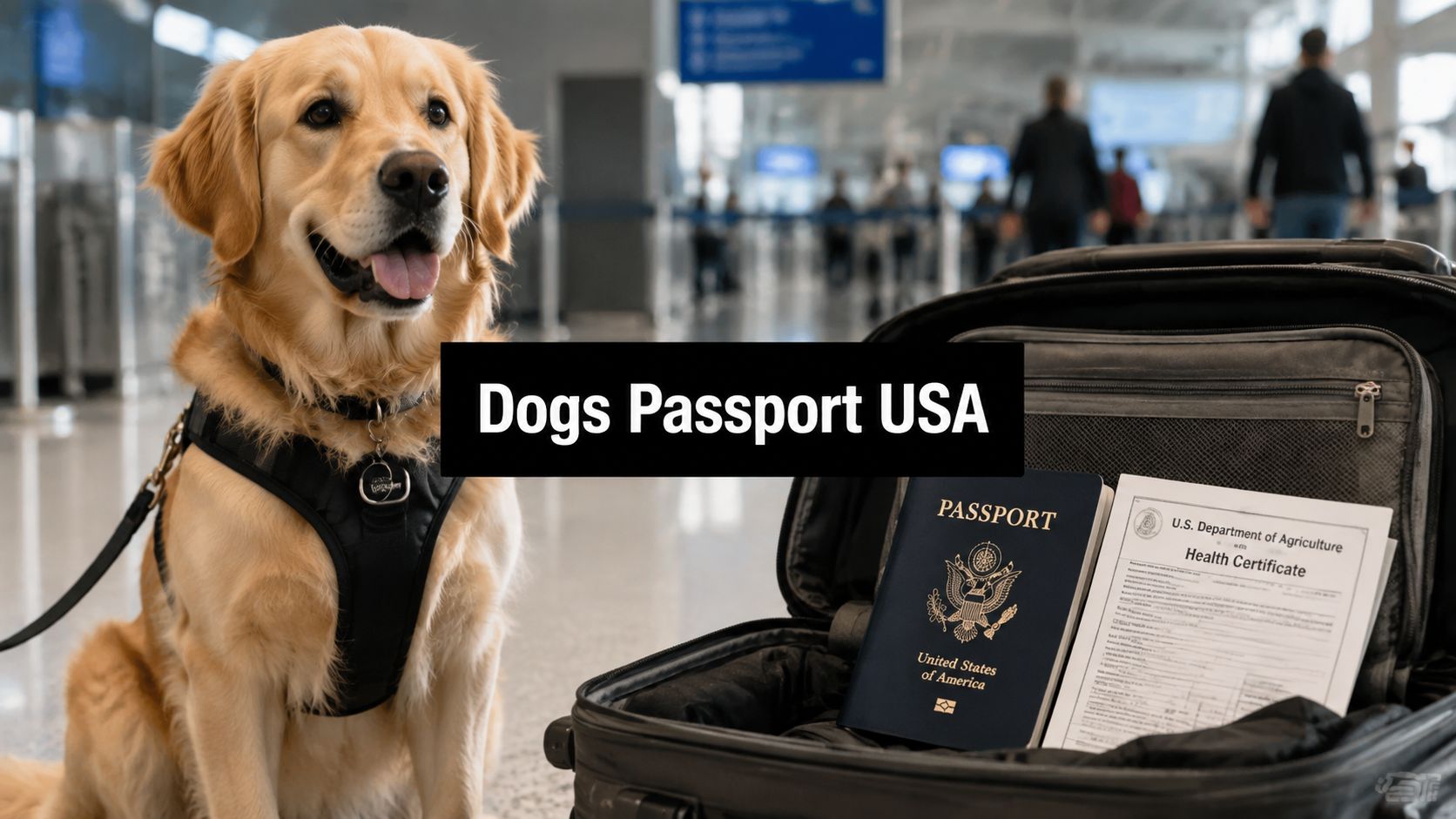
There is no official U.S. government-issued dog passport, and for dogs entering the United States from abroad the paperwork usually starts with a microchip, rabies vaccination proof, a health certificate, and the CDC Dog Import Form. If you’re staring at a folder of vet papers and flight confirmations right now, you’re probably not missing a single magic booklet, you’re trying to assemble a chain of records that prove your dog is healthy, identifiable, and cleared for travel.
That’s where most first-time pet parents get stuck. The phrase dogs passport USA sounds like one document you can buy or request, but the actual process is more like building a file that has to line up from start to finish. A microchip number has to match the rabies record, the vet exam has to support the health certificate, and the import form has to fit the destination rules and your dog’s travel history.
What a Dog Passport Actually Means for U.S. Pet Owners
A family opens the travel folder the night before a vet visit and finds vaccination cards, airline printouts, and a half-finished checklist. The instinct is to ask for the “dog passport,” but in the U.S. that isn’t a government-issued booklet.
The U.S. Department of State is blunt about it. “Your pet does not need a passport,” and the term is generally used for a bundle of documents, not a single official identity document, with domestic travel within the United States not requiring a pet passport (U.S. Department of State pet travel guidance). For international travel, the paperwork usually centers on a veterinarian-issued health certificate, proof of rabies vaccination, and, in some cases, USDA endorsement, which is why the phrase dogs passport USA confuses so many people.

The simplest way to think about it
Think of the “passport” as a traceability file. It starts with your dog’s permanent identity, usually the microchip, and then connects that identity to medical proof and travel approval. If one piece doesn’t match the others, the file starts to break down.
Practical rule: if the document can’t be tied back to your dog’s chip number and travel history, it won’t help much at the border.
That’s why nervous pet parents should stop looking for a single pass and start asking a better question, “What documents does my destination require, and in what order do they need to be created?” A well-organized folder from a vet, plus supporting notes from a relocation coordinator, is far more useful than a vague passport label.
If you’re trying to sort papers and travel dates at the same time, a folder system like travel document filing tips can help you keep the pet file separate from human passports and boarding passes. And if the move includes insurance planning before departure, Spot Pet Insurance offers customizable accident and illness coverage for dogs and cats, with flexible reimbursehment options, multi-pet discounts, and access to any license veterinarian.
The Documentation Chain Every Dog Needs
A dog travel file works like a chain, and every link has to match the next one. The chain usually begins with identity, then connects to rabies vaccination, then to the health certificate, and finally to the import form or endorsement step that shows the paperwork was reviewed. If one piece points to a different dog, the whole file becomes harder to trust.
Start with the microchip, then tie the vaccine to it
The microchip comes first because it gives your dog a permanent identifier. The rabies vaccination has to be linked to that chip, and the order matters because the chip should be implanted before, or at the same time as, the vaccine so the record can be tied to a fixed identity (traceability guidance on microchip and rabies sequencing). If the rabies record lists a different chip number, or no chip at all, the document chain is much weaker at inspection.
Practical rule: the chip number on the rabies record has to match the chip in your dog, exactly.
Then add the veterinary health certificate
Once the identity and rabies records are in place, the veterinarian issues the health certificate. This is the paper that shows your dog was examined and cleared for travel under the destination’s rules. Some trips also need USDA endorsement on that certificate, which is why people often hear about a “USDA-stamped” document even though the U.S. doesn’t issue a dog passport as one single item. For a plain-English breakdown of how that endorsement step works, see this USDA health certificate guide.
Finish with the import form
For dogs entering the United States, the CDC Dog Import Form is part of the chain. The receipt acts as proof that the importer submitted the required information before arrival, and the CDC’s current rules add extra steps for dogs that have recently been in high-risk rabies countries (CDC pet travel guidance). If the route includes a destination with its own extra requirements, those sit on top of the core chain rather than replacing it.
A clean file is easier to check when the papers are arranged in the order they will be used. Label each tab by sequence, not just by document type, so you can pull the chip record, rabies proof, certificate, and import form without hunting through loose pages. For broader filing ideas, the Family Folder piece on travel document filing tips is a practical reference.
Timelines and Costs by Destination
The hardest part is not collecting papers, it is giving each document enough time to become valid in the right order. A vet visit that happens too early, or a certificate signed before the required vaccine timing is met, can leave you with paperwork that looks complete but cannot be used. For a nervous first-time pet parent, it helps to treat the process like a chain of identity records, each link has to match the next one, and the CDC Dog Import Form receipt becomes part of that chain for dogs entering or returning to the U.S.
Why timing changes from one trip to the next
Some destinations only want to see a current rabies record and a health certificate. Others add endorsement, waiting periods after vaccination, or extra entry checks. If your dog has been in a high-risk rabies country in the previous six months, the route can call for more documentation and, in some cases, quarantine or permit steps, so the order of your appointments matters as much as the documents themselves.
That is why there is no single calendar for dogs passport USA preparation. The timing depends on the destination, your dog’s recent travel history, and whether the return route touches a higher-risk country. The best way to keep the chain intact is to build backward from the entry rule, then place each vet step where it belongs.
What to budget for in plain language
I cannot give you a reliable dollar amount here because the verified information does not include price figures, and costs vary by vet, city, and destination rules. What you can plan for is a layered set of expenses. Most families pay for the microchip, the rabies vaccination, the vet exam and certificate, possible USDA endorsement, and any extra import paperwork or approvals tied to the route.
If your dog has recent travel history in a high-risk rabies country, plan for more appointments and more review time, not just more paperwork. That is the piece families often miss. A route that looks simple on a flight map can still create extra admin at the border if the dog’s travel history changes how the authorities classify the entry.
Keep the budget flexible until the destination is confirmed, because the document stack can expand fast once country rules are checked.
For families moving from the Virginia, Washington, D.C., or Maryland area, a coordinated ground and flight plan can reduce the chance of last-minute scrambling. If you also need help thinking through crates and in-transit comfort, this pet transport planning guide is a useful companion piece.
Country-Specific Entry Rules You Should Know
A first-time trip often goes sideways for one simple reason, the family assumes every destination wants the same dog documents. Each country sets its own entry path. One may focus on rabies proof and a health certificate, while another adds waiting periods, microchip rules, quarantine, or a required entry airport. The safest plan is to check the destination rules before you buy the ticket, because the paperwork chain starts with the border, not with the flight search.
| Destination | Rabies Vaccination | Health Certificate | Quarantine | Microchip Required |
|---|---|---|---|---|
| Canada | Varies by entry type and animal history | Often required | Depends on circumstances | Often required by airlines or specific programs |
| Mexico | Commonly requested | Often required | Usually not routine for healthy pets | Commonly recommended |
| United Kingdom | Required | Required | Can apply depending on compliance | Required |
| European Union countries | Required | Required | Can apply if documents are incomplete | Required |
Use the table as a quick comparison, not as the final word. It shows how fast the document stack grows once your dog leaves the U.S. and enters a different system. A rule that looks simple on paper can still create delays if one document is missing, entered in the wrong format, or tied to the wrong dog.
High-risk rabies country rules can change the whole trip
Some entry rules depend on where your dog has been, not just where you are headed next. If a dog has been in a high-risk rabies country in the previous six months, the entry path can include endorsed rabies documentation, approved-port entry, and, in some cases, revaccination on arrival or quarantine. That is why a layover can matter if it changes the dog’s travel history. The CDC pet travel guidance is a useful reference for that kind of route check, but you still need to confirm the rules tied to your exact destination.
A short connection can create a long paperwork problem if it places your dog inside a higher-risk category.
Flight shopping should not start with price alone. A route that looks easy for people can be awkward for a dog’s compliance file, especially if the route pushes the dog into a different risk category on paper. Before you lock in tickets, check whether the destination sees that route as clean, complicated, or high-risk. If you are still deciding how to keep water, breaks, and crate comfort organized during transport, these stainless steel dog water bottles are a practical item to have in the travel kit. For crate sizing and fit, this guide to international pet travel kennel requirements helps you check the crate against the trip instead of guessing after booking.
Preparing Your Dog for Travel a Step-by-Step Checklist
This is the part most pet parents need most, a calm sequence they can follow without overthinking it. Start early, keep every record together, and treat each milestone like a gate that opens only after the previous one is done. If your move is complicated, a licensed and insured coordinator such as Precious Pets Transport Services, LLC can help with door-to-door ground transport in the United States and international move coordination from Virginia, Washington, D.C., Maryland, and nearby states, while you keep the medical paperwork on track.

Ninety days before departure
This is when you check the dog’s identity and health status. If your dog doesn’t already have a microchip, get it implanted now so the rabies record can be tied to the right number. Then confirm the rabies vaccination is current and recorded correctly.
Thirty days before departure
This is the point to verify destination rules and airline rules together. If your destination needs a health certificate or special endorsement, your vet needs enough time to issue it in the correct format. If you’re moving with a crate-trained dog, the kennel should already be part of the routine, not a surprise on travel week.
A simple comfort item can help here too. If you’re packing for road transfer or airport waiting time, stainless steel dog water bottles are worth considering because they’re easy to carry and keep water available between stops.
Ten days before departure
Book the vet health certificate appointment and submit any documents that need review. If the route involves U.S. entry, complete the CDC Dog Import Form and keep the receipt with the rest of the file. For kennel specifics, this international pet travel kennel requirements guide is a good cross-check if your airline has size or ventilation rules.
Day of travel
Do a final paper check before you leave home. Bring the chip number, rabies proof, certificate, import form receipt, and any destination-specific paperwork in one easy-to-grab folder. Keep a second copy in your phone and a printed backup in your carry-on.
- Microchip confirmation: make sure the chip reads correctly and matches the records.
- Rabies proof: verify dates and vaccine details before you leave.
- Health certificate: confirm every signature and stamp is present.
- Import paperwork: keep the receipt and any permit with the travel file.
Common Mistakes That Delay or Cancel Pet Travel
A common mistake is treating the rabies certificate like the whole story. The certificate only works when the microchip number belongs to the right dog and the rest of the file follows that same identity trail. If one page points to a different chip, the whole packet can lose its footing, because the records no longer tell one clear story.

Three avoidable problems
- Last-minute vet visits: A rushed appointment leaves little room to correct errors before departure. A health certificate, import receipt, or destination form is easier to fix when there is still time to return to the clinic and ask for a corrected version.
- Incorrect travel history assumptions: A short stop in a rabies-controlled area can still change the entry path if the dog has recently been in a higher-risk country. The route matters, not just the final destination.
- Mixed-up documents: Human passports, pet records, and airline papers often end up in the same folder. That makes it easy to miss the one page that matters at check-in or inspection.
The fix starts before travel day, not at the airport counter. Build the file early, match every number to the microchip, and leave time for one correction cycle if anything is unclear. That extra margin is often what keeps a nervous first trip from turning into a rejected one.
Families who want an added layer of financial protection sometimes compare coverage options like Spot Pet Insurance or Embrace Pet Insurance. Both are described as customizable accident and illness coverage for dogs and cats, which can help owners think through veterinary risk before domestic or international travel.
Bringing It All Together for a Stress-Free Move
For many U.S. pet owners, a dog passport is less a single booklet and more a traceability system. It connects a permanent ID, usually the microchip number, to the rabies record, the health certificate, and the import paperwork, so each document points back to the same dog. Once that chain is clear, the process stops feeling random and starts looking like a file you can build in order.
The easiest way to think about it is as a sequence. Microchip first. Rabies vaccination matched to that chip. Vet health certificate. CDC Dog Import Form receipt. Some trips add USDA endorsement or destination-specific approvals, and some travel histories call for extra review, especially if the dog has recently been in a high-risk rabies country.
That order matters because each step supports the next one, like links in a leash. If the chip number does not match the rabies certificate, the record chain breaks. If the health certificate is missing or the import form was not completed correctly, the paperwork can slow down at check-in or inspection.
The calmest moves usually start early, while there is still time to catch a mismatch and fix it at the clinic. Build the file before travel day gets close, keep the documents together, and check that every name and number lines up with the microchip. If you are handling a household move and do not want to juggle crates, routes, and forms on your own, a trusted relocation team can keep the dog moving safely while you focus on the rest of the family.
If you want help planning a dog move without the guesswork, visit Precious Pets Transport Services, LLC. Their team handles safe domestic and international pet relocation, including door-to-door ground transport and guidance for families working through travel requirements.
Leave a Reply