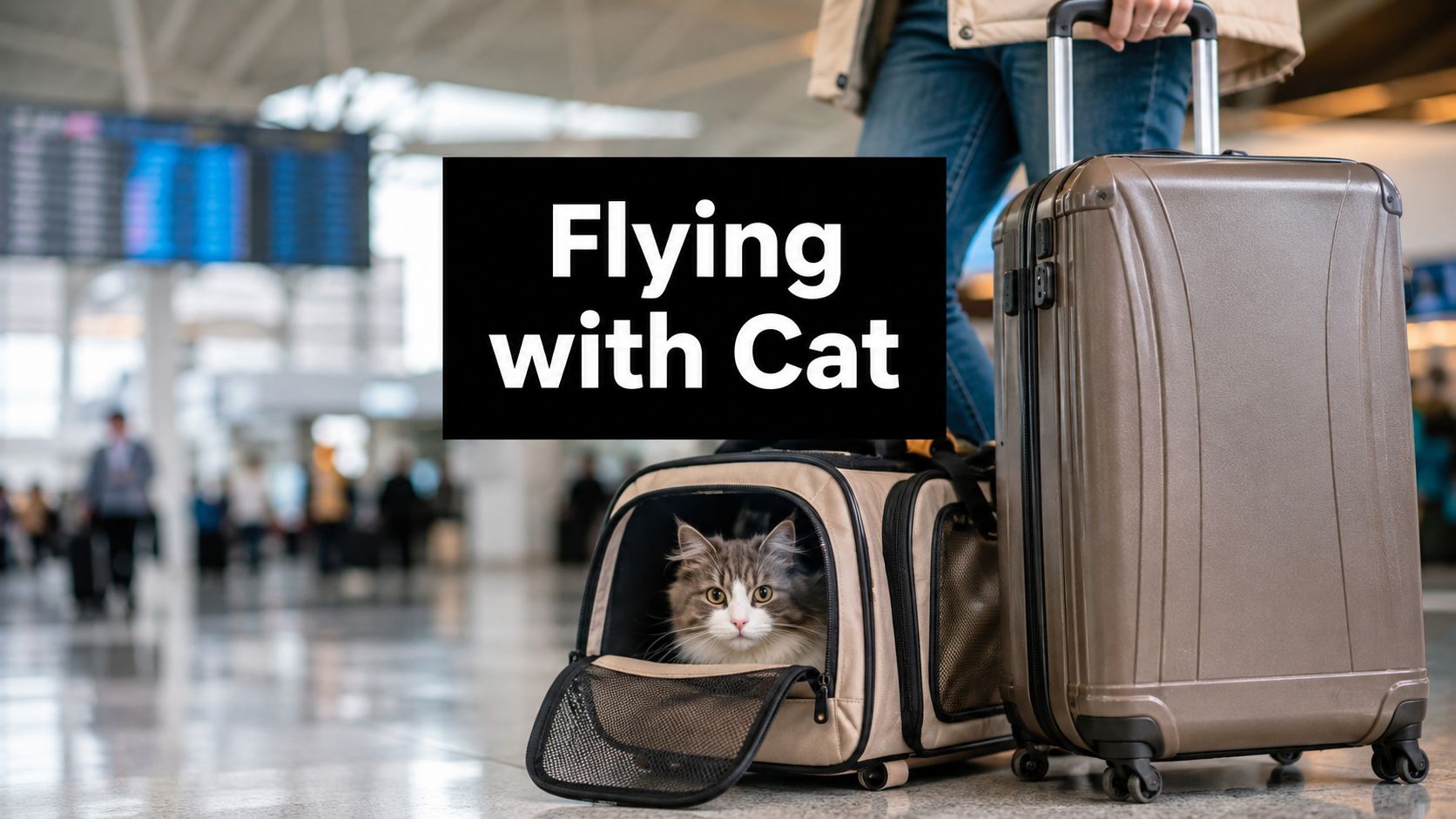
47.6% of cat owners in one cited study said moving was the main reason they flew with a pet, and that’s why airplane travel with a cat starts with a practical question, not a cute one, does the carrier fit under the seat in front of you? If it doesn’t, the plan changes fast, because everything from booking to baggage to post-arrival care depends on that single answer.
You’re probably at the stage where the flights are open, the apartment lease or duty station is fixed, and the cat still has to get there somehow. That’s when the paperwork, carrier dimensions, food timing, and airport handling stop being abstract advice and turn into the difference between a controlled move and a gate-side problem.
Why Airplane Travel With Cat Is a Logistics Project

A lot of people start with the wrong mental image. They search for airplane travel with cat and expect a simple packing list, maybe a few airline hacks, then a calm boarding experience. The picture looks more like a relocation desk, carrier measurements on the kitchen floor, and a lot of phone notes about deadlines.
That matters because cat flights aren’t mainly leisure trips. In a Los Angeles Times report, 47.6% of cat owners said moving was the primary reason they brought a pet on a plane, and the same report cited federal transport data showing nearly 507,000 pets flew in 2017, with 24 animals dying in cargo holds that year (Los Angeles Times report). The death figure is small compared with the total, but it still explains why people planning a cat flight think in terms of risk control, not convenience.
What the scale tells you
A peer-reviewed review in PMC says over 2 million pets and other live animals are transported by air every year in the USA alone, cats make up 22% of all pet travellers annually, and pet travel has increased by 19% in the past decade (PMC review). That puts cat air travel in a broader mobility trend, not a one-off edge case.
Practical rule: Treat the flight like a relocation project from the beginning. If the cat is stressed, if the route is tight, or if the airport timing is unforgiving, small mistakes get expensive quickly.
That’s why the best plans start before the ticket is bought. The seat layout, airline pet rules, and destination requirements all stack up against the same reality, a cat can’t explain itself at the checkpoint, so you have to do that work in advance.
The rest of the process follows the same logic, policy first, carrier second, then booking, then arrival care. For a broader relocation lens, the planning framework in Precious Pets Transport’s pet transport guide fits naturally with the airport details here.
Researching Airline Policies and Required Documentation
Airline pet rules are not interchangeable, and that’s where many trips go sideways. One carrier may accept cats in the cabin, another may not, and even among airlines that do allow them, the under-seat carrier limit can vary enough to make a “fits on paper” bag fail at the gate.
Start with the airline’s own pet policy page, not a third-party summary. You’re looking for three things, whether cats are allowed in-cabin at all, the exact under-seat carrier dimensions, and how the airline handles fees or pet limits on a specific flight. If the site’s wording is vague, call the airline and ask for the pet policy in the context of your exact route and aircraft type.
The paperwork to line up early
Documentation is where check-in delays happen. Most airlines ask for a recent health certificate, current rabies documentation, and microchip verification, and international trips can add import permits or breed-based limits. A certificate from a previous trip usually won’t help if the airline requires something issued in a much narrower time window.
A simple folder system keeps this manageable:
- Airline rules: Save screenshots or PDF copies of the official pet policy page.
- Health records: Keep vaccination records, microchip details, and any vet-issued forms together.
- Route-specific documents: For international travel, add permits, destination forms, and any required translations.
- Timing notes: Write down expiration dates so nothing gets handled at the airport for the first time.
If you want to protect yourself from the financial side of a surprise vet visit before travel, Embrace Pet Insurance offers customizable accident and illness coverage for dogs and cats, including optional wellness rewards, which can be useful before domestic or international travel when you’re trying to avoid another layer of uncertainty.
The biggest mistake here is assuming the vet visit is enough. A healthy cat can still be turned away if the airline wants different paperwork, or if the microchip and vaccine timeline don’t line up with destination rules. The airline agent at check-in won’t negotiate around a missing form.
Keep your own checklist and mark each item as complete only after you’ve matched it to the airline’s actual requirement. If a form, chip, or vaccine detail is unclear, resolve it before booking the seat, not after.
Choosing and Preparing a Travel-Approved Carrier

The carrier is the part of airplane travel with cat that either clears the counter or stops the trip before it starts. For in-cabin travel, the requirement is simple, the carrier must fit under the seat in front of you, and your cat has to stay inside it through check-in, security, boarding, and the flight itself.
Measure against the airline’s published dimensions, not the wording on the product page. External size matters, but compressibility matters too, because a carrier can look right online and still hold its shape too well to fit under a seat. The actual picture looks more like carrier measurements on the kitchen floor, a tape measure against the airline’s limits, and a cat stretched out the way it naturally rests.
Build the carrier around the trip, not the other way around
Preparation works better when the carrier stops being a surprise. Leave it open at home, put familiar bedding inside, and feed meals nearby so the space becomes part of normal life instead of a signal that something stressful is coming. Short car rides can help, but only after the carrier already feels ordinary.
The details matter on travel day, and they matter again at arrival.
- Absorbent pads: Put one under the bedding so small accidents stay contained.
- Thin blanket: Add a light layer for comfort and thermal buffering.
- Secure closure: Check zippers, latches, and seams before every move.
- Ventilation: Make sure airflow stays good even when the bag is compressed.
- Practice handling: Carry the bag the way you will carry it at the airport, not the way it looks in a product photo.
If you also need help getting your cat used to being lifted, touched, or briefly restrained during prep, Global Pet Sitter’s harness guide is a practical outside reference for the harness side of handling.
Keep the carrier boring at home and predictable at the airport. Cats trust routine more than reassurance.
There is another planning issue here. Many airlines count the in-cabin pet as your one carry-on item, so the carrier can take the place of a separate bag and change what you pack for the airport. That means the carrier choice affects the rest of your baggage plan, not just the cat’s comfort.
For travelers who also need to think beyond the cabin bag, the international pet travel kennel requirements overview is useful for the larger kennel picture.
Deciding Between In-Cabin and Cargo Travel
Many travelers hope for the cabin, and for good reason. In-cabin travel keeps your cat near you, avoids handoffs, and gives you better visibility into how the trip is going, but it only works if the carrier fits under the seat and the airline has room for the pet on that flight.
That’s where many guides stop being useful. If the cat or carrier can’t meet the under-seat constraint, you need a different plan instead of trying to force a cabin solution that won’t pass inspection. The issue isn’t comfort alone, it’s whether the dimensions, the cat’s size, and the airline’s limits can all coexist.
How to think through the choice
In-cabin travel usually works best when the cat is small enough to rest comfortably in a soft-sided carrier and tolerate a long stretch without being let out. Cargo travel is the alternative when the cat is too large for the cabin setup, or when the route and airline make cabin acceptance impractical. The trade-off is obvious, cabin travel gives you proximity, cargo gives you more space but less control.
A simple comparison helps:
| Factor | In-cabin | Cargo |
|---|---|---|
| Supervision | Direct | Limited after handoff |
| Size flexibility | Low | Higher |
| Handling transfers | Fewer | More |
| Stress profile | Often lower for some cats | Can be harder for some cats |
| Planning burden | Tight on dimensions | Tight on airline and route rules |
The New York Times Wirecutter guide points out the same practical gap, most advice talks about airline rules, but not enough of it helps owners decide what to do when a cat can’t physically fit the cabin setup (Wirecutter guide).
Decision rule: If the carrier can’t sit under the seat without forcing the cat into an unsafe or obviously cramped position, don’t treat cabin travel as the default.
This is also where temperament matters. A calm cat that settles quickly may do well in a tightly managed cabin trip, while a larger or more reactive cat may need a completely different relocation plan. The right answer isn’t the most popular one, it’s the one that matches the animal and the route.
When owners do choose a broader relocation solution, some use a professional pet transport service rather than trying to improvise. Precious Pets Transport Services, LLC is one such option for domestic and international pet relocation, especially when the move needs hands-on coordination rather than a standard ticketing process.
Booking Strategy and Day-of Procedures
A cat ticket can disappear long before the flight looks full, especially on routes that allow only a small number of pets in the cabin. Once that space is gone, airport staff usually cannot add one at check-in, so waiting until the last minute creates a real risk of losing the trip.
Book through the airline directly whenever possible. Third-party sites often blur the pet rules or hide the details that matter, such as whether the carrier count is still open on your chosen flight. Call the airline after booking to confirm the pet reservation, the route, and the carrier policy before you commit to any nonrefundable plans. If the airline later swaps aircraft or changes the seating layout, check the under-seat dimensions again instead of assuming the earlier approval still fits.
The day of travel should feel controlled, not rushed.
Arrive early enough to handle check-in without hurrying through the paperwork. For in-cabin travel, at least two hours before departure gives you room for airline questions, security screening, and a cat that may need a few extra minutes to settle after being removed from the carrier.
Food timing matters more than many owners expect. Keep the meal smaller than usual, or skip feeding right before the flight if your vet has advised that approach for your cat. One international guide recommends food about 12 hours before travel and stopping feeding about 6 hours before departure (travel guidance). The Transportation Department guidance also advises avoiding a full stomach close to departure (Transportation Department guidance). Water should still be available.
A compact travel kit keeps small problems from turning into airport drama.
- Absorbent pads: Use these to line the carrier or manage a spill.
- Portable litter option: Useful if a delay stretches out.
- Familiar blanket: Helps the cat settle in unfamiliar spaces.
- Water bowl or collapsible dish: Helpful after security and again at arrival.
- Recent cat photo: Useful if you and the carrier get separated.
- Extra comfort item: A familiar item from recommended pet travel gear can help if your cat is sensitive to new places.
A normal meal before departure can backfire. A full stomach, airport stress, and a delay rarely mix well.
Keep the cat out of a parked car while you handle bags or parking. Heat builds fast, and a cat in a carrier has no way to tell you the situation is getting worse. Plan the handoff from car to terminal before you leave home, so you are not making decisions at the curb with time running out.
If the trip is part of a larger move, some owners choose to apply for visa with My Global Trips while they organize the rest of the travel paperwork, since pets and people often end up on different schedules. For a domestic move, a short checklist and a calm check-in routine usually matter more than adding more items to the bag.
Navigating International Travel Requirements
International cat travel adds a second layer of inspection risk. Domestic paperwork can be annoying, but cross-border rules can stop a trip entirely if the timing, chip, or import paperwork does not line up with the destination country’s standards.
Start with the microchip. Many countries require an ISO-compliant 15-digit microchip, and some destinations will not recognize a chip if it was implanted after the rabies vaccine. That sequence matters because inspectors want to see that the identity link existed before immunity documentation was created.
The next pressure point is rabies timing and entry approval. Many countries enforce a waiting period after a primary rabies vaccine, and the common minimum is 21 days before entry is allowed. Some destinations also require import permits, and those can take time to process, so they need to be started early rather than left until the travel week.
What usually trips people up
The problems that derail international cat travel are usually predictable. Breed restrictions can apply, especially for cats with flatter faces or respiratory risk concerns at altitude, and airline rules can add another layer on top of the country’s own requirements. The safest approach is to use the destination government’s agricultural or customs website as the final authority, because the rule set can change and a checklist from last month may already be outdated.
A practical international checklist looks like this:
- Microchip verification: Confirm the chip is compliant and readable.
- Rabies timing: Check the primary vaccine date and the entry waiting period.
- Import permit: Apply early if the destination requires one.
- Breed or route rules: Confirm whether the airline or country has added restrictions.
- Veterinary forms: Keep copies in more than one bag.
For broader visa and trip coordination, apply for visa with My Global Trips can help keep the human side of the move organized while you handle the pet side separately.

If the paperwork feels too layered for a first-time international move, professional coordination is often the safer route. Precious Pets Transport Services, LLC, for example, works on domestic and international pet relocation and is positioned to guide owners through transport logistics from the United States and nearby regions.
International pet travel is as much a timing problem as a paperwork problem. A form that is technically correct but submitted too late still fails you at the airport.
Post-Arrival Care and Monitoring Your Cat
The flight ending doesn’t mean the trip is over. The first 24 to 72 hours after landing are where stress, dehydration, and urinary problems can show up, especially if the itinerary was long or involved time-zone changes.
Set up the arrival space before the cat gets there. A quiet room, familiar bedding, a litter box, and water should already be in place so the cat doesn’t have to search a new home while disoriented. Offer water right away, then wait until the cat is calmer before returning to a normal feeding routine, which may take a few hours depending on how hard the trip was on them.
What to watch closely
The warning signs that need attention are straightforward, and they’re worth taking seriously:
- Refusal to eat or drink: If it lasts more than 24 hours, it’s not just normal settling.
- Straining in the litter box: Especially if no urine is produced.
- Persistent hiding or vocalizing: If it doesn’t improve in a quiet, familiar environment.
As noted earlier, cats should not have solid food in the hours before flight, and the focus after landing shifts to getting water down, then restoring a normal feeding pattern once the cat is settled. Broader welfare guidance also treats not eating or straining in the tray as urgent, not as a harmless adjustment. That’s the difference between normal travel fatigue and a problem that needs a veterinarian.
If a cat won’t eat, won’t drink, or can’t urinate normally after arrival, don’t wait for it to “settle down.” Watch the clock and call for help if the pattern doesn’t improve.
Long-haul and international itineraries can make this period messier because jet lag throws off appetite and litter-box habits. Keep the environment calm, minimize visitors, and check output more than you think you need to. If the cat hides at first, that can be normal. If the hiding comes with refusal to drink, repeated trips to the litter box, or obvious discomfort, it deserves attention.
Most cats do settle, but the ones that don’t need quick attention. The goal isn’t to overreact to every odd behavior, it’s to know which changes are normal and which ones mean the trip has crossed into veterinary territory.
If you’re planning airplane travel with a cat and want help turning the paperwork, carrier choice, and arrival plan into something workable, visit Precious Pets Transport Services, LLC. They coordinate domestic and international pet relocation, and they can help you think through the logistics before travel day turns into a scramble.
Leave a Reply