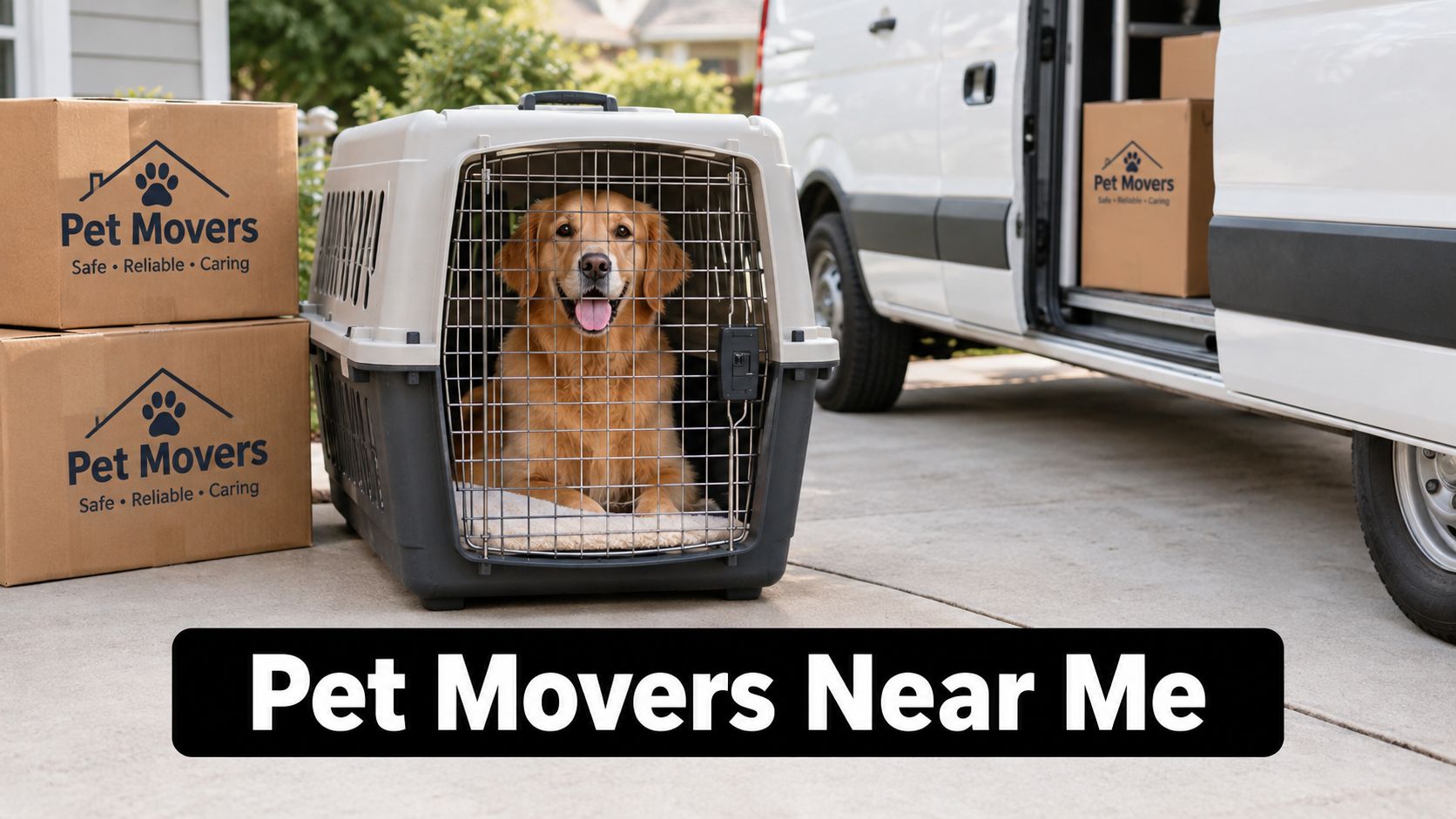
You've got a move date, a pet who can't manage the logistics alone, and a search page full of companies calling themselves local pet movers. The difficult part isn't finding a phone number. It's working out which providers are legitimate, insured, equipped for your route, and prepared for the animal in front of them.
Start with a shortlist you can verify. Check whether the company is USDA licensed, whether it belongs to the International Pet and Animal Transportation Association, and what its insurance covers. A useful guide to how to pick a pet transporter can help, but you still need direct answers from each mover.
The three choices below address common pre-booking gaps: protecting your pet financially, choosing the right travel crate, and testing a mover with service-level questions before you commit.
Table of Contents
- 1. Spot Pet Insurance
- 2. Embrace Pet Insurance
- 3. Petmate Sky Kennel
- Pet Moving Options: Spot, Embrace, Petmate
- Confirm Credentials and Service Area Before You Book
1. Spot Pet Insurance
Pet transport creates risks that ordinary moving insurance often doesn't address. A household mover may cover furniture damage, but that doesn't automatically mean your dog or cat has protection for an illness, injury, or veterinary visit connected with travel. Before searching for pet movers near me, check your existing pet policy and confirm how it treats domestic trips, interstate relocation, international travel, waiting periods, exclusions, and care from an unfamiliar veterinarian.
Spot Pet Insurance is a practical option for owners who want customizable accident and illness coverage for dogs and cats. Its flexible reimbursement structure can help owners choose an arrangement that fits their broader pet-care budget. It also offers multi-pet discounts and permits visits to any licensed veterinarian, which matters when your pet may need care far from home.
That flexibility doesn't replace a mover's liability coverage. These are separate questions. Pet insurance generally concerns eligible veterinary treatment, while a transport company's commercial policy may address its responsibility during the journey. Ask for the distinction in writing.

What to verify before relying on a policy
Read the policy documents rather than relying on a comparison page or a verbal summary. Travel can involve several locations, handlers, and forms of transport, so the relevant wording may not be obvious from a general accident-and-illness description.
Ask these questions before you purchase or renew coverage:
- Travel treatment: Does the policy cover an accident or illness while the pet is being transported by a professional mover?
- Destination access: Can you use any licensed veterinarian if you're crossing state lines or entering another country?
- Pre-existing conditions: Which conditions are excluded, and how does the insurer define them?
- Waiting periods: When does coverage begin for accidents and illnesses?
- Reimbursement details: What percentage, deductible, and annual limits apply to eligible claims?
- Documentation: What veterinary records must you keep during the move?
You'll also need to understand what the mover covers. Ask whether its insurance applies to veterinary expenses, loss, escape, injury, delays, and subcontracted handlers. “Fully insured” is not enough by itself. A responsible coordinator should explain the policy's scope without making you chase the answer.
Practical rule: Treat pet insurance and transporter liability as two separate layers. Confirm both before travel day.
Where Spot fits best
Spot suits owners who want a configurable policy rather than a one-size-fits-all arrangement. That can be useful for a household with multiple pets, different ages, or different medical histories. The ability to visit any licensed veterinarian may also reduce friction during a long domestic move, when your regular clinic isn't available at the destination.
It's still important to distinguish coverage from guaranteed payment. Insurance policies have terms, exclusions, deductibles, and claim procedures. A policy also doesn't make a weak mover acceptable. You should still reject a company that can't explain who supervises the animal, how emergencies are escalated, or what happens if weather disrupts the route.
For more background before comparing plans, review this guide to pet insurance. Then ask each shortlisted mover for a certificate of insurance, the name of its insurer, and a clear explanation of any limits that apply to live-animal transport.
Don't overlook the welfare plan
Insurance can help with eligible veterinary expenses, but it doesn't prevent stress. A nationwide survey found that 84% of movers said their pets experienced at least some stress while adjusting to a new home and neighborhood. The same report found that 93% said their pets settled within one month when owners provided support. Those findings support a transport plan that includes familiar food, predictable routines, calm handling, and arrival guidance, not just financial protection. DVM360's summary of the moving survey provides the underlying context.
A capable mover should ask about medications, behavior, feeding, exercise, escape risk, and medical history. If the provider only asks for the pet's size and pickup address, you're not getting enough operational planning.
2. Embrace Pet Insurance
You have a mover in mind, a pickup date on the calendar, and a pet that may need care on the road. This is the point to verify the move, not just compare monthly premiums. Embrace Pet Insurance can be a practical option if you want accident-and-illness coverage, adjustable reimbursement choices, and an optional wellness add-on for routine care such as exams or preventive visits that may come up before departure.
Start with the route and the handling plan. Then match the policy to that reality. A short ground transfer, a multi-state trip with overnight stops, and an international relocation create different risks, paperwork, and treatment scenarios. Check what Embrace treats as eligible care, when coverage begins, and how claims are handled if a veterinarian sees your pet away from home.
Match the policy to the route
Write down the actual move before you book anything. Include where the pet starts, where it ends, how it travels, who is responsible at each handoff, and who can authorize care if you cannot answer the phone. That list helps you test whether the policy and the mover fit each other.
For international travel, policy details are only one part of the check. Airline rules can vary. Destination rules can be stricter than the transport itself. Use the destination country's import requirements and the current carrier rules to confirm health certificates, timing, and entry conditions before you assume a policy will line up with the trip. If you are flying, the U.S. Department of Transportation's guidance on flying with pets is useful context on how airline policies differ, but the final check still belongs to the carrier and the destination authority.
Customization matters here. A lower premium can mean a higher deductible, a different reimbursement rate, or limits that matter if your pet needs urgent treatment during transit. A broader setup may make more sense for an older animal, a pet with a known medical history, or a move with several handoffs. Read the policy documents closely. Marketing language does not decide a claim.

Questions to ask your mover and insurer together
Local mover research becomes a verification step. The mover and insurer do different jobs, but their answers should still line up. If the mover says it can get veterinary help quickly, the insurer should be able to explain what records you will need, whether the clinic must be licensed, and how the claim should be documented.
Ask these questions before you pay a deposit:
- Emergency authority: Who can approve treatment if you are unreachable?
- Clinic selection: Can the handler use any licensed veterinarian during transit?
- Payment process: Do you pay first and submit later, or is another arrangement possible?
- Records transfer: How will invoices, treatment notes, and receipts reach you?
- Delay handling: What happens if weather, traffic, mechanical trouble, or a missed connection extends the trip?
- Arrival support: Will the mover tell you what to watch for during the first hours after delivery?
Good movers answer these clearly. They also tell you what they cannot promise. That matters. Insurance helps with eligible costs. It does not fix a weak handoff, a missed document, or a destination that was never confirmed.
Ask for the handoff plan, not just the route. A pet can travel safely and still run into problems if the receiving person, housing approval, or backup veterinary plan is not ready.
Insurance doesn't solve a housing failure
A lot of relocation trouble starts at the destination. The Pets and Housing Data report states that 79% of rental properties accept pets. The same report also notes breed restrictions, size limits, and fees. The 2025 Pets and Housing Data report also notes that 21% of owners who surrendered a pet cited moving to housing that didn't allow their type of pet.
That is why I treat housing approval as part of mover vetting. Get permission in writing. Confirm breed and weight rules, deposits, recurring charges, vaccination requirements, licensing, elevator access, and any move-in windows or building restrictions. A listing that says pet-friendly may still reject your specific animal.
Then ask the mover what happens if the lease changes or the building refuses entry on arrival. Can the booking be delayed, redirected, or split into temporary boarding and final delivery? If the company has no answer, you have found a service gap before your pet is on the road, which is exactly the right time to find it.
If you want a closer look at policy details before choosing a mover, this Embrace pet insurance guide for pet travel planning gives more background. The policy can reduce financial uncertainty. It cannot replace destination checks, crate planning, or clear service-level answers from the mover you hire.
3. Petmate Sky Kennel
Your mover is booked, the pickup date is close, and then the crate becomes the problem. That happens all the time. A crate decides how your pet is loaded, how air moves around them, how handlers access water, and whether the animal can stand, turn, and rest without strain. The Petmate Sky Kennel is a common choice because it holds up well in transit and is widely recognized by transport teams, but the model alone does not settle the booking. You still need to verify fit, assembly, and the mover's handling process before you commit.
That is the true purpose of crate shopping during a local search for pet movers. It is not just buying plastic and bolts. It is a verification step. If a company cannot explain what size they require, how they secure it, or what hardware they accept, that tells you something before your pet ever leaves home.
Measure the pet, not the old crate
Start with the animal in a normal standing position. Measure height and length, then compare those numbers with the carrier or mover's crate rules. Old crates mislead people. Breed labels mislead people too. Body shape varies a lot, especially with short-nosed dogs, leggy dogs, and broad-chested dogs, so a weight-based guess is a poor way to buy a travel crate.
Fit affects safety in both air and ground transport. Too much empty space can let a pet slide when a van brakes or turns. Too little space can leave the animal cramped and make routine checks harder for the handler. The right crate gives enough room for normal posture without letting the pet get thrown around inside it.
I tell owners to test the crate before they compare movers. Put it in the house. Leave the door open. Add familiar bedding if the mover or carrier allows it. Reward calm entry. Then try short periods with the door shut. Departure day is the worst time to learn that a cat thrashes in confinement or a dog works the latch with its nose.
Assemble it for handling and cleaning
Assembly matters as much as size. Follow the manufacturer's instructions, then confirm whether the airline or mover requires specific hardware, labels, food and water dishes, or fastener types. Handlers look for secure panels, reliable closures, ventilation on the required sides, absorbent bedding, and water access that does not soak the crate during loading. Skip improvised modifications. Extra holes, loose attachments, or homemade add-ons can create a handling problem fast.
Cleanliness is part of move prep, not a last-minute chore. If bedding is wet or soiled, replace it. Sanitize the crate with a pet-safe product and let every surface dry fully before reuse. This guide to cleaning kennels is useful if you want a simple routine before travel day.
A good crate should make the handler's job easier. If the door, water setup, bedding, or fasteners create doubt, correct it before pickup.
Then ask the mover how that crate is handled once it is in their care. For local ground transport, the answer should be specific. Ask how the kennel is anchored in the vehicle, how airflow is maintained around it, whether it is kept separate from loose cargo, how temperature is monitored, and whether staff can inspect the pet safely during stops. Climate control helps, but good temperature management also depends on loading habits, parking choices, and whether the animal is ever left unattended.
Compare ground and air transport honestly
A Sky Kennel often comes up when owners are deciding between air and ground service. The crate may work for both, but the trip conditions are different, and that affects how you vet the mover. Flying can shorten total travel time. It can also rule out a pet because of breed, size, age, health status, temperature limits, or paperwork issues. As noted earlier, federal reporting on airline pet transport does not cover every carrier equally, so broad airline numbers only get you so far. DOT's pet travel guidance is still a useful starting point for federal rules and travel basics, but you also need the mover or airline to tell you what applies to your pet on your route.
Ground transport gives you different trade-offs. You may get door-to-door handling, fewer handoffs, and more control over feeding, walking, litter access, and updates. You may also face a longer trip, overnight arrangements, weather changes on the road, and a pet that does not settle well in a vehicle for extended periods. Neither option is automatically better. The right choice depends on the individual animal and how the company runs the trip.
That is why crate choice and mover vetting belong together. Ask the company to explain the transport method using your pet's breed, size, age, health, behavior, route, season, and destination requirements. A careful provider will not steer you toward air or ground service until they have those details.
Before you book, get direct answers to these service questions:
- Care schedule: How often are dogs walked, and how do cats get litter access?
- Food and medication: Can the team follow the pet's normal schedule from home?
- Overnight supervision: Who stays with the animal when driving stops?
- Communication: When should you expect updates, and who is the contact person?
- Emergency response: Which veterinarian or emergency clinic is used if there is a problem?
- Vehicle standards: Are kennels sanitized, secured, and kept separate from household goods?
- Handoffs: Who handles pickup, any transfers, and final delivery?
The crate protects the pet physically. The mover's procedures determine whether that protection holds up in real travel conditions. Check both before you pay a deposit.
Pet Moving Options: Spot, Embrace, Petmate
| Product | Implementation complexity 🔄 | Resource requirements ⚡ | Expected outcomes ⭐📊 | Ideal use cases 💡 | Key advantages |
|---|---|---|---|---|---|
| Spot Pet Insurance | Low–Moderate 🔄, online enrollment; choose deductible/reimbursement options | Moderate ⚡, ongoing premiums; submit vet invoices for claims; multi-pet discount available | High ⭐⭐⭐⭐, accident & illness coverage with flexible reimbursement | Travel-ready pets; multi-pet households; owners needing flexible claims | Access to any licensed vet; customizable plans; multi-pet discounts |
| Embrace Pet Insurance | Low–Moderate 🔄, online signup; optional wellness add-on available | Moderate ⚡, premiums plus optional wellness cost; claim documentation required | High ⭐⭐⭐⭐, comprehensive accident & illness coverage; wellness rewards option | Owners wanting broad vet coverage and optional wellness before travel | Wellness rewards; flexible reimbursement; broad veterinary acceptance |
| Petmate Sky Kennel | Moderate 🔄, requires assembly and proper airline-compliant hardware | Low–Moderate ⚡, one-time purchase; may need additional hardware/labels for airline compliance | High ⭐⭐⭐⭐, durable, well-ventilated; airline-suitable when properly outfitted 📊 | Domestic and international airline travel; professional pet transport | Durable construction; good ventilation; widely accepted by airlines when compliant |
Confirm Credentials and Service Area Before You Book
A search for pet movers near me should end with a documented decision, not a quick call to the first company with an attractive listing. Confirm the mover's USDA license, check for IPATA membership, and ask for proof of insurance. Then verify that the company serves your pickup and delivery locations, including rural addresses, apartment buildings, military installations, and international departure points.
Ask how the service handles the entire journey. The useful questions are specific: Is transport door to door? Are vehicles climate controlled? How are kennels sanitized and secured? Who walks dogs, provides cats with litter access, administers approved medication, and stays with animals overnight? What happens if the vehicle breaks down, a route closes, or the pet needs urgent veterinary attention?
A credible coordinator should also explain the paperwork boundary. For domestic moves, ask what health records or destination requirements you need to provide. For international moves, ask who checks airline rules, veterinary certificates, import requirements, and timing. The U.S. Department of Transportation's pet travel information makes clear that airline and destination requirements vary, so a mover shouldn't promise a universal process.
Precious Pets Transport Services, LLC is USDA licensed, insured, and an IPATA member since 2013. The company provides door-to-door ground transportation across the United States in climate-controlled vans with sanitized kennels and bottled water. Dogs are walked at least four times daily, cats receive regular litter box access, and pets are fed according to their normal schedules. Drivers undergo background checks, receive pet first-aid training, and remain with animals overnight.
The service also coordinates international moves from Virginia, Washington, D.C., Maryland, and nearby states. Request a local estimate or confirm service-area coverage directly through Precious Pets Transport Services. For a broader credential review, see this guide to which handler credentials matter most.
Precious Pets Transport Services, LLC offers USDA-licensed, insured domestic and international pet relocation with door-to-door care, climate-controlled vehicles, and trained drivers. Visit Precious Pets Transport Services, LLC to confirm coverage, request an estimate, and discuss the safest plan for your pet's move.
Leave a Reply