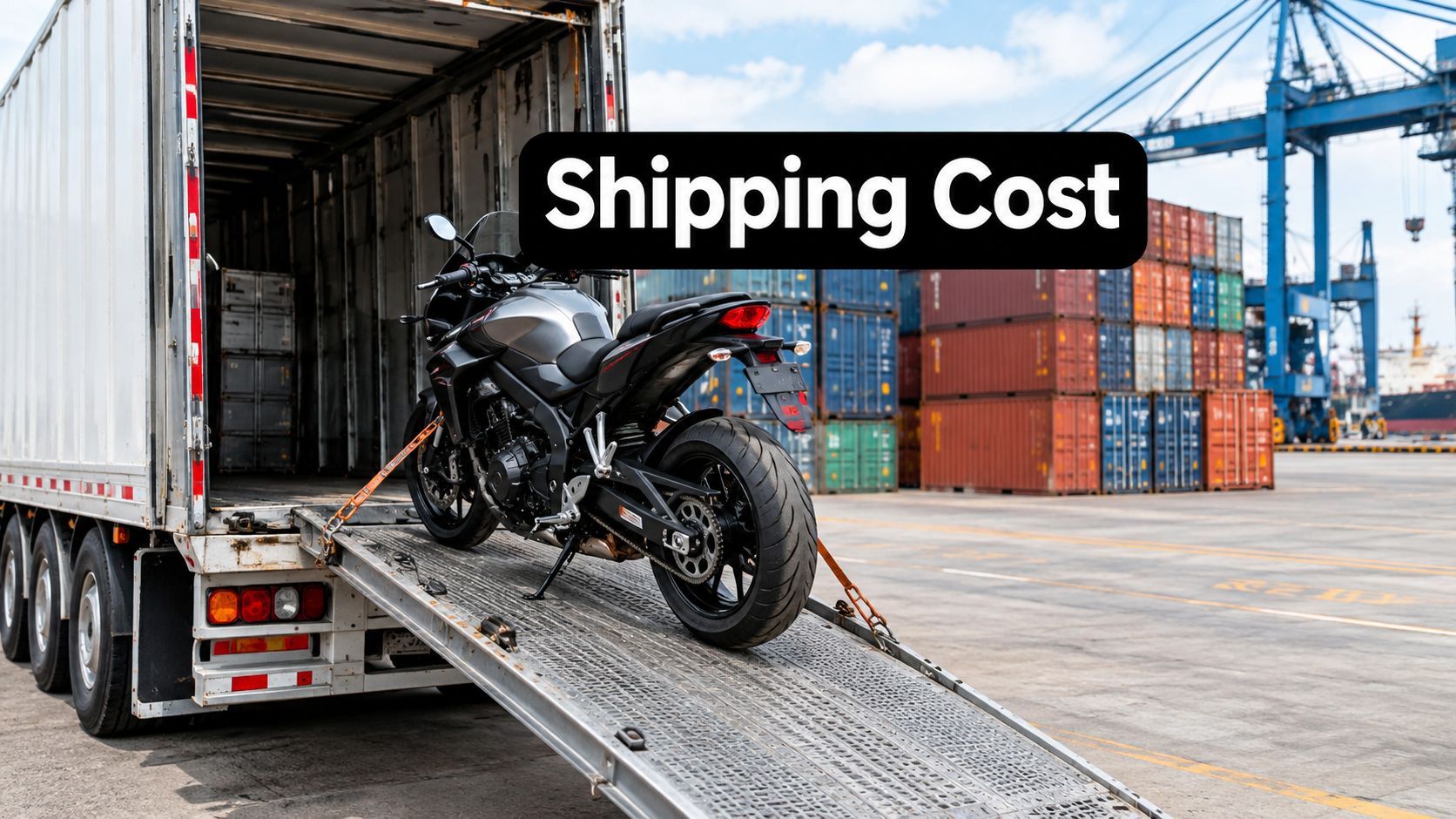
Domestic U.S. motorcycle shipping typically costs $300 to $1,200, while international shipments range from $900 to over $2,800, depending on the method and destination. The cheapest quote isn't automatically the cheapest shipment, because access fees, preparation, handling, and customs can change the final bill.
You may be standing beside a motorcycle that needs to reach a new home, a buyer, a storage facility, or a port. The carrier asks for the pickup and delivery ZIP codes, then returns several prices that seem impossible to compare. One quote covers an open trailer, another includes an enclosed carrier, and a third requires the bike to be crated.
The difference usually comes from what each quote includes, not from a mysterious pricing formula. Mileage matters, but so do the motorcycle's dimensions, running condition, access at both addresses, delivery urgency, equipment, and the charges added outside the base transportation rate.
Table of Contents
- Motorcycle Shipping Cost Baselines
- Domestic Routes Versus International Freight
- Choosing Between Open and Enclosed Transport
- Hidden Variables That Drive Your Final Price
- How to Compare Quotes and Avoid Lowball Traps
- Preparing Your Motorcycle for a Safe Journey
- Finalizing Your Shipping Strategy
Motorcycle Shipping Cost Baselines
A buyer needs a motorcycle collected from a seller, delivered to a storage facility, or moved to a port. The first quote may cover an open carrier, the second an enclosed truck, and the third crated freight. Those prices are not directly comparable until you identify the services and accessorial charges behind them.
For a domestic U.S. shipment, use $300 to $1,200 per motorcycle as a practical planning range. Mileage, equipment, delivery speed, motorcycle size, season, and access at both addresses shape the price. Crating can cost more upfront than a specialized carrier, yet it may suit a port-bound shipment or a bike requiring protected freight handling. An open carrier can be cheaper, while an enclosed service may justify its higher rate for a valuable or vulnerable motorcycle. These published motorcycle shipping cost estimates provide a broad starting point, not a guaranteed quote.
Build the shipment profile first
Before requesting prices, record:
- Origin and destination: Provide the actual pickup and delivery addresses, not only ZIP codes.
- Motorcycle details: List the make, model, length, width, height, wet weight, and running condition.
- Service requirements: Choose among open, enclosed, crated, terminal, door-to-door, standard, and expedited options.
- Access limitations: Report narrow streets, steep driveways, remote locations, gated properties, and loading restrictions.
Accurate details stop a carrier from pricing a standard motorcycle and later adding an oversized, non-running, residential, or difficult-access charge. Confirm whether loading help, storage, terminal handling, and special equipment are included. For an international vehicle purchase, analiza kosztów transportu i cła na Copart is a useful reminder to separate transport, port, and customs costs in the landed budget.
Treat the first quote as a planning figure
Ask for fuel surcharges, residential access, insurance limits, loading assistance, storage, taxes, and crating in writing. A low headline price can become expensive when those items sit outside the base transportation rate.
My recommendation is direct: budget from the middle of the relevant range, then verify every accessorial charge before booking. Compare the complete service, not the cheapest number on the page.
Domestic Routes Versus International Freight
A motorcycle traveling a few hundred domestic miles may still carry nearly the same loading, dispatch, paperwork, and insurance workload as a much longer shipment. International freight adds an entirely different chain: local collection, preparation, inland delivery to a port, export documents, port handling, ocean or air freight, customs, destination handling, and final delivery.
Domestic distance remains a useful starting point, but the route bands are only estimates:
- Under 500 miles: Quotes commonly fall around $200 to $500.
- From 1,500 to 2,500 miles: Many shipments land around $600 to $1,200, depending on equipment and service.
- More than 2,500 miles: A coast-to-coast move may cost roughly $800 to $1,450, with open, enclosed, and crated options producing different totals.
Why short routes cost more per mile
Short shipments absorb fixed costs across fewer miles. Loading, securement, dispatching, driver time, paperwork, and insurance administration still require labor, even when the motorcycle travels only a short distance. Longer routes spread those costs across more miles, so the per-mile rate usually drops.
Published domestic estimates place short-trip pricing around $0.60 to $1.00 per mile, compared with approximately $0.30 to $0.50 per mile for a cross-country move, according to domestic motorcycle shipping estimates. Do not apply a long-haul rate to a short route and expect a reliable quote. Access charges can overwhelm the mileage calculation.
International freight follows a layered pricing model. Ocean shipping is generally the economical choice, but transit commonly takes 20 to 45 days, or roughly 4 to 8 weeks once customs and port handling are included. Air freight may take about 7 to 14 days, while the faster schedule brings a much higher transportation cost.
Ocean versus air
International estimates commonly fall around $700 to $2,000, while broader 2025 ranges run approximately $900 to $2,800. Air freight can exceed $3,000 when speed takes priority, according to international motorcycle shipping rate guidance.
Choose ocean freight for a relocation, collection, or flexible touring plan. Choose air only when the cost of delay exceeds the premium. Require a written breakdown covering destination fees, duties, customs processing, delivery, storage, and cargo protection. The freight charge is not the total delivered cost.
The same layered logic applies to an international pet move. This international pet shipping cost breakdown separates line-haul charges from handling, which is how a motorcycle freight quote should be evaluated.
Choosing Between Open and Enclosed Transport
If your motorcycle is a standard, running road bike, open transport usually controls the budget. Enclosed transport costs more, but it limits exposure to weather, road debris, and uncontrolled handling. Choose equipment based on the bike's condition and the consequences of damage, not on the lowest advertised rate.
A controlled 635-mile move averaged $850 on an open carrier and $1,200 in an enclosed trailer. That puts enclosed service roughly 40% to 50% higher, according to the Forbes motorcycle shipping comparison. The premium can make sense for a collectible or custom motorcycle, but it is unnecessary protection for many everyday bikes.
Match the equipment to the bike
Use open transport for a normal road bike with a durable finish, provided the carrier explains its inspection process and claims coverage. Select enclosed transport for a collectible, heavily customized, high-value, or weather-sensitive motorcycle. The extra charge buys a more controlled environment, not automatically better service.
Crated LTL freight creates a different cost structure. Packaging materials, preparation labor, forklift handling, terminal transfers, and dimensional pricing all affect the bill. A light motorcycle inside a large crate can consume more billable space than its weight suggests. Crating may suit terminal-accessible shipments, unusual dimensions, or bikes that require rigid packaging, but it is not automatically cheaper or safer.
| Transport Method | Cost Premium | Best Use Case |
|---|---|---|
| Open carrier | Lower domestic baseline | Running standard motorcycles on regular routes |
| Enclosed carrier | About 40% to 50% above open service in the cited example | Collectible, customized, or weather-sensitive motorcycles |
| Crated LTL freight | Packaging and dimensional charges can exceed ordinary trailer transport | Terminal-accessible shipments, unusual dimensions, or crate-required moves |
Ask the dispatcher how the bike will be secured, who loads it, where the condition inspection takes place, and how damage claims are handled. Compare equivalent services. An enclosed, door-to-door, expedited quote is not comparable with a terminal-to-terminal open quote.
If pets travel during the same move, Spot Pet Insurance offers customizable accident and illness coverage for dogs and cats, with flexible reimbursement options, multi-pet discounts, and access to any licensed veterinarian.
Practical rule: Choose the least expensive method that protects the motorcycle's actual condition and meets the pickup and delivery requirements.
Hidden Variables That Drive Your Final Price
The invoice reflects more than the motorcycle's value. Trailer space, loading equipment, route access, securement requirements, and handling time all shape the final rate. A specialized motorcycle carrier may cost less than crated freight on one route, while an open carrier can become expensive when accessorial services are added.
Standard motorcycles commonly measure 70 to 90 inches long, 30 to 35 inches wide, and 30 to 35 inches high, according to motorcycle transport and securement guidance. A trike, sidecar rig, or extended custom build can add roughly $100 to $300 because it occupies more trailer space or requires different tie-down or flatbed arrangements, as described in motorcycle freight pricing guidance.
Physical details change the classification
LTL freight uses density, calculated from shipment weight and crate volume, to classify freight. A lightweight motorcycle in a bulky crate can therefore cost more per pound than a compact shipment. Crating protects against some handling risks, but packaging labor, forklift handling, terminal transfers, and dimensional charges can erase its apparent price advantage.
Give the carrier final packaged dimensions, not an optimistic measurement of the bare motorcycle. Include cases, bars, mirrors, extended swingarms, racks, and crate structures that change the footprint.
Access is a billable service decision
Door-to-door service may require a residential surcharge when streets are narrow, clearance is low, parking is restricted, grades are steep, or a large truck cannot turn. A terminal can reduce handling complexity if you can safely deliver and collect the motorcycle there. Confirm whether loading help, storage, appointment scheduling, and remote-area service are included.
Expedited service can reach approximately $900 to $1,400, while standard open-carrier service may run around $500 to $750. Door-to-door delivery may add approximately $75 to $150. Treat these as rate-sheet examples, not universal quotes.

Separate transportation from landed cost
International shipments can add crating, inland trucking, port handling, customs processing, ocean or air freight, destination delivery, duties, and storage. Use this guide to estimate total landed cost of car export when separating freight from the final delivered amount.
Seasonal capacity, remote pickup, non-running condition, oversized dimensions, and urgent scheduling can raise the quote. A domestic pet transport cost breakdown makes the same point from another industry: one headline number rarely covers the complete route.
How to Compare Quotes and Avoid Lowball Traps
A low quote can become expensive after the motorcycle is booked. For example, a carrier may advertise a $450 base rate, then add residential pickup, fuel, and storage charges until the invoice reaches $720. Ask for the pricing logic before you compare offers.
Give every carrier the same shipment details, then focus your questions on how the company sells and fulfills the service. Request separate pricing for open transport, enclosed transport, and crated freight. Crating can look cheaper than specialized motorcycle transport, yet packing, inland handling, and terminal movement may erase that advantage. An open carrier may cost less at the line-item level while creating higher access charges at difficult locations.
Watch for these red flags:
- The dispatcher refuses to itemize the quote or will not identify the equipment assigned.
- The company pressures you to pay a large deposit before confirming pickup terms.
- The quote changes verbally, with no revised booking document.
- The broker cannot name the transporting carrier or explain who carries the insurance.
- A subcontractor appears uninsured, or the stated coverage does not clearly apply while the motorcycle is in transit.
- The price is far below competing offers without a clear operational reason.
A carrier that avoids basic questions will be difficult to reach when a delivery problem occurs. Ask for the motor carrier's legal name, insurance documentation, cancellation terms, and the process for claims. Confirm whether the deposit is refundable if the assigned carrier, equipment, or pickup window changes.
Use the quote as a negotiation tool, not just a price tag. If one company offers the same equipment and timing for less, ask a higher-priced carrier whether it can match the rate. Do not negotiate away cargo insurance, proper securement, terminal handling, or written accessorial terms to save a small amount.
Before signing, compare the final total and payment schedule with the original offer. A credible provider can explain every difference in plain language and put the agreement in writing. If the company relies on urgency, vague promises, or an unusually low headline price, choose a clearer quote instead.
Preparing Your Motorcycle for a Safe Journey
A motorcycle can arrive with new damage, delays, or handling charges when its condition and loading requirements are unclear. Give the carrier accurate details before pickup, especially if the bike is non-running, modified, leaking, or moving as freight.
Create a condition record first. Wash the motorcycle so scratches and dents are visible, photograph every side, record the odometer and accessories, and list existing damage on the inspection paperwork. Remove loose items, alarms, detachable luggage, GPS units, and personal belongings unless the carrier approves them in writing.
Follow the securement plan
Under FMCSA rules in 49 CFR 393 subpart L, the aggregate working load limit of the securement system must equal at least one-half of the cargo's weight. For a 700-pound motorcycle, the combined rated working load limit must therefore reach at least 350 pounds, subject to the carrier's equipment and operating procedures.
A sound loading plan usually uses a wheel chock and soft straps attached to suitable structural points. Handlebars, brake lines, painted surfaces, and fragile bodywork are poor anchor points and can create damage or an unsafe load.
Confirm operating requirements
Ask about fuel level, battery disconnection, tire condition, steering position, and whether the motorcycle must roll freely. Requirements vary by equipment and service type. An inaccurate declaration can result in refusal or a last-minute handling charge.
Crated freight requires extra measurement discipline. Measure the completed crate, provide its dimensions for the quote, and confirm whether the carrier requires forklift-compatible construction or specific loading access. Owners juggling a motorcycle and a pet in the same move can follow a separate animal travel preparation checklist before travel day.
Keep the keys, registration documents, condition report, and booking confirmation together. At pickup, inspect the motorcycle with the driver and ensure every existing mark appears on the inspection record. That record protects you if a securement issue or handling dispute arises later.
Finalizing Your Shipping Strategy
Choose the method based on the motorcycle and the route, not on a generic “motorcycle shipping” price.
For a standard running road bike on a domestic route, start with specialized open transport. Move to enclosed service when the motorcycle's finish, value, customization, or weather sensitivity justifies the premium. Consider crated freight when terminal access, unusual dimensions, or handling requirements make a crate practical, but compare the full freight calculation against uncrated specialized transport.
For international moves, use ocean freight when timing is flexible and air freight only when speed justifies the higher cost. Separate the transportation quote from the landed cost. Customs, port handling, destination delivery, storage, cargo protection, and import charges may sit outside the initial freight figure.
Give every carrier the final specifications, request itemized pricing, and compare equivalent service levels. A non-running, oversized, modified, or leaking motorcycle can trigger a surcharge or refusal, so disclose those conditions before the carrier commits to a price, as emphasized in motorcycle shipping cost guidance.
The most reliable way to save money is to make the shipment easier to price. Use terminal access when practical, allow flexible scheduling, prepare accurate dimensions, and reject any quote that hides accessorial charges.
Precious Pets Transport Services, LLC provides door-to-door domestic and international pet relocation, including ground transportation across the United States and coordination for international moves from Virginia, Washington, D.C., Maryland, and nearby areas. If your motorcycle shipment is part of a larger relocation, visit Precious Pets Transport Services, LLC to request an estimate for moving your pets with clear, coordinated travel support.
Leave a Reply