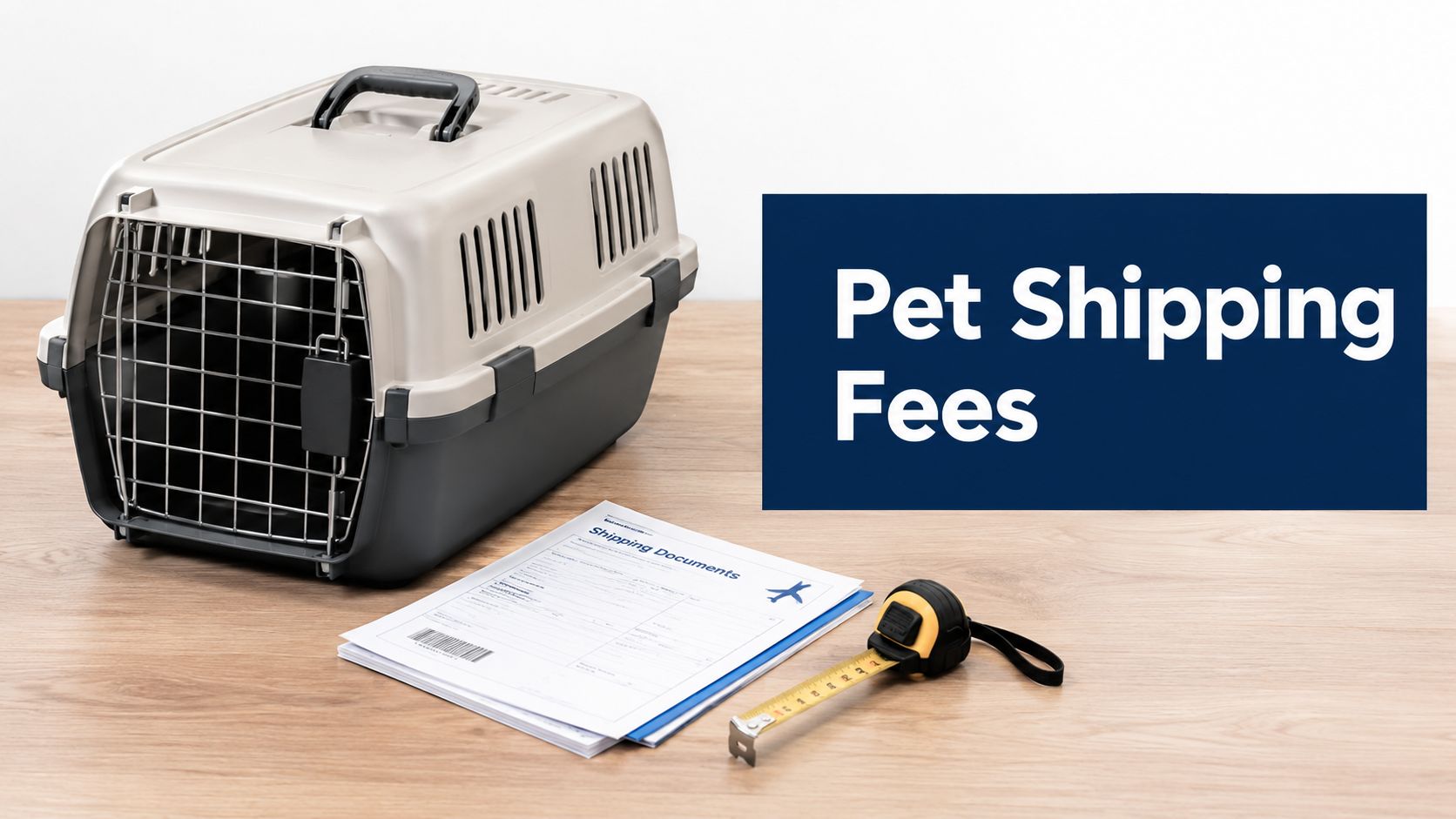
Domestic ground transport commonly falls between $250 and $2,200, according to decoding moving quotes Boston. Domestic air travel often adds $95 to $300 in airline fees, before the crate, veterinary paperwork, and other extras. International relocation can reach $1,500 to $12,000 or more all-in, depending on distance, pet size, transport mode, destination rules, and paperwork.
Those ranges describe different parts of the journey, so a quote may not resemble the price of your own ticket. A provider may list only the pet's place on a flight. Another may manage pickup, crate arrangements, veterinary timing, airport transfers, and delivery to the new home. Both prices can be reasonable when their included services differ.
Use the full door-to-door total as your comparison point. It may include mileage, airline charges, a compliant crate, veterinary documents, airport handling, customs support, and destination requirements.
A simple analogy helps: the base fee is the visible part of the trip, like the fare on a taxi meter. Add-ons are the stops, luggage, and required paperwork that determine what you ultimately pay. A low opening quote can therefore become more expensive after crates, documents, transfers, or route restrictions are added.
If you have compared moving estimates before, the same principle applies. Service details shape the final price, because pet relocation costs reflect the work required to complete the trip, not merely the distance on a map.
Table of Contents
- Introduction Why Pet Transport Pricing Feels So Confusing
- How Pet Transport Pricing Actually Works
- What Affects Your Pet Transport Cost the Most
- Real Price Ranges for Common Pet Transport Scenarios
- Hidden Fees and Extra Charges That Change the Total
- How to Get an Accurate Estimate and Reduce Costs Safely
- Pet Transport Cost FAQ and Common Misconceptions
Introduction Why Pet Transport Pricing Feels So Confusing
A family relocating from Maryland to another state might assume the cost is straightforward. Their dog needs a ride, the destination is known, and the dates are on the calendar. Then the questions begin. Is ground transport safer or more practical than flying? Does the airline fee include the crate? Will a veterinarian need to complete paperwork? Is pickup from the home included, or does the owner need to reach an airport?
Those details explain why pet transport cost varies so sharply. A basic airline add-on and a managed relocation service aren't interchangeable products. One may cover only the animal's place on a flight. The other may coordinate the crate, veterinary timing, airport transfers, overnight care, and final delivery.
Practical rule: Compare the final door-to-door total, not the smallest number in the first line of a quote.
A useful way to think about the process is to separate the journey into layers:
- Movement: The actual ground miles or airline transportation.
- Compliance: Crate rules, health documents, permits, customs, and destination requirements.
- Care: Handling, transfers, rest periods, overnight supervision, and special needs.
- Coordination: Booking, timing, communication, and problem-solving when a route changes.
The rest of your estimate grows from those layers. A regional ground move may be relatively simple, while an international relocation can require several organizations and carefully timed documents. The key is not to treat the range as a warning sign. Treat it as an invitation to ask what each provider has included.
By the end of the planning process, you should be able to read a quote line by line, identify missing charges, compare ground with air, and decide whether a lower fee offers better value. That approach gives you a budget you can trust and helps you choose an arrangement that fits your pet's comfort as well as your schedule.
How Pet Transport Pricing Actually Works
A quote can look simple until you ask what happens between your front door and the destination. A pet relocation provider may arrange the route, crate, paperwork, pickup, transfers, and delivery. Each item is a separate piece of the total, much like booking a trip that also requires baggage, permits, and ground connections.
That is why the transport charge is only one component of the final price. Ground providers commonly use a mileage-based model. Industry estimates often cluster around $0.46 to $1.50 per mile, with broader professional guidance placing ground relocation around $0.50 to $2.00 per mile, as summarized by this pet transport cost benchmark. The final quote may also include overnight care, private routing, difficult pickup locations, or special handling.
Air travel follows different rules. The starting point may be a carrier fee or cargo calculation. Published airline policies commonly place in-cabin charges around $75 to $200 one way, while cargo often begins near $150 and changes with weight, route, and kennel size, according to the complete U.S. airline pet policy guide. Once a pet exceeds cabin limits, the price becomes a logistics estimate rather than a simple ticket add-on. Crate specifications, airline acceptance, transfers, and destination restrictions can all affect the total.

Three quote styles you'll encounter
Per-mile ground: The estimate is tied to route distance and may include shared or private service, stops, rest periods, and overnight care.
Flat airline add-on: The airline lists a charge for in-cabin or another approved travel category. The carrier, veterinary documents, airport transfers, and handling may remain separate.
Full-service door-to-door: The provider combines transportation with planning and coordination. The higher price covers a larger portion of the journey, not merely the miles traveled.
Compare estimates in the same order. Identify the movement first, then compliance requirements, followed by care, transfers, and contingency handling. Ask for an all-in total if any of those pieces are unclear. The lowest first-line fee can become the higher door-to-door cost after required add-ons are included.
What Affects Your Pet Transport Cost the Most
Distance shapes many ground quotes, but other factors can outweigh it. A long road trip may be straightforward, while a shorter flight becomes complicated because of crate dimensions, route eligibility, or paperwork timing. The practical question is the door-to-door total, not only the first fee on a quote.
Distance and mileage affect ground transport directly. A 500-mile move can fall around $250 to $800, while a 2,000-mile trip may reach $1,000 to $3,600 or more, depending on service level, pet size, and overnight care. Mileage accounts for fuel, driver time, route planning, rest stops, and the number of days a provider reserves for the journey.
Transport mode changes how the estimate is built. Ground service usually follows the route. Air service depends on airline policy, cargo availability, kennel size, and destination restrictions. A small pet approved for cabin travel may have a clearer fee, while a larger pet may require cargo coordination and a hard-shell kennel. The cheapest mode on paper may create a higher total after required equipment, transfers, and paperwork are added.
Pet size and crate requirements can create another major difference. Cargo estimates commonly include the airline charge, an IATA-style hard-shell crate, and veterinary paperwork. Industry summaries place cargo shipping with those extras around $400 to $1,200 per pet, with crates often around $75 to $300 and a Certificate of Veterinary Inspection adding roughly $75 to $250, as detailed in this pet transport cost calculator guide.

Restrictions can outweigh distance
Breed restrictions, temperature embargoes, carrier dimensions, and route eligibility can remove the simplest travel option. An airline may refuse a breed, route, or weather condition, leaving ground transport as the workable choice. Two pets traveling between the same cities can therefore receive different quotes.
For airline travel, the Petmate Sky Kennel is one option to evaluate. Proper assembly with metal hardware and airline-compliant accessories supports domestic and international use. Its hard-shell construction and ventilation also address common airline crate requirements, though the carrier and destination rules still control acceptance.
Documentation and veterinary timing affect the total as well. Domestic routes may need a Certificate of Veterinary Inspection, while international moves can involve government paperwork, permits, customs, and destination-specific requirements. These documents are not interchangeable. Late completion can force a change in travel plans or add coordination work.
Quarantine and destination rules may add a separate layer of cost. International relocation depends heavily on the destination's import process. A provider may coordinate the requirements, while veterinary and government charges remain separate from the transportation line.
Season and route availability influence the available choices. Weather restrictions can limit air options, and a route with few carriers or limited cargo space may require a more expensive alternative. Flexibility can reduce the quote, but safety and compliance should determine the final choice. Ask whether the estimate includes the crate, documents, transfers, care, and any required destination handling before comparing prices.
Real Price Ranges for Common Pet Transport Scenarios
The clearest way to understand pet transport cost is to compare situations that look similar but use different services. A regional ground move may be priced by mileage. A domestic flight may begin with an airline fee but require a crate and paperwork. An international relocation combines transportation with compliance and destination logistics.
| Scenario | Typical Range | What Drives Variation |
|---|---|---|
| Regional door-to-door ground | $250 to $2,200 | Mileage, shared or private routing, pickup access, care needs, and overnight service |
| Coast-to-coast ground | $1,000 to $3,600 or more | Route length, pet size, service level, overnight care, and direct versus shared travel |
| Domestic air, in-cabin | $95 to $300 in airline fees before extras | Airline policy, number of flight legs, carrier limits, and route eligibility |
| Domestic air, cargo | $400 to $1,200 per pet with common extras | Cargo pricing, kennel size, veterinary paperwork, handling, and airport transfers |
| International relocation | $1,500 to $12,000 or more all-in | Airline routing, customs, permits, veterinary work, crate, and quarantine |
The domestic ground range of $250 to $2,200 reflects the broad difference between a simpler regional trip and a more involved door-to-door move, as outlined in the domestic and international pet transport cost guide. A shared route may reduce the transportation portion, while private service can reserve the vehicle and schedule for one household.
For air travel, the airline amount shouldn't be mistaken for the landed total. An in-cabin pet may need only an approved soft carrier and required veterinary documents, while a cargo pet may need a larger crate, airport handling, and more coordination. The cost of shipping pets across the country can therefore vary even when the origin and destination appear identical.
International moves have the widest range because the destination can determine the work required. A straightforward route may sit toward the lower end, while customs, permits, quarantine, or complex timing can push the all-in amount much higher. Ask whether a quoted range includes those destination services or merely the transportation booking.
Hidden Fees and Extra Charges That Change the Total
A base quote can look affordable because it leaves out items that don't apply to every pet or route. The solution isn't to assume a provider is hiding something. It's to request a line-by-line estimate that separates transportation from required extras.
The line items to ask about
Airline processing fees may sit on top of cargo rates. One major airline's published policy lists a $150 live-animal processing fee in addition to cargo rates, an example of how airlines can price animal transport as a separate ancillary service, according to the pet transport pricing reference.
Crate expenses depend on the pet's measurements and the travel method. A compliant crate isn't just a container that fits the animal at home. It must meet the applicable airline and route requirements, and an unsuitable crate can create a last-minute replacement cost.
Veterinary paperwork can include an examination and a Certificate of Veterinary Inspection. The commonly cited range is $75 to $250 for the certificate, while the veterinary appointment and any required treatments may be separate, as described in the air cargo cost breakdown.
USDA endorsements, permits, customs, and quarantine are especially relevant to international relocation. These charges depend on the destination and the specific import process. A provider can coordinate them, but coordination doesn't mean every government, veterinary, or boarding charge is included in the quoted transport fee.
Handling and transfer surcharges can appear when a pet needs airport delivery, collection, layover supervision, or special handling. If you're comparing household relocation costs too, a resource on the cost to ship a vehicle with National illustrates the same broader lesson: transportation estimates become more useful when they show what service components the headline number covers.
Why the cheapest fee can cost more
A low airline fee may force an inconvenient route, extra layovers, or a mode that doesn't suit your pet. Breed restrictions, temperature embargoes, or a documentation error can then lead to rebooking, additional handling, or repeat veterinary work.
Use an all-in checklist before accepting any quote:
- Transportation: Ground miles, airline charge, cargo rate, or flight coordination.
- Equipment: Carrier or hard-shell crate, required accessories, and replacement risk.
- Documents: Veterinary examination, Certificate of Veterinary Inspection, government forms, and permits.
- Destination services: Customs, inspection, quarantine, boarding, and final delivery.
- Care and contingencies: Transfers, overnight supervision, special handling, and schedule changes.
For a closer look at one frequently misunderstood item, review how much a health certificate for dogs costs. The important budgeting habit is simple: ask which charges are included, which are estimates, and which will be paid directly to another provider.
How to Get an Accurate Estimate and Reduce Costs Safely
A provider can't give a dependable door-to-door estimate from a destination and a pet's name alone. Start with a complete information sheet so the quote reflects the actual trip.
Give the provider the details that change the math
Include:
- Pet profile: Species, breed, age, approximate weight, health considerations, temperament, and whether the pet can travel in a carrier.
- Crate information: Current crate dimensions, or your pet's standing, turning, and resting measurements if you need guidance.
- Route: Full pickup address, destination address, and whether airport transfers are acceptable.
- Dates: Preferred departure and delivery dates, plus any flexibility.
- Service preference: Shared or private ground transport, in-cabin air, cargo, airport-to-airport, or door-to-door support.
- Documentation status: Vaccination records, veterinary appointment timing, permits, and international requirements already completed.
A precise estimate also depends on what you want handled. Some owners can manage a local handoff, while others need a provider to coordinate every transfer, document, and overnight period.
Lower the total without lowering the care standard
Flexible dates can open more routing options. Comparing ground and air for your specific pet can also prevent you from paying for a mode that triggers restrictions or complex transfers. Prepare documents early, and confirm the crate requirements before buying equipment so you don't pay twice.
Precious Pets Transport Services, LLC is one example of a provider offering door-to-door ground transportation across the United States and coordinating international relocations through IPATA connections. Its service context includes climate-controlled vans, sanitized kennels, bottled water, overnight care, and pet routines such as regular walks or litter-box access. Those features belong in the service comparison because they explain what a higher-touch quote may include.
A safer saving strategy: Remove unnecessary complexity, not necessary care. A flexible date or well-prepared document can lower friction. Skipping required paperwork or using an unsuitable crate can create a much larger problem.
For practical preparation guidance, see this pet transport service overview. Before booking, ask for a written estimate that identifies the base movement, required add-ons, optional services, and possible charges paid to third parties.

Pet Transport Cost FAQ and Common Misconceptions
Is distance the only major pricing factor?
No. Distance matters most for many ground routes, but air eligibility, pet size, crate dimensions, paperwork, route availability, and destination rules can change the total.
Does the lowest airline fee mean the cheapest trip?
Not necessarily. A low fee may exclude the crate, veterinary documents, airport transfers, handling, or a route that requires additional layovers.
Do all quotes include paperwork and quarantine?
No. Ask specifically. International estimates may include coordination without including government, veterinary, customs, or quarantine charges.
Why do companies give different quotes?
They may be pricing different service levels. One estimate might cover transportation only, while another includes pickup, delivery, overnight care, crate support, document guidance, or international coordination.
Does pet size alone determine air cost?
No. Size affects crate and cargo requirements, but airline policy, breed restrictions, route eligibility, and cabin availability also matter.
When should international planning begin?
Start as early as possible. International rules can require carefully timed veterinary and government documents, and a delay can affect the available route and total cost.
A trustworthy comparison focuses on the complete journey, not a tempting base fee. Once you know what each estimate includes, you can choose a practical balance of price, safety, comfort, and coordination.
Precious Pets Transport Services, LLC offers door-to-door domestic ground transportation and coordination for international pet relocations, with service options built around safe handling, clear communication, and your pet's routine. Request an estimate through Precious Pets Transport Services, LLC and share your route, dates, pet details, and preferred level of support so you can plan the true door-to-door cost.
Leave a Reply