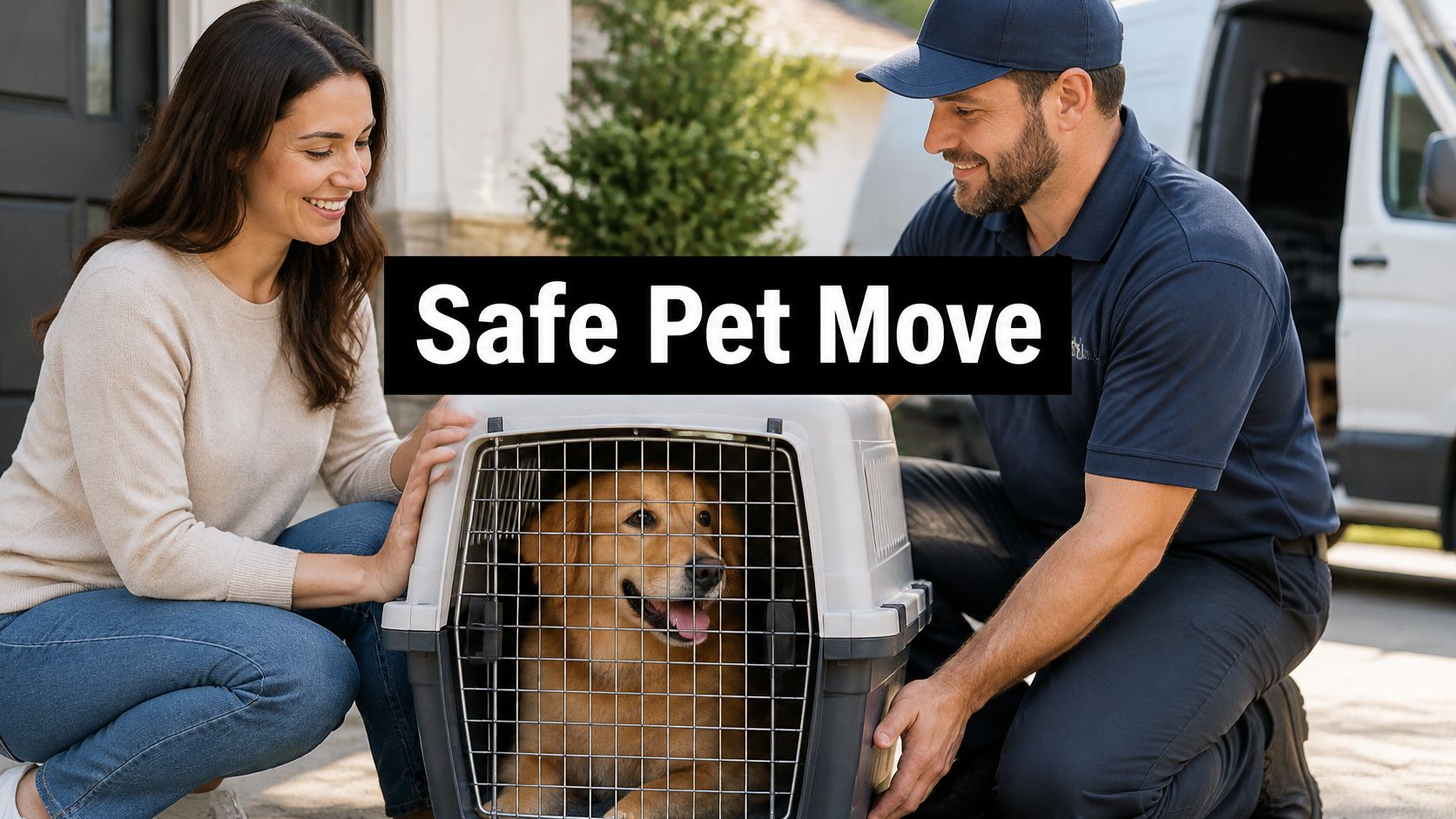
Your house is sold, the closing date is set, and the moving truck is booked. Then someone asks the question you've been avoiding: what happens to the dog? Or the two cats. Or the senior Labrador who can't manage stairs anymore, let alone a twelve-hour drive with a stressed driver at the wheel.
It's easy to start this problem in the wrong place. People open a browser and search for a company, or they assume they'll just drive and figure it out. The better starting point is a welfare question. Who physically holds your pet at each stage of the journey, what conditions are they held in, and who answers for the animal if something goes wrong at hour nine of a fourteen-hour leg? That's not a booking task. It's a risk plan with a schedule attached.
88% of surveyed U.S. dog owners and 90% of cat owners reported traveling with their pets by car in the previous year, according to the American Pet Products Association's 2024 owner insight report. And of Americans who had moved within the previous five years, 60% owned a pet during their move, per Lemonade's Moving Insights Report. Pets travel constantly. What varies enormously is how carefully anyone planned it.
Table of Contents
- Domestic Pet Transport Options Compared
- How Door-to-Door Ground Transport Works
- Flying a Pet Domestically
- Temperature and Handling Limits That Protect Pets
- Vetting a Transport Provider Before You Book
- Seniors, Anxious and Brachycephalic Pets
- Confirm Your Timeline and Request a Written Estimate
Domestic Pet Transport Options Compared
Five options cover almost every domestic move in the United States. Three keep you responsible for the animal; two hand it to a hired driver team.
| Option | Who Handles the Pet | Best For | Main Limit | What Drives the Cost |
|---|---|---|---|---|
| Self-drive with pet | Owner | Short to medium distances and calm pets | Owner fatigue and pet stress on long driving days | Fuel, meals and lodging on your own route |
| Airline cabin | Owner, under the seat | Small dogs and cats in airline-approved carriers | Per-airline size and weight limits and few pet spots per flight | The airline's pet fee plus an approved carrier |
| Airline cargo | Airline staff in a pressurized hold | Larger dogs on longer routes | Less direct contact and restrictions on some breeds | The airline's cargo rate for your route |
| Private ground door-to-door | Hired driver team | Owners who cannot drive or fly the pet, and multi-pet moves | Cost rises with distance and pet count | Route, travel dates, number and size of pets, and the service requested |
| Shared ground door-to-door | Hired driver team in a shared vehicle | Single pets and owners who want door service without a dedicated vehicle | Other animals share the vehicle, so the route serves several deliveries | Route, travel dates, number and size of pets, and the service requested |
Self-drive is the cheapest option in cash and the most expensive in stamina. A calm cat who sleeps in a carrier handles a six-hour day fine. A vocal husky in July does not.
Airline cabin travel keeps your pet within reach but stacks three constraints against you: a carrier that fits under the seat, a weight limit that usually counts the carrier itself, and a handful of pet spots per flight. The airline sets all three, and they differ by carrier and aircraft. Cargo puts a larger dog in a pressurized, climate-controlled hold handled by airline staff, which works well on long routes but removes your direct oversight for several hours.
Ground door-to-door sits at the control end of the spectrum. A crew collects the pet at your old address, drives with planned care stops, and delivers to the new one. Trips run from cross county to cross state line, as private or shared rides, with pickup and delivery included. Pricing depends on the route, travel dates, the number and size of pets, and the service requested. A private ride dedicates the vehicle to your animals; a shared ride combines bookings, so ask how many pets travel together and who answers for yours at each stop.
Decision shortcut: Answer three questions before comparing quotes. How far is the move, how calm and healthy is the pet, and how much hands-on control do you want during transit? The answers usually eliminate two or three of the five options immediately. For either hired-driver option, add a fourth question: who signs for the pet at pickup and at delivery?
How Door-to-Door Ground Transport Works
A ground transporter works like a project manager assigned to one animal's journey. The sequence matters because each stage exists to prevent a specific failure: a missed health requirement, a pet loaded into a hot vehicle, a handoff where nobody on the receiving end expected the animal.
Start the kennel search early, before you book anything. Measure your pet standing, sitting, and turning around, then choose a kennel that allows all three without leaving room to slide during braking. The Petmate Sky Kennel is a common choice sized this way for airline travel, and the same fit rule applies in a van even though no airline checks it. Assemble the kennel at home and let the pet spend time inside it before moving day, so the vehicle is the only new thing that day.
1. Request an estimate. Complete the Pet Transport Quote Request form with pickup and delivery locations, preferred travel dates, and details about each pet. Giving all of it up front prevents a quote that changes later.
2. Describe the animal, not just the address. Age, breed, size, mobility, medical conditions, and medications determine the plan. A twelve-year-old with arthritis needs shorter driving legs and more water stops than a two-year-old.
3. Disclose behavior. Say how the pet acts around people and other animals, what it eats and when, and whether there's any history of anxiety, biting, or escape attempts. This is the detail owners most often soften, and it's the detail that changes how a driver handles a rest stop.
4. Get the quote in writing. A written estimate per pet's trip lets you compare providers on the same terms instead of on the pictures on their website.
5. Let the provider plan the route. Pickup, routing, care stops, and delivery all get scheduled before the driver leaves. Your part is the address detail: gate codes, apartment access, who meets the vehicle at each end, and a phone number someone answers.
6. Stage the pickup. Kennels, water, and paperwork come out before the vehicle door opens. Loading and unloading is its own temperature exposure window, so a provider that lingers curbside in August is telling you something.
7. Run the day on the pet's schedule. On the road, dogs get walked several times daily, cats get regular litter box access, and everyone eats on their home schedule rather than whenever the driver stops.
8. Take delivery deliberately. The pet should arrive with its health records and feeding notes. Walk the dog or open the carrier, check the animal over, and confirm it ate and drank normally on the road before you consider the job done.

At every stage you should know who has the animal and when the next update is coming. If a provider can't answer that at the quote stage, treat the silence as the answer.
Flying a Pet Domestically
U.S. airlines transported 161,335 animals in 2024 and reported 0.81 incidents per 10,000 animals transported, according to the Department of Transportation's full-year 2024 air travel report. Rare, in other words, but not zero, and the industry counts it publicly every month.
Cabin travel requires a carrier sized to the under-seat space, a weight limit set by the airline that often includes the carrier, and one of the few pet spots the flight allows. Book early and call to confirm the spot exists. Cargo places the pet in a pressurized, climate-controlled hold run by airline staff, which means less contact for you and far more weight on the kennel, labelling, and health paperwork. Many airlines restrict or refuse short-nosed breeds in cargo, so get that policy in writing before you commit.
The division of control is worth naming plainly. You control booking timing, kennel fit, routing, and paperwork. The airline controls the hold. If you're working through the cabin side of this, the guide to flying with dogs covers carrier fit and airport handling in more detail.
Connecting flights multiply handoffs. Every layover is another transfer where someone has to move the kennel, verify the paperwork, and keep the animal out of a hot tarmac. Book a direct flight wherever one exists.
Three things to confirm in writing before paying: the airline's live-animal policy for your exact aircraft type, the kennel dimensions against the airline's published acceptance rules, and the airport handling window for drop-off and collection.
Temperature and Handling Limits That Protect Pets
A pet can be fine at the pickup address and still be at risk during the handoff. Heat, cold, humidity, and poor airflow matter more in a vehicle or carrier than owners expect. Age, medical status, coat type, and a flat face narrow the margin further. That makes temperature control a welfare-risk plan, with clear accountability at every transfer.
The AVMA transport guidance recommends an ambient temperature of 45°F to 85°F (7.2°C to 29.5°C) with relative humidity between 30% and 70%, and says temperatures should not stay outside those limits for more than four consecutive hours. It also says to measure at the animal's level inside the vehicle, because the compartment heats and cools differently from the air outside.
| Limit | Threshold | Source |
|---|---|---|
| Ambient temperature range | 45-85°F (7.2-29.5°C) | AVMA transport guidance |
| Relative humidity | 30-70% | AVMA transport guidance |
| Maximum time outside temperature limits | Four consecutive hours | AVMA transport guidance |
| Where to measure | At the animal's level, inside the vehicle | AVMA transport guidance |
| Exposure during loading or unloading | 45 minutes above 85°F or below 45°F | USDA APHIS guidance on transporting animals in commerce |
| Covered transport device in cold weather | Below 50°F (10°C) | USDA APHIS guidance on transporting animals in commerce |

The two sets of numbers do different jobs. The AVMA range addresses the journey itself. The federal loading and cold-weather device limits address short exposure when a pet is being moved between a vehicle and a building. A well-run van can still create risk if the handoff happens on a hot curb with no shade and no clear owner.
Ask where the animal waits, who opens the door, and who decides that conditions are acceptable. A responsible provider should be able to name the person accountable during each handoff, not just the company as a whole. Departure, arrival, and any exception should be recorded in a way the owner can understand.
What to ask: "How do you monitor temperature inside the animal compartment, and do you keep a written log?" A provider who monitors continuously or documents readings regularly can answer in one sentence.
Add safeguards for puppies, seniors, short-haired breeds, and flat-faced dogs and cats, whose respiratory and thermal margins are thinner. Learn the signs of heat stress in dogs before the trip, not during it, and check the temperature threshold at which a dog becomes unsafe before approving a midday August pickup.
Vetting a Transport Provider Before You Book
A license is a starting point, not proof. Neither is the phrase climate-controlled on a website.
Under the Animal Welfare Act, a business that takes custody of an animal and transports it for hire is covered, including both interstate and intrastate moves, as the USDA APHIS guidance on transporting animals in commerce explains. Covered businesses must register with APHIS and follow federal transport standards. A pet traveling in its owner's custody generally isn't regulated under the AWA. That distinction tells you what to ask: not "are you licensed" alone, but "who holds custody at each stage, and does that party fall under federal oversight?"

Then separate regulatory requirements from company promises. Registration is a requirement. Insurance, driver background checks, pet first aid training, and whether drivers stay with the animals overnight are choices a company makes. Any provider should answer all four without hesitation.
Ask for the records a credible operation can produce on request:
- A written itinerary with named handoff points, not just cities.
- Check-in frequency and the channel used, so you know when silence means something.
- Overnight arrangements, including who is physically with the pet.
- Emergency veterinary contacts for the route, not just a national hotline.
- Sanitation procedures for vehicles and kennels between pets.
- Temperature contingencies, meaning what triggers a delay or reroute.
- Incident and delay reporting, and what happens if a pet is rejected, becomes ill, escapes, or can't safely continue.
If you want to understand what licensing covers before you start asking, this explainer on pet transport licensing walks through the distinction between a registered business and a safe one.
A polished site, a license number, and a climate-control claim can all be true at once and still tell you nothing about what happens at 2 a.m. when a pet won't settle. Only the written plan answers that.
Our own intake process asks the same questions a careful owner should: age, breed, size, mobility, medical conditions, and medications before booking, plus behavior around people and other animals, feeding instructions, and any history of anxiety, biting, or escape attempts. Precious Pets Transport Services, LLC has held membership in the International Pet and Animal Transportation Association since 2015, which is a starting credential, not a substitute for the conversation above. Ask any provider what they do with the answers.
Seniors, Anxious and Brachycephalic Pets
The hardest part of transport planning has nothing to do with logistics. It's deciding whether this animal should travel this way at all.
Research on canine air travel found that most dogs coped and recovered well, but a meaningful minority experienced physical, mental, or emotional harm, including death. More than 40% of owners reported feeling very or extremely stressed about their dog flying, and over half did not seek professional advice, according to the study published in a peer-reviewed veterinary journal. The finding generalizes beyond aircraft. A van removes some aviation risks without removing motion sickness, heat exposure, dehydration, or panic.
Here's how that plays out across the cases that need the most thought.
Senior pets. Arthritis, kidney disease, and hearing loss all change what a long drive costs an animal. Get a vet check before travel, plan more frequent water stops, and specify mobility needs so a driver isn't lifting a sore dog without warning.
Brachycephalic breeds. Bulldogs, pugs, Persians, and other flat-faced animals have narrow airways and poor heat tolerance. They need strict temperature control and breathing checks at every stop, and some cargo routes will refuse them outright. Ground transport in a climate-controlled vehicle is often the more sensible choice.
Anxious, reactive, or escape-prone pets. Motion sickness, crate panic, and a history of bolting all belong in the plan, not in the surprises column. Any sedation decision belongs to your veterinarian, who knows the animal's health status, not to you the night before or to a driver at a rest stop. If medication is part of the plan, read up on what's prescribed and why, such as the Bandana Rx guide to lorazepam, then confirm the dose and timing with your vet.
Pets on daily medication. Dose timing has to survive the trip, including time zone changes, and a spare supply should travel with the pet in case of a delay.
Rescues and incomplete histories. Unknown bite history, unknown vaccine status, and unknown anxiety triggers all raise the risk. Budget extra time for a behavior assessment and be conservative about what you claim.
Multi-pet households. Kennel compatibility gets tested before departure. Two dogs who share a bed at home may not share a moving vehicle.
Signs that mean stop and call a vet: labored or noisy breathing, repeated vomiting, unusual lethargy, refusal of water, and any sign of heat stress. A driver who can name those signs before you ask is worth more than one who promises everything will be fine.
Confirm Your Timeline and Request a Written Estimate
Most of the work belongs to you, and it starts earlier than people expect. Use this as a checklist, not a rough guide.
| Timing | Task | Who Leads |
|---|---|---|
| 6-8 weeks before | Choose the option, compare two or more providers, request written estimates | Owner |
| 4 weeks before | Vet fitness check, vaccines and microchip current, health certificate if the destination requires one | Veterinarian |
| 2-3 weeks before | Introduce the carrier or kennel, run short practice trips, keep the routine steady | Owner |
| 1 week before | Confirm pickup window and contacts, pack food, medication and records | Owner |
| Day of move | Final water and feeding timing, ID tag, leash, paperwork in a sealed pouch | Owner and driver |
| After arrival | Check the pet, update the vet, record any delay or incident | Owner |

Two tasks carry more weight than the rest. The six-to-eight-week window is when you compare providers, because availability disappears and last-minute quotes lose their negotiating room. The vet visit at four weeks is when you find out your pet isn't fit to travel as planned, and that's a far better discovery than a cancelled flight.
The sequence holds for ground and air moves alike. What changes is lead time, and airlines need the most. A practice run in the kennel three weeks out tells you more about your cat's tolerance than any product description.
On the day, keep it boring. Time water and feeding so the pet isn't travelling on a full stomach or dehydrated. Check the ID tag, pack the leash where you can reach it, and put every record in a sealed pouch that stays with the animal rather than in a moving box.
After arrival, check the pet thoroughly, let them decompress, and note any delay or incident while it's fresh. That record is what turns a complaint into a pattern.
This week's action is one form and one comparison. Submit the Pet Transport Quote Request form with pickup and delivery addresses, travel dates, and details for each pet, then hold the written itinerary against the vetting questions above before you pay a deposit. An online pet transport estimate tool makes the first step quick, and Precious Pets Transport Services, LLC is one provider worth putting on the comparison list.
Precious Pets Transport Services, LLC has moved dogs and cats door to door across the continental United States since 2004, with private and shared ground rides, climate-controlled vans, sanitized kennels, and drivers who stay with the animals overnight. Every move starts with a written estimate built from your pickup and delivery locations, travel dates, and each pet's age, breed, size, mobility, and medical needs, so the plan fits the animal rather than the schedule. If you're weighing options for your own move, visit Precious Pets Transport Services, LLC to request an estimate and get a written plan you can compare against anyone else's.
Leave a Reply