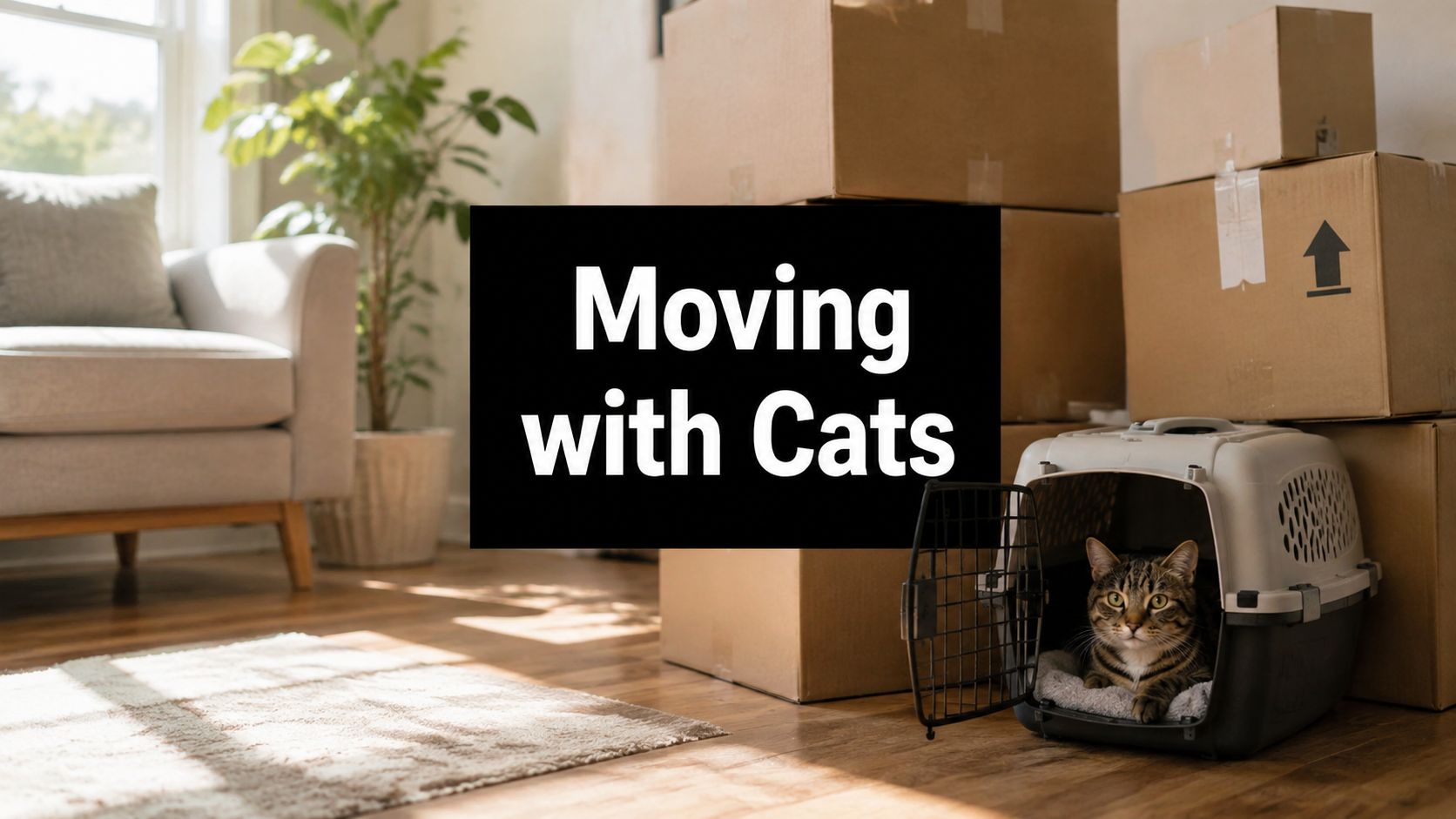
You're standing in a hallway full of boxes, the cat has vanished under the bed, and the movers are already asking where to put the sofa. That's the actual starting point for how to move with cats, not a tidy checklist on a fridge. Cats don't understand moving day, they read it as a threat to territory, routine, and safety, which is why the job works best when you treat it like a four-phase containment workflow, not one chaotic event.
The workflow is simple: prepare, transport, isolate, expand. If you try to skip straight to “put the cat in the carrier,” you usually get scratching, bolting, hiding, or a miserable ride. If you stage the move properly, the cat gets a predictable sequence, and predictability is what cats trust.
Table of Contents
- The Cat Owner's Moving Day Reality Check
- Vet Visits, Paperwork, and ID Updates Before the Move
- Carrier Training So Move Day Is Not a Wrestling Match
- Choosing How Your Cat Actually Travels
- Moving Day Protocol for the Cat
- Settling In at the New Home
- Your Cat Moving Timeline and When to Call the Pros
The Cat Owner's Moving Day Reality Check
The key failure point on moving day is usually the same. People manage boxes, schedules, and movers, then leave the cat's containment plan until the last minute. That creates avoidable stress. The cat should already be staged for movement before the first heavy item leaves the old place.

The mistake many people make is treating the carrier as the whole plan. It isn't. A cat move works in four phases, prepare, transport, isolate, expand, and each phase has to happen in order if you want the cat to stay controlled and recover quickly.
Carrier acclimation belongs in the prepare phase, long before the movers show up. Multi-cat homes need sequencing too. One cat can be staged first while the others stay separated, so you do not create a pileup of escape attempts, hissing, and open doors at the exact moment everything else is already noisy.
Practical rule: put the cat away before the movers arrive, while the room is still calm and the doors are still controlled.
Transport is where people either stay disciplined or lose the whole day. The cat needs a secure carrier, a direct route, and a driver who is focused on the cat rather than the boxes. If the trip is long, rough, or requires crossing a lot of distance, a ground transport service can earn its keep because it removes a layer of handling and keeps the cat under one controlled plan instead of several rushed handoffs.
After arrival, the first job is isolate, not explore. Set the cat up in one closed room with litter, water, food, and familiar bedding, then leave the rest of the house off-limits until the cat is eating, using the litter box, and moving normally. That same discipline matters for outdoor cats too, because reintroduction has to wait until the cat has learned the new indoor territory and stopped acting like the house is a temporary shelter.
If you want a practical checklist that stays focused on the move itself, the Pet Magasin guide to moving with cats stays useful because it keeps the attention on the trip and the handoff instead of drifting into theory. Read it for the moving sequence, then build your own day around containment first and freedom later.
Vet Visits, Paperwork, and ID Updates Before the Move
Book the vet before you book the moving-day panic. A clean move starts with a cat that's healthy enough to travel, current on identification, and traceable if something goes wrong. If you're crossing state or national borders, the paperwork matters even more, and the wrong folder in the wrong box is a stupid problem you can prevent in ten minutes.
What belongs in the travel folder
Put the essentials together and keep them with you, not in the moving truck. That means the cat's health records, vaccination paperwork, microchip information, and any travel documents you've been told to bring. I also want the carrier bag to hold a printed emergency contact list and a recent photo of the cat, because the photo is often the fastest way to help if the cat slips out.
A lot of owners leave the identity updates until the end. Don't. Update the microchip registration with the new address and phone details before the move, because a chip with stale contact information is almost as useless as no chip at all. If the cat wears a collar, make sure the tag details are current too.
A sedated cat isn't a substitute for a calm plan. If your vet doesn't explicitly recommend medication, don't try to solve anxiety with guesswork.
How to time the appointment
Aim to have the wellness check done early enough that you can fix any issue without rushing. If your cat needs documents for a long trip or a border crossing, schedule early enough to leave room for corrections, signatures, and reprints. If you're using air travel, verify the airline's exact rules well before you're packed, because carrier requirements and documentation expectations are not the same across carriers.
If the move is international or complex, the paperwork can become the bottleneck. A hard-sided travel crate like the Petmate Sky Kennel can fit that role when properly assembled with metal hardware and airline-compliant accessories, and it's one of the standard options people use for domestic and international flights. Don't buy the crate after you've already scheduled the move, buy it early enough to train the cat into it.
A simple document order
- Vet visit first. Confirm the cat is healthy enough to travel and ask what travel-specific paperwork is needed.
- Update the microchip next. Use the new address and phone number before move day.
- Pack the folder last. Keep documents in your carry bag, not the moving van.
If you're the kind of owner who wants protection before the trip, Spot Pet Insurance is one option to consider because its coverage is customizable for dogs and cats, and its travel-friendly appeal is the flexibility it gives you before departure. I'd treat insurance as a backstop, not a substitute for the vet visit.
Carrier Training So Move Day Is Not a Wrestling Match
A carrier should sit in the house like ordinary furniture, not like an ambush tool. Start weeks ahead, leave it out, and let the cat decide that it belongs in the room. The common mistake is dragging it out the night before and expecting trust by morning.
Make the carrier part of the room
Leave the carrier open in a familiar spot with bedding inside and a few treats nearby. The cat gets to investigate on its own terms, and the carrier stops being something that appears only when trouble starts. If your cat already distrusts the carrier, stop forcing repeated showdowns. Each forced attempt makes the next one harder.
Use food as the bridge. Put meals near the carrier first, then at the entrance, then inside with the door open. Once the cat walks in willingly, close the door for a few seconds, then longer, then pair that closed-door time with calm handling so the cat learns that confinement does not always lead to upheaval.
Carrier acclimation needs time, not a last-minute sprint. If you are still at square one, the move is already asking too much of the cat. For a practical prep guide that stays focused on travel behavior, preparing a pet for travel is worth reading alongside your own training plan.
Train the trip, not just the box
Short, uneventful car rides matter because they teach the cat that motion does not always end in disaster. Keep the carrier secure in the car, finish feeding well before travel, and never treat the carrier itself as the cue for panic. Hill's Pet specifically recommends securing the carrier with a seat belt or a stable wedge and not using cargo space or a moving truck for transport.
If your cat already freezes at the sight of the carrier, change the carrier style instead of turning every loading attempt into a battle. Top-loading or soft-sided carriers usually work better for cats that lock up, while hard-sided carriers make more sense for air travel and rougher handling. Choose the tool that fits the trip, not the one already sitting in the closet.
Multi-cat households need a sequence, not a scramble. Train each cat separately, load the most reactive cat first, and keep the others out of the room until the first carrier is closed and secured. That keeps one cat from reading the others' panic and escalating before the vehicle ever starts.
Useful test: if you need gloves and two people to load the cat, you started carrier training too late.
Ground transport services only pay for themselves when the move is long, the cat is highly stressed, or your own schedule leaves no room for a measured handoff. If your cat needs a quieter, supervised ride than your own vehicle can provide, choose a provider with clear crate handling and direct route planning. That is the point where a service like Precious Pets Transport Services, LLC earns its keep, because the cat gets containment without a chaotic loading scene.
Choosing How Your Cat Actually Travels
Pick the travel mode by what it does for the cat, not by what looks simplest on a booking screen. Car, air, and professional ground transport solve different problems. The wrong choice adds stress before the move even starts, and that stress is what cats remember.
Car travel
For most local and regional moves, a car is still the cleanest choice. It keeps the cat close, lets you control the temperature and noise, and avoids extra handoffs. Use a secured carrier on the back seat, keep the ride steady, and leave the cat alone once the door is closed.
If you have a moving truck, keep the cat out of it. A truck is loud, uneven, and usually the worst possible place for a cat that needs stable conditions. If you are driving, the cat rides in the car with you.
Air travel
Air travel only makes sense when distance or borders force it. It brings more paperwork, more rules, and fewer chances to fix mistakes. Cabin space is limited, and some routes do not allow cats in the cabin at all. One moving account notes that cats cannot enter the UK in the cabin and must travel in the hold on direct flights there moving a cat from the US to the UK.
That setup is hard on cats that already dislike confinement, noise, or strangers handling their carrier. Air travel can work, but only if the route, airline policy, and your cat's temperament line up before you buy the ticket.
Professional ground transport
Professional ground transport makes sense when the drive is long, your schedule is tight, or the cat is too anxious for a do-it-yourself trip. It also helps in multi-cat households, where separate handling and staggered loading reduce chaos. A service like pet transport planning for cats gives you a direct handoff and removes the part of the move where cats usually get rattled, which is the loading and loading-again routine.
This is the option I recommend when the cat needs calm handling more than it needs your presence in the front seat. It costs more than driving yourself, but it pays for itself when it prevents a meltdown, keeps the cat contained, or saves you from trying to manage transport while everything else in the move is already on fire.
Transport Mode Comparison for Moving With Cats
| Transport Mode | Travel Time | Stress Exposure | Paperwork Burden | Best Fit |
|---|---|---|---|---|
| Car | Usually the most flexible | Lower when the cat rides with you in a secured carrier | Moderate | Short to medium moves, cats that do well with routine |
| Air | Fast on paper, but slow in planning | Higher because of handoffs and airport handling | High | Long-distance or international moves with tight logistics |
| Professional ground transport | Depends on route and schedule | Lower than a do-it-yourself drive for many cats | Moderate | Senior cats, anxious cats, multi-cat homes, owners who can't drive |
Choose the route that keeps containment simple, loading calm, and handoffs limited. That is what protects the cat.
Moving Day Protocol for the Cat
Move day works best when you treat the cat like a staged containment job, not a loose household errand. Lock the cat into one safe room the night before, and keep that room closed while the rest of the house turns into a loading zone. Put the litter tray, water, food, bed, and carrier in place before anyone starts carrying boxes through the hall. That is the setup that keeps cats from vanishing into cupboards, slipping past open doors, or melting down under noise.

The order matters
Move the cat last out of the old home and first into the new safe room. Handing the cat to movers is a mistake. Leaving the carrier loose in the car is a mistake. Feeding a full meal right before travel is another one, because an upset stomach and a stressed cat make a bad combination on moving day.
Pack a travel bag for the day with wipes, a spare liner, basic food, water, the recent photo, the collar information, and the paperwork folder. Keep it where you can grab it without digging through boxes. In multi-cat homes, load and unload one cat at a time so nobody gets jostled, swapped, or released into the wrong room.
If you have a cat that needs ground transport instead of a do-it-yourself drive, use it for the handoff and keep the rest of the move focused on containment. That is where a service like pet transport planning for cats earns its keep. It strips out the most stressful part of the day, the loading and re-loading routine, and gives the cat one controlled transfer instead of a series of chaotic ones.
If the cat bolts
Do not chase in a panic. Shut down the other exits, tell movers to stop opening doors, and get one person on cat duty while everyone else stays out of the way. Use the familiar photo and your own voice to check hiding spots, because cats usually go tighter into cover when people rush around.
A calm room-by-room search works better than a frantic sweep. Stay low, check behind furniture, inside open boxes, and under anything the cat could wedge into. If you need a fuller recovery plan after a slip-out, use this lost cat recovery guide as a practical reference.
Best habit: take a new photo of the cat before the move, while you can still see the collar, markings, and face clearly.
Sedation without vet approval is a bad idea. It can complicate travel, hide a problem, and leave you with a groggy cat in a strange place. If your vet recommends medication, follow the vet's instructions exactly. If not, stick to the carrier routine, the locked safe room, and the controlled loading sequence.
If the old home still has litter smells or marking issues, deal with cleanup early. A resource like Birmingham cat urine carpet experts is useful when you need the old space properly cleaned before handoff or want the new place protected from repeat marking.
Settling In at the New Home
The new house can be quiet and still feel wrong to a cat. Treat the first days as a containment workflow, not a free-for-all. Prepare one room, transport the cat straight into it, isolate there first, then expand the territory only when the cat is using the litter box, eating, and moving without constant crouching.
Build the first room before you open the carrier
Set up the first room before the carrier door opens. Use the litter box, food, water, bed, and carrier in that room, then add something with the old home's scent, like a blanket, bed, or towel the cat has already slept on. Keep the room quiet, keep people out, and let the cat choose when to come out.
If the cat is in a multi-cat home, do not stack everyone into the same starting space and hope it sorts itself out. Give each cat a sensible sequence, especially if there was already friction at the old address. The nervous cat gets a smaller, calmer start. The more confident cat can wait.
If the move left you with litter or odor problems at the old place, deal with cleanup early. A resource like Birmingham cat urine carpet experts can be helpful when you need the old space properly cleaned before handoff or the new place protected from repeated marking.
Expand territory with discipline
Open one more room only after the cat is reliably eating, using the litter box, and walking around without acting trapped. Then add the next room. Do not swing the whole house open because the cat looked brave for a short stretch. That is how you turn a careful move into a territorial mess.
Keep the expansion boring and predictable. Same routine, same feeding spots, same litter access, same order. Cats settle through repetition, not encouragement.
Outdoor cats need harder rules. Keep them indoors first, then reintroduce outside access gradually only after they have settled and know the new home is safe. UK welfare guidance warns that 15% of cat owners lost their pet within a five-year period, and it recommends keeping indoor/outdoor cats inside for at least four weeks after a move before easing them back out moving house cat welfare guidance. The point is simple, rushing the door open is a bad trade.
If the cat slips out or vanishes inside the new place, use a proper recovery plan instead of tearing the house apart in panic. The step-by-step search process in this lost cat recovery guide is the right place to start.
Your Cat Moving Timeline and When to Call the Pros
Print this timeline and keep it visible. The win here is not speed, it's sequence.
Pre-move
| Timing | Action | Why It Matters |
|---|---|---|
| 4 to 8 weeks before | Book the vet, update microchip details, start carrier training | Gives you time to fix problems before the move |
| Several weeks before | Leave the carrier out and feed near it | Turns the carrier into ordinary territory |
| Before moving day | Decide whether car, air, or professional ground transport fits the route | Prevents last-minute mode changes |
Move day
| Timing | Action | Why It Matters |
|---|---|---|
| Night before | Set up one safe room | Keeps the cat contained while the house gets busy |
| During loading | Keep the cat away from doors and movers | Reduces bolt risk |
| Final step | Move the cat last from the old place and first into the new safe room | Limits exposure to chaos |
Post-move
| Timing | Action | Why It Matters |
|---|---|---|
| First 72 hours | Keep the cat in one room, then expand slowly | Lets the cat settle without territorial overload |
| First two weeks | Keep the cat indoors and watch litter, appetite, and hiding behavior | Catches adjustment problems early |
| After about one month for outdoor cats | Reintroduce outside access gradually | Reduces the chance of disappearance |
If you need a reason to hire a pro, use this rule. Hire one when the move is long-distance, international, involves a senior or anxious cat, includes multiple cats, or makes personal driving unrealistic. That's where professional ground transport stops being an indulgence and starts being the sane decision.
For families who want a full-service ground option, Precious Pets Transport Services, LLC provides door-to-door pet relocation for domestic and international moves, with climate-controlled vans and routine-based care that fits this exact kind of transition. If you're trying to move with cats without turning the day into a disaster, ask them for an estimate and compare that option against the stress of doing it yourself.
Leave a Reply