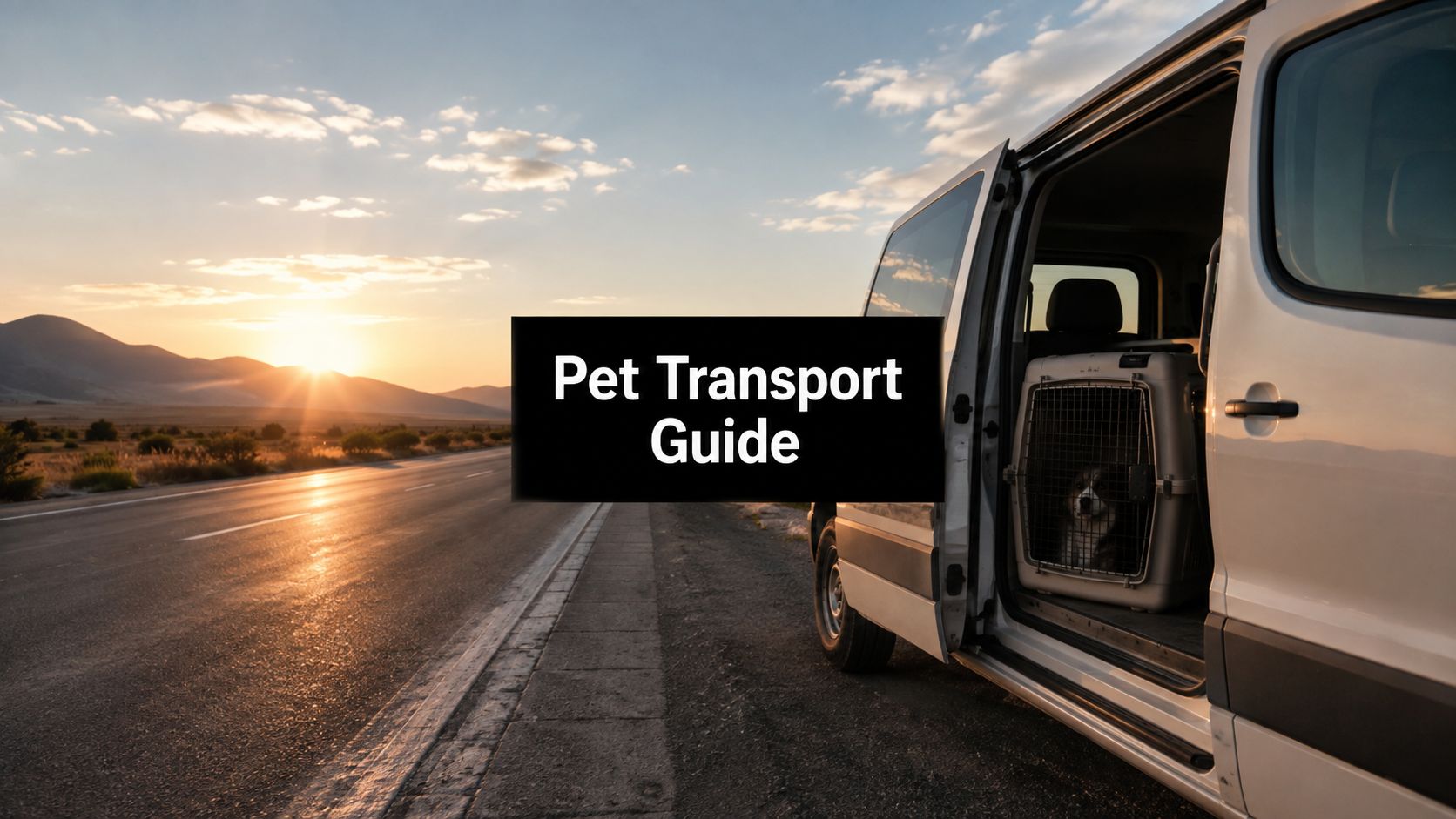
You're staring at moving boxes, a nervous pet, and a move date that won't wait. The wrong move is treating cross country pet transportation like a simple booking problem. It isn't, it's a logistics project, and the pet comes first.
Table of Contents
- Mapping Out Your Pet's Cross Country Move
- What Cross Country Pet Transportation Costs
- Choosing Between Ground, Air, and Hybrid Transport
- Preparing Your Pet and Paperwork Weeks Before Departure
- Running a Smooth Travel Day From Pickup to Rest Stop
- A Real-World Cross Country Move and the First 72 Hours After Arrival
- Final Checklist and Questions Owners Ask Before Booking
Mapping Out Your Pet's Cross Country Move
Book transport too early and the whole move gets messy. Cross country pet transportation works best as a staged logistics project, not a single reservation. The vet, the crate, the documents, the route, and the feeding plan all have to fit together before anyone starts the trip.
Start with the four-phase plan
Start with consultation, vet review, document reconciliation, and route design. That order matters because a route that looks fine on paper can fail if the vaccine record does not match the health certificate, or if the crate is the wrong size for the animal to settle in. Independent guidance also says to verify that vaccine records, health certificates, and import or export paperwork all match exactly, then practice crate time before departure and keep feeding and daily routines steady on travel day, according to Pet Adventures' cross-country pet transport guidance.
Lead time matters more than mileage. One relocation guide recommends booking 2 to 4 weeks ahead, while another recommends a 60-day planning window for veterinary needs and acclimation, which tells you the bottleneck is preparation, not distance, according to Cross Country Moving USA's moving-with-pets guide. A solid planning window also gives you room to compare routes and avoid paying rush pricing when a calm schedule would have done the job better.
If you want a plain-English breakdown of what tends to drive the bill up or down, this cross-country pet shipping cost guide is a useful reference point. Use it to pressure-test every quote against the actual handling model, not just the headline number.
Practical rule: Build one master checklist and make every decision feed into it. If a detail does not affect the paperwork, crate fit, feeding plan, or route timing, it is not a priority.

Make the checklist do real work
A checklist only helps if it forces decisions early. If the destination state wants a different document format, you need to know that before pickup is on the calendar. If the crate is too large or too tight, fix it before the animal starts associating the carrier with stress.
The schedule should answer four questions without hesitation. What does the vet need to confirm? What documents need to match? What crate will fit? What route keeps the animal's day predictable? If those answers are not clear, the transport is not ready to book.
The usual failure point is simple. The paperwork says one thing, the crate fits another way, and the schedule asks the pet to tolerate too many hours at once. That kind of mismatch is how people end up with delays, refused boarding, or avoidable distress.
What Cross Country Pet Transportation Costs
Getting a quote and still not understanding what you're paying for is a bad sign. A serious transport budget should explain distance, handling model, pet-specific needs, and whether the trip is private or shared.
Read quotes as a bundle of decisions
A neutral guide places ground transport at $0.50 to $1.60 per mile, which translates to roughly $1,500 to $6,400 for a cross-country move, according to Pet Works' cost guide. Those ranges are wide because the quote is not just fuel and mileage, it also covers handling, timing, and how much care the animal needs on the road.
A separate pricing breakdown for shipping pets across the country puts a 2,000 to 3,000 mile trip at $3,600 to $5,200 and says 4,000+ miles can exceed $6,800. That lines up with how staged pet transport is priced in practice. Longer routes cost more because they require more hands-on care, more route coordination, and more time keeping the pet fed, hydrated, and settled.
What pushes the price up? Pet size, schedule urgency, medical needs, private versus shared service, and seasonal demand. If a transporter has to work around a tight pickup window, coordinate special handling, or manage a pet that needs extra attention, that gets reflected in the quote. If the trip is shared, some costs may soften, but the schedule usually becomes less flexible.
| Trip Distance | Typical Cost Range | Main Price Drivers |
|---|---|---|
| Cross-country ground transport | $0.50 to $1.60 per mile, roughly $1,500 to $6,400 | Distance, pet size, route, timing, shared or private service |
| 2,000 to 3,000 miles | $3,600 to $5,200 | Route length, urgency, medical or comfort needs, service model |
| 4,000+ miles | $6,800+ | Very long routing, scheduling complexity, seasonal demand, special handling |
The right way to budget is blunt. Take the quote, ask what's included, then ask what changes the number. If they cannot explain the cost drivers in plain English, keep shopping. A decent pricing framework should let you compare options and immediately see where one transporter is padding the total.
Stress-test the estimate
Before you commit, test the quote against three scenarios. What happens if pickup slips, if the pet needs extra rest, or if the route changes because of weather? A transparent transporter can answer those questions directly.
If the estimate feels vague, it usually is. The cheapest quote is a bad choice if it leaves out the details that keep the animal calm and the move on schedule.
Choosing Between Ground, Air, and Hybrid Transport
The wrong transport method can make a healthy pet miserable. The right one fits the animal's body, temperament, and destination rules. Don't start with your preference. Start with what the pet can handle.
Ground works when time and handling matter
Ground transport is the most straightforward option for pets that hate airports, do better with predictable handling, or need repeated rest stops. One route-based guide says team-driver ground transport can cut trip time by 40 to 50 percent compared with a single-driver route, according to WorldCare Pet's transportation guidance. That shorter duration can matter a lot for anxious animals and for owners who want less time in transit.
Ground also gives you more control over the care cadence. If the transporter is staying with the pet overnight and logging breaks sensibly, the trip can feel much more controlled than air. Precious Pets Transport Services, LLC is one example of a door-to-door ground provider that uses climate-controlled vans, sanitized kennels, bottled water, and overnight supervision, which is the kind of service model that fits this category when a ground move is the right choice.
Air is about speed, but speed has trade-offs
Air travel makes sense when time is the priority and the pet is a good candidate for cargo handling or cabin travel. It's efficient, but it's not automatically gentler. Air introduces airport handoffs, cargo rules, and a level of separation some pets don't tolerate well.
If you're considering air, the crate matters. A proper airline crate should let the animal lie down comfortably, sit upright without touching the top, and turn around fully, and the Petmate Sky Kennel is one of the crates commonly used for airline pet travel when properly assembled with metal hardware and airline-compliant accessories. That doesn't make it magic. It just means the container has to support the trip instead of becoming the problem.
Hybrid solves the edge cases
Hybrid routing is the smartest answer for long, awkward, or requirement-heavy moves. A short flight plus a ground leg can reduce stress when a full ground trip is too long, but a full air route isn't ideal either. It's especially useful when destination rules, airline limits, or a pet's health profile make a single method a bad fit.
Decision rule: Choose the method that reduces stress without creating new handling problems. A faster trip that leaves the pet frantic is not a better trip.
For dogs and cats with special concerns, this decision matters even more. Brachycephalic breeds, seniors, and anxious pets don't need generic advice, they need a method matched to the individual animal and the trip length. If you want a deeper look at method selection, the ground-travel framework in this dog transport guide is worth reading alongside your quotes.

Ask the transporter five hard questions
- Who handles the pet during handoffs? You want a named process, not a shrug.
- How are rest periods managed? The answer should fit the animal, not just the route.
- What happens overnight? If nobody can explain supervision, move on.
- What documents are required for this exact route? Generic answers waste time.
- What would make you recommend a different method? Good operators know when to say no.
Preparing Your Pet and Paperwork Weeks Before Departure
The crate and the paperwork should be settled well before departure day. Leave either one until the last minute, and you force the pet to adapt while you are still chasing forms, signatures, and travel approvals.
Fit the crate to the animal, not the other way around
The crate has to support the pet's body without squeezing it. The standard is simple. The animal should be able to lie down comfortably, sit upright without touching the top, and turn around fully. If a pet cannot shift positions naturally, the crate is the wrong fit.
Start acclimation with short sessions and build up to longer periods inside the crate. That progression matters because the crate needs to feel routine before the trip starts. If the animal only sees the crate on departure day, you are asking for stress you could have prevented.
Reconcile the documents early
A clean travel folder should include the health certificate, vaccine records, and any import or export forms required by the destination. Keep paper copies and digital backups together so you can reach them quickly at pickup, during stops, and on arrival. The USDA health certificate guide for dogs is useful if you want a clear view of how the certificate fits into the larger paperwork stack.
Required: If a document has the wrong name, date, or destination detail, fix it before the trip. “Close enough” does not work here.
Lock in the health and routine details
Updated ID tags and fresh microchip registration are dull until something goes wrong. Then they matter a lot. If a carrier, crate, or handoff goes sideways, recovery is much easier when identification is current.
Feed lightly before departure and avoid a heavy meal right before the move. A practical feeding rule from relocation guidance is to give a light meal 3 to 4 hours before departure and offer water instead of food in motion. That keeps the stomach calmer and lowers the chance of motion-related nausea.
For the rest of the prep, keep the priorities straight:
- Vet review first: Confirm the pet is fit to travel and that any special needs are addressed.
- Paperwork second: Match every name, date, and destination detail before you hand anything over.
- Crate practice third: Build tolerance in stages, not all at once.
- Routine fourth: Keep feeding, handling, and bedtime as normal as possible.
Running a Smooth Travel Day From Pickup to Rest Stop
Travel day has to run like a staged logistics job, not a casual handoff. If pickup is messy, the rest of the route usually turns messy too. A good transporter runs on timing, clear ownership, and a calm handoff.
Use the pickup window to set the tone
Professional ground services usually work from a 2 to 4 hour pickup window, with status updates every 6 to 8 hours and stretch or walk breaks every 2 to 3 hours. That cadence should be easy for a provider to explain before you book. If they cannot spell out how pickup, breaks, and updates are handled, they are not running a disciplined route.
The schedule is not just about convenience. Long-haul planning should build in breaks every 2 to 4 hours, and the driver should avoid pushing the day too hard when possible, because long stretches raise stress, dehydration risk, and motion sickness. That is the baseline for keeping a pet steady on a cross-country run.
Pack a separate go-bag
Keep your travel bag with you, not buried in the transport vehicle. Put water, a leash, a small towel, copies of records, and comfort items in it. A worn T-shirt or a familiar toy gives the pet something recognizable in a day that already feels unfamiliar.
Do not overfeed. Do not overload the crate. Do not change the plan halfway through because you feel rushed. Pets read timing and tone fast, and they do better when the day stays predictable.
Watch for the operational mistakes
The most common failure is still simple. The paperwork says one thing, the crate does not fit right, and the schedule has no room for delay. That mismatch creates avoidable pressure for everyone involved.
A calm travel day comes from boring execution. Correct documents, a proper crate, sensible breaks, and a driver who respects the animal's routine beat clever shortcuts every time.
If the transporter is staying overnight, ask who stays with the animals and how supervision works. If the answer stays vague, treat that as a red flag. Constant care is not a luxury, and it should never be treated like one. That same practical mindset also helps when you compare the human side of the move with a pet-friendly Florida vacation guide.
A Real-World Cross Country Move and the First 72 Hours After Arrival
A family leaves Virginia for the Pacific Northwest with a senior dog and an anxious cat. They don't try to force both animals into the same travel pattern just because it's convenient for the humans. They stage the move around the pets' tolerance, then choose a ground plan that keeps handling simple and overnight care consistent.
What a smooth handoff looks like
Pickup happens after the paperwork has already been checked, not while everyone is still sorting forms. The driver confirms the crate, the records, and the contact numbers, then the pets go into a controlled environment with water, familiar bedding, and a routine the family already established. That's the difference between managed transport and wishful thinking.
A good post-arrival handoff is quiet. No crowd, no chaotic introductions, no immediate pressure to “explore the new place.” The pet gets space first.
How the first 72 hours should look
The receiving home should set up a decompression room with water, bedding, and a familiar feeding routine. Keep the cat separated until the environment feels less strange, and reintroduce other pets slowly. Watch for stress signs that don't resolve quickly, and call a vet if something feels off.
That same family also uses a nearby rental guide to plan the human side of the move more intelligently, including a useful pet-friendly Florida vacation guide when they're thinking through longer-term stays and future trips. It's a reminder that the pet move doesn't end at arrival. The destination environment matters too.
The first 72 hours aren't for bragging about the journey. They're for letting the animal land. If you keep the room quiet, the routine steady, and the introductions slow, the pet usually settles much faster than families expect.
Final Checklist and Questions Owners Ask Before Booking
Book only after the timeline, cost, and transport method all line up. If one piece is off, stop and fix it. A rushed booking is how people end up paying for avoidable mistakes later.
Final booking checklist
- Timeline is real: Vet review, document check, crate acclimation, route design.
- Costs are explained: Distance, pet size, transport method, and added services.
- Method fits the pet: Ground, air, or hybrid based on the animal's profile.
- Questions are answered: Licensing, insurance, driver screening, first aid, updates, and overnight handling.
If you want added financial protection before a move, Spot Pet Insurance offers customizable accident and illness coverage for dogs and cats, with flexible reimbursement options, multi-pet discounts, and access to any licensed veterinarian, which makes it a practical option for domestic or international travel planning.
Questions to ask before you pay
- What is your cancellation policy?
- How will I receive updates during transit?
- What is the contingency plan for delays?
- Who is with my pet overnight?
- Are your drivers background-checked and trained in pet first aid?
If you want broader veterinary coverage with optional wellness rewards, Embrace Pet Insurance is another option worth reviewing before a long move, especially if you want flexible reimbursement and routine-care support built into the plan.
Short answers to the questions people ask most
When should I book? As early as you can, because the planning window affects everything from health paperwork to crate training.
Is ground or air better? Pick the method that creates the least stress for your specific pet, not the one that looks easiest for you.
What matters most on travel day? Clean paperwork, proper crate fit, sensible breaks, and a transporter who follows the care plan.
If you want a team that handles domestic and international pet relocation with door-to-door ground transport, climate-controlled vans, vetted drivers, and overnight care, visit Precious Pets Transport Services, LLC. They work with the same kind of logistics this guide lays out, and they can help you turn a stressful move into a controlled one.
Leave a Reply