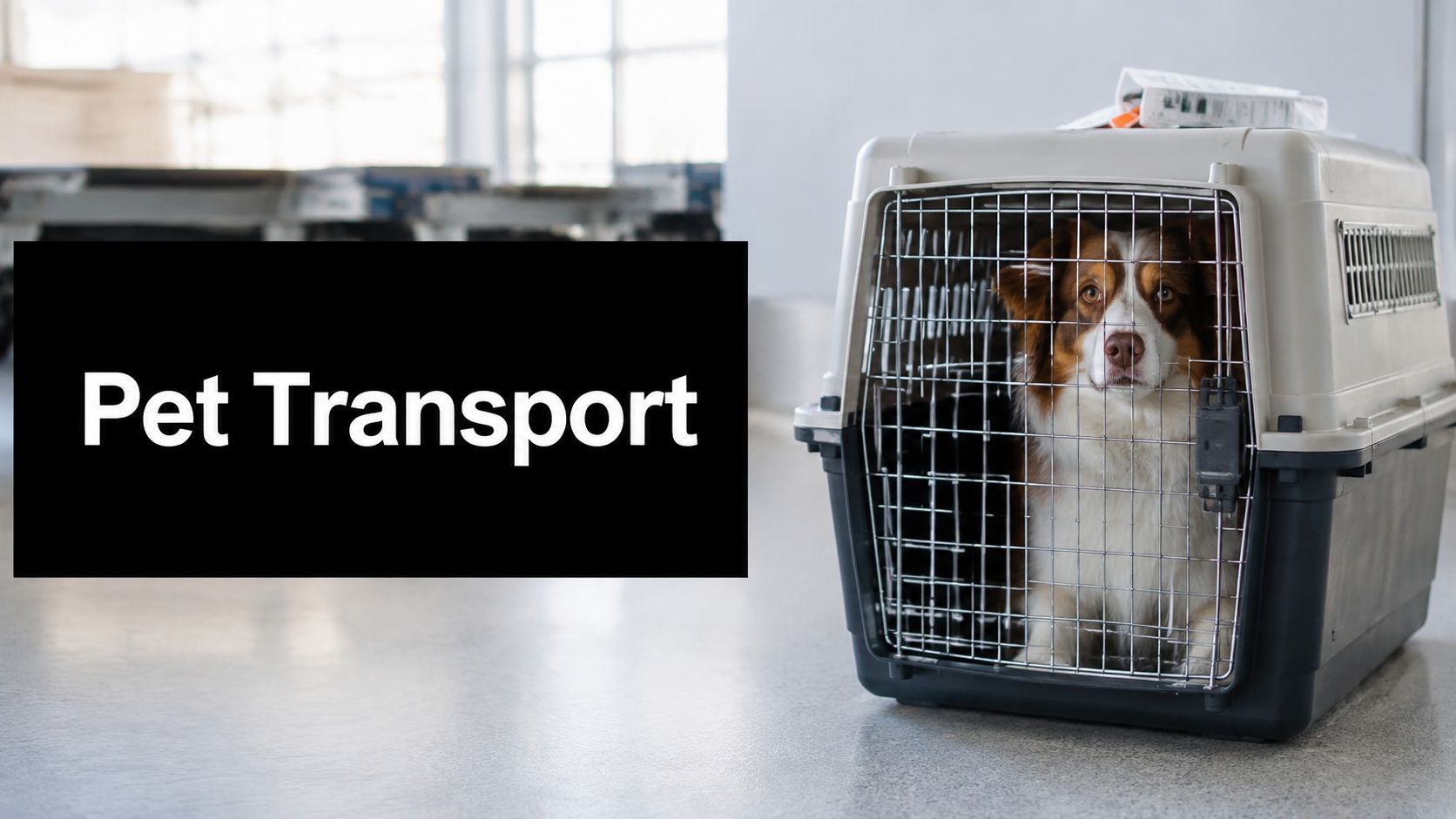
The first sign that this is no longer a simple family drive is usually small. The dog gets queasy after four hours, the route crosses too many state lines, and everyone at the kitchen table starts asking the same question, where do we even begin? That's the moment pet transport services get typed into a search bar, then the airline gets called and it's realized fast that the pet is not really the passenger. The pet is the cargo, the schedule, the paperwork, and the welfare responsibility.
A move like that needs a coordinator, not just a ticket. It needs someone to track whether the route is domestic or international, whether the destination requires a federally endorsed certificate, whether the kennel fits the animal correctly, and who hands the pet off at the other end. USDA explains that most countries require pets to arrive with a health certificate, and that the United States doesn't issue pet passports because entry rules vary by destination (USDA pet travel guidance). That's why this kind of move behaves more like a logistics project than a booking task.
If you're staring at a calendar, a carrier, and a worried dog or cat, the decisions are already forming. You have to choose the mode of transport, the paperwork jurisdiction, the budget envelope, and the person who handles the handoff at destination. Everything else sits underneath those four choices.
Table of Contents
- The Moment a Move Becomes a Pet Project
- What Pet Transport Services Do
- Comparing Ground, Air, and Cargo Options
- Domestic and International Compliance Essentials
- 2026 Cost Ranges and Realistic Timelines
- Preparing Your Pet for the Journey
- Specific Advice for Military, Movers, Breeders, and Seniors
- Questions Smart Owners Ask Before They Book
The Moment a Move Becomes a Pet Project
A family of four packs the car for a cross-country move, but one detail keeps changing the plan. Their 60-pound mixed-breed dog gets carsick once the drive stretches beyond the four-hour mark, and nobody wants to spend days stopping to clean the back seat. By the second night of hotel reservations, the question changes from whether they can keep driving to who can move the dog safely and legally.
That is usually the point where pet transport services become part of the plan. The first instinct is to call the airline and ask about the dog the way you would ask about a suitcase, but that misses the core issue. The animal is the regulated shipment, and the route has to satisfy welfare rules, airline rules, and destination rules at the same time.
Why this move needs a project plan
USDA notes that dogs and cats generally must be at least 8 weeks old and fully weaned before air transport, and that only limited combinations of young pets can share a kennel (USDA pet-air guidance). Rules like that change the timeline before anyone books a flight. A puppy that is too young, or a kennel setup that does not meet the carrier's standard, can stop a move that looked simple on paper.
Practical rule: if the move involves borders, breeds with airline restrictions, or a pet that does not tolerate long drives, treat the relocation like a project with a compliance calendar.
That project has several pieces. Someone has to confirm the route, someone has to verify the health paperwork, and someone has to plan for what happens if the pet cannot fly on the original day. The earlier those checks begin, the fewer surprises show up at check-in.
A good starting point is a pet transportation services guide, especially if you are comparing service levels for the first time. Once the move starts affecting the animal's health, the owner's calendar, and the destination's rules, it stops being a personal errand and starts working like a logistics job.
What Pet Transport Services Do
At their core, pet transport services act like a project manager for a move. They do more than carry an animal from one address to another. They line up the pieces that have to fit before travel can happen, starting with species, breed, weight, origin, destination, and timing. Those details decide whether a route is workable at all.
A managed provider usually begins with a consultation, then checks the route, the paperwork, and the handoff points. The work often includes quote preparation, route selection, kennel guidance, booking, status updates, and final delivery. Some providers handle the full chain themselves. Others coordinate the job and pass the driving or handling to a subcontractor. A self-managed move leaves every step with the owner, including the timing and compliance checks.
A clear way to test a provider is simple. Ask who touches the pet at each handoff, and ask who is responsible if a flight changes or a road delay pushes arrival later than planned. If those answers are vague, you are probably looking at coordination only, not a complete service.
A first-time client also needs to know what is included in the quote. Paperwork coordination, a kennel, and transit updates may be part of the base price. Ground transfers, overnight boarding, and in-transit vet checks are often separate. That is where a lot of confusion starts, because two quotes can look similar while covering very different pieces of the move.
For families comparing full-service help with self-managed travel, this pet transportation services guide is a useful starting point. It helps show how the service model changes once the trip becomes more than a simple ride.
The difference matters because pets do not move on paperwork alone. They move when the route, the crate, the handler, and the destination all line up. For readers comparing self-service and managed options, this long-distance pet transport overview gives a clear reference point.

For teams that already use a central tool to coordinate travel tasks, an AI travel bot for businesses shows the value of one place for planning. The same idea applies here. One owner of the workflow reduces missed steps and last-minute surprises.
Comparing Ground, Air, and Cargo Options
A pet move can look simple until the route is set. A dog that can ride with a family in one city may need a different plan once the trip crosses state lines, changes airports, or involves a breed with carrier limits. The method you choose depends on distance, pet type, airline rules, and how much handling you can accept along the way. USDA pet-air handling rules shape what many families can book, especially when temperature windows and kennel rules narrow the choices.
How the main modes differ
Door-to-door ground fits regional moves and pets that should not fly, including very large dogs or animals that fall outside airline policies. It gives the owner more visibility into stops, breaks, and handoffs, which can reduce uncertainty. The trade-off is time. Longer routes can cost more because the vehicle, driver, and overnight care stay tied up for more of the trip.
Accompanied air works when the owner is already flying and the pet can travel in cabin or as checked baggage under airline rules. On paper, it is often the simplest choice because the pet stays on the same itinerary as the family. In practice, breed restrictions, crate size, and seasonal limits can remove it quickly, so it helps to confirm those details before you buy the human ticket.
Manifest cargo is common for long domestic moves. The pet travels on a commercial flight path with specialized handling, but that also means airport handoffs, routing decisions, and tighter document review. For readers comparing self-managed travel with coordinated transport, this long-distance pet transport overview helps show why the route matters as much as the booking.
Pet-only air charter is the most specialized option. Families usually reserve it for complicated routes, pets that cannot fit commercial rules, or moves where timing control matters more than using a standard flight schedule.
| Mode | Best Distance | Cost Posture | Stress on Pet | Lead Time | Best Fit |
|---|---|---|---|---|---|
| Door-to-door ground | Regional, often under long-haul flight ranges | Lower to mid | Often lower for animals that dislike airports | Moderate | Large dogs, restricted breeds, pets that need fewer handoffs |
| Accompanied air | Short to medium, when owner flies too | Usually lowest when already traveling | Moderate | Short to moderate | Families traveling together |
| Manifest cargo | Long domestic routes | Mid to higher | Moderate to higher | Moderate | Coast-to-coast domestic relocation |
| Pet-only air charter | Complex or highly controlled routes | Highest | Often lowest handling burden | Longer planning window | International moves, restricted breeds, multi-pet logistics |
Breed restrictions change the picture faster than many owners expect. Snub-nosed dogs and cats, pets that should not be sedated, and animals affected by seasonal embargoes may lose half the available options before the first quote is finalized. If the mode changes, it is usually because the animal's needs outweigh the schedule.
For families comparing routes and trying to keep paperwork, ground handling, and flight timing in one place, the AI travel bot for businesses is a useful reminder that one coordinator can reduce missed steps. International moves add one more layer of handoffs, which is why International shipping in sugar land is a practical reference for anyone trying to track a chain of responsibility instead of a single departure date.
Domestic and International Compliance Essentials
A pet move turns into a paperwork project the moment the route crosses a state line or an international border. The documents look similar at first, but the rules behind them are different. USDA guidance makes clear that destination requirements can vary, and that certification, endorsement, and sometimes quarantine may come into play depending on where the animal is going (USDA pet travel guidance).
Domestic moves
For interstate travel, the first question is simple: does the receiving state, airline, or carrier want a health certificate? A federally accredited veterinarian usually issues it, but the timing has to match the travel window. In some cases, the certificate also needs endorsement, so the vet visit may be only the first step.
Air handling adds another layer. USDA says pets generally should not be exposed to temperatures above 85°F or below 45°F for more than 4 hours during air transport, with only limited kennel-sharing exceptions applying (USDA pet-air handling rules). That affects airport check-in, the drive to the terminal, and any layover that pushes the animal outside a safe window.
International moves
International travel is stricter because the destination country sets its own entry rules. The European Commission says pets entering the EU from non-EU countries still need an official animal health certificate issued by a state vet within 10 days of arrival, a written non-commercial declaration, and, in some cases, written permission if the owner is not accompanying the pet (European Commission pet travel guidance). That is the kind of detail first-time movers often miss until the calendar is already tight.
A good way to handle the process is to work backward from arrival. The certificate can be correct and still fall outside the allowed window. Coordinators usually start with the destination date, then place the vet visit, endorsements, and handoff in order so nothing expires before the pet lands.
Crate size and construction matter too. A pet can have the right paperwork and still be turned away if the kennel does not meet route-specific rules, so a international pet travel kennel requirements guide is worth reviewing before the booking is final.
For families used to tracking chain-of-custody paperwork in other shipping contexts, the logic in International shipping in sugar land will feel familiar. Compliance sets the pace, and the transport plan has to follow it.

USDA endorsement happens at a port or authorized point, so that step has to be scheduled into the move instead of treated like a last-minute formality.
2026 Cost Ranges and Realistic Timelines
The cleanest 2026 pricing signal is straightforward. Pet transport gets expensive fast once the route adds paperwork, longer routing, or special handling. One 2026 industry report says typical international relocation costs often range from about $4,000 to $6,000+ for a single pet, $6,000 to $9,000+ for multiple pets, and $10,000+ for highly regulated destinations or complex routings (2026 data report). Another 2026 report based on 41,114 international relocation records found an average of 1.43 pets per move, which helps explain why family pricing rises quickly once more than one animal is involved.
What the numbers usually mean in practice
Domestic ground moves usually sit in a simpler planning band than international relocations because they do not involve foreign import rules. Domestic air can be less expensive than long-haul ground in some cases, but the route still depends on crate size, routing, and whether the pet travels with the owner or as cargo.
| Transport Option | Typical Cost Range (USD) | Lead Time | Best For |
|---|---|---|---|
| Regional ground transport | Lower to mid, route dependent | About 2 weeks for planning | Nearby domestic relocations |
| Coast-to-coast ground transport | Higher than regional ground | Longer than regional moves | Large pets, restricted breeds, no-fly cases |
| Accompanied air | Lower when the owner is already traveling | Moderate | Shared owner-pet travel |
| Manifest cargo | Mid to high | Moderate | Domestic long-distance moves |
| International accompanied | About $1,500 to $5,000 in simpler cases, route dependent | Several weeks to months | Less complex cross-border trips |
| International manifest cargo | About $3,000 to $7,000 in many cases | Several months for planning | Standard overseas relocation |
| International charter | About $8,000 to $15,000 | Long planning window | Complex routes, restricted pets, multi-pet moves |
The timeline is usually the bigger warning sign. Domestic ground can sometimes be organized in about 2 weeks, but an international move can stretch into a 6 to 12 month project when titre tests, permits, and quarantine apply. Route popularity, fuel surcharges, customs broker fees, breed embargoes, and pet size all change the final quote, so the cheapest headline number can become the most expensive real outcome once missing items are added.
Book early. A 60 to 90 day planning window is a safer starting point for most serious moves, and international routes often need more than that.
Preparing Your Pet for the Journey
A calm trip usually starts two weeks before departure, not on travel day. The pet needs time to learn the kennel, and the owner needs time to catch mistakes before they become expensive. The most useful prep plan is a countdown, because it turns a vague concern into a sequence of tasks.
A 14-day prep rhythm
- Days 14 to 10, confirm kennel sizing and start short crate sessions with treats. The animal should be able to stand, turn, and lie down naturally, which is why size matters more than looks.
- Days 9 to 7, verify vaccinations, copy records into a waterproof folder, and keep the carrier in the living space so it stops feeling strange.
- Days 6 to 4, schedule the health certificate exam inside the airline's validity window and check that the microchip reads correctly.
- Days 3 to 1, freeze water dishes if needed to reduce spills, attach contact details and feeding notes, and pack a familiar blanket, collapsible bowl, waste bags, and a printed vet summary.
USDA says dogs and cats must generally not be overexposed to 85°F or underexposed to 45°F for more than 4 hours in air-transport settings, so pre-trip planning should also consider heat and layover timing (USDA pet-air handling rules). That matters even before the animal leaves home.
For brachycephalic dogs and senior cats, the prep needs a softer pace. Long fasting windows can be hard on older pets, and any altitude or sedation decision should be checked with a veterinarian before travel. If your family is buying a crate for the first time, the Petmate Sky Kennel is one of the airline-travel options commonly used by professional shippers when it's assembled with metal hardware and airline-compliant accessories.

Specific Advice for Military, Movers, Breeders, and Seniors
A move can feel simple until the pet is the one with the tightest constraints. A military family may be working around orders and handoff windows. A breeder may be tracking several animals, each with its own records. A senior pet may need a slower pace and less handling. The right plan starts with the household's situation, then matches the transport method to that reality.
Four common profiles, four different priorities
Military and government transfers often hinge on PCS timing and the destination's transfer rules. For CONUS to OCONUS moves, choose a provider that already understands kennel staging, airline handoffs, and the pressure that comes with assignment orders. A practical first check is a kennel photo log before deposit, so you can see the crate and labeling are ready before loading day.
Corporate international movers usually do better when the employer's relocation team or approved vendor handles the paperwork from start to finish. That keeps the pet move from competing with housing, visas, and school enrollment. Ask whether the relocation benefit can cover a dedicated coordinator, so one person manages the route, certificate timing, and destination handoff.
Breeders and rescues need individual records for every animal, plus age-appropriate vaccination proof and clean transfer paperwork. When several pets move together, the paperwork can pile up quickly, especially across state or country lines. A simple spreadsheet helps, with each animal's identifier, due dates, and receiving contact in one place.
Senior or special-needs pets usually need fewer layovers and calmer handling. Ground transport or pet-only charter often fits better than commercial routing when the animal is heat-sensitive, anxious, or medically fragile. Request a tele-vet consultation 72 hours before departure and get written guidance on altitude, feeding, and medication questions before anyone packs the crate.
| Owner Profile | Recommended Mode | Must-Have Documentation | Concrete Next Step |
|---|---|---|---|
| Military or government | Ground or cargo, route dependent | Orders, health certificate, destination-specific paperwork | Request kennel photo log |
| Corporate mover | Managed air or hybrid route | Health certificate, employer travel approval, import documents | Confirm who owns paperwork |
| Breeder or rescue | Ground or cargo with multi-pet planning | Individual records, age-based vaccines, transfer documents | Build per-animal checklist |
| Senior or special-needs pet | Ground or charter | Vet sign-off, travel records, route-specific forms | Schedule tele-vet review 72 hours out |
Questions Smart Owners Ask Before They Book
How do you vet a carrier? Ask for IPATA membership where relevant, USDA licensing or equivalent documentation, a written contingency plan, and real-time tracking. A legitimate provider can also show recent references from routes similar to yours, not just generic testimonials.
What costs get added later? The headline number rarely includes vet exam fees, second certificates, crate deposits, airline fuel surcharges, customs brokerage, or quarantine boarding. If the route is international, assume the quote needs a second read before you compare it against anything else.
Who can receive the pet if you can't be there? If a spouse, neighbor, or pet sitter meets the animal, ask for a written authorization process before travel day. That avoids confusion at the handoff and helps the driver or airline know who is allowed to sign.
What happens if the plan falls apart? Flights divert, border paperwork gets rejected, and pets sometimes get sick in transit. Before you pay a deposit, insist on a written escalation chain, 24/7 phone support, and a backup ground leg in case the original routing fails.
Precious Pets Transport Services, LLC coordinates domestic and international pet relocation with a focus on route planning, paperwork timing, and secure handoffs. If you want a managed move that treats your pet's trip like a logistics project instead of a rushed booking, visit Precious Pets Transport Services, LLC to review service options and start planning with a team that understands the details.
Leave a Reply