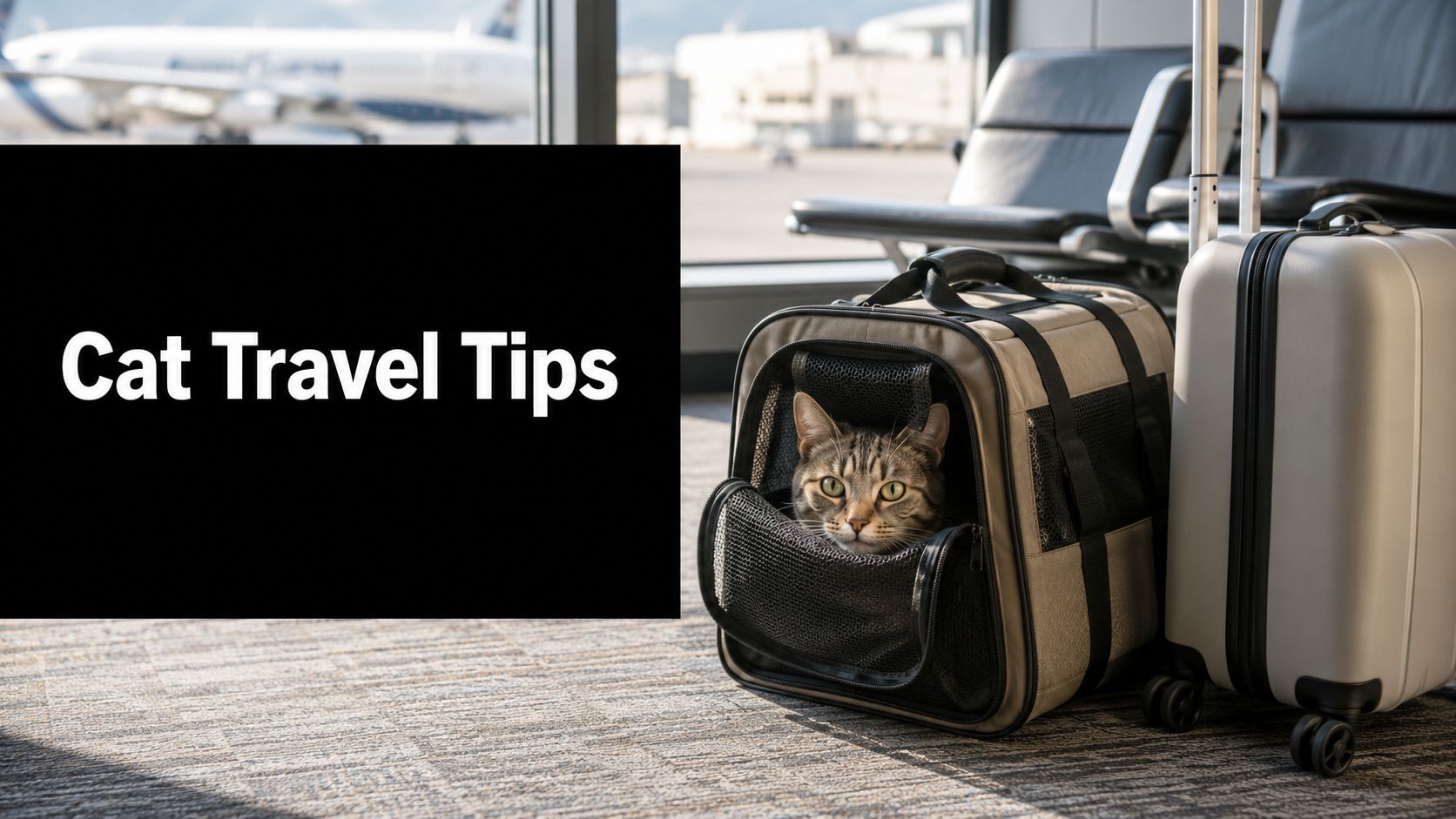
You’re at the gate with a cat in a carrier, a boarding pass in one hand and a phone full of airline emails in the other. You’ve probably already realized the core problem isn’t just whether your cat can fly in the cabin. It’s whether every piece of the trip, carrier fit, paperwork, booking, airport screening, delay handling, and destination rules, lines up cleanly enough that your cat stays calm and you stay in control.
That’s the standard I use when I move cats for clients. The cabin-versus-cargo question matters, but it’s only one variable in a bigger operational plan, and many focus on the wrong one for too long. If you get the plan right, cats traveling on planes becomes a logistics project. If you get it wrong, it becomes a panic drill with a boarding pass attached.
Transporter Recommendation:
If your cat slips out during the TSA screening or while traveling through the airport, GPS tracking can make finding them much faster. The Fi Mini GPS Collar is an excellent option for many cats and small dogs. Be sure the collar is properly fitted for each pet. Check Current Price on Amazon
Why Air Travel With Cats Is Harder Than It Looks
A cat at the kitchen counter is usually not the problem. The problem is the chain reaction. Airline rules, paperwork windows, carrier fit, and the cat’s tolerance for confinement all have to line up on the same day, and that is where trips fall apart. Owners fixate on cabin or cargo, then act surprised when the route, timing, and documents matter more than the label on the reservation.
Cats are not a niche case in air transport. They account for about 22% of all pet journeys by air in multiple pet-travel summaries, and a peer-reviewed review notes that pet air travel in the U.S. has increased by 19% over the past decade, with more than 2 million pets and other live animals transported by air every year in the country alone (PMC review). That volume is exactly why airline and carrier rules are standardized in some places and frustratingly inconsistent in others. There is enough traffic to make the process common, but not enough uniformity to make it easy.

Complexity, not just anxiety, is the core problem.
The history matters because it explains why some owners still treat flying like a gamble. U.S. airline pet safety reporting became much more visible in the 2000s and 2010s, with Department of Transportation reporting that showed 35 pet deaths in 2011 and 29 in 2012, while Smithsonian summarized that roughly 2 million animals still flew commercially each year in the U.S. during that period (Smithsonian). More recent reporting points in a better direction, with a 2025 analysis reporting 117,861 animals transported, 3 deaths, 5 injuries, and 1 loss, for an overall rate of 0.76 incidents per 10,000 animals and about 99.997% arriving without a death in that dataset.
That does not make flying casual. It means the risk is manageable when the owner plans like a professional. The mistake I see constantly is treating the carrier as the whole job. The carrier is only the container that holds your preparation, or your lack of it.
Practical rule: if your cat is healthy, fits airline carrier limits, and can travel in cabin, cabin is the first option to pursue.
The three ways cats fly and which one makes sense
The decision is operational, not emotional. In-cabin travel is the cleanest option when the cat fits under the seat, the airline allows it on that route, and you can stay within the airline’s pet limits for that booking. Checked cargo on the same flight is the fallback when the cat cannot ride in cabin but still travels on the plane you are on. Manifest cargo is different, because the cat travels as shipped freight through a dedicated pet operation and you may not be on the same aircraft.
Here is the blunt version. In-cabin is the right fit for healthy cats that stay within airline limits. Checked cargo is the last resort, because it adds another handling layer and another chance for something to go wrong. Manifest cargo makes the most sense for international relocations where you cannot escort the cat yourself and you need a transport company or freight channel to handle the move.
If you are still deciding, use a simple filter. If your cat is calm, under the airline’s carrier and weight limit, and you can book a direct flight, cabin travel is usually the right answer. If the cat is large, medically fragile, or not suited to close confinement, do not force a plane solution just because it sounds faster. I would rather see a cat moved by a controlled ground service than pushed into an airline setup that does not fit the animal or the route.
A separate piece people ignore is crate specification. For international moves, the crate itself can determine whether the cat gets accepted at check-in, which is why a clear checklist on international pet travel kennel requirements belongs in the planning stage, not at the airport counter. And if you still need to get your cat comfortable before travel day, follow how to crate train for relocation, because a carrier that feels normal at home is easier to manage in a terminal.
Choosing the Right Carrier and Acclimating Your Cat
A carrier isn’t just a bag or box, it’s the cat’s entire airport world. If the carrier is wrong, the rest of the trip gets harder before you even leave home. If the carrier is right and the cat trusts it, the airport becomes manageable instead of theatrical.
Carrier fit and fit training are not optional
Airline-approved soft-sided and hard-sided carriers both have a place, but the key test is whether the carrier fits the under-seat space on your specific flight. That’s where owners get sloppy. They buy a “travel carrier,” assume it will work everywhere, and then discover the airline wants a different shape, a tighter profile, or a firmer bottom than they expected. For a good overview of crate setup and habit-building, I like the practical walkthrough on how to crate train for relocation because it focuses on making the carrier normal before travel day.
The cat needs weeks, not hours, to accept the carrier. Leave it open at home. Put bedding and treats inside. Reward voluntary entry. Then start closing the door briefly, followed by short practice sessions where the carrier becomes part of normal life instead of a warning signal. If your cat freezes, pants, or bolts every time you touch the carrier, you do not have a carrier problem. You have a training problem.
If you want a backup planning layer while you work through the prep, Spot Pet Insurance offers customizable accident and illness coverage for dogs and cats, with flexible reimbursement options, multi-pet discounts, and access to any licensed veterinarian. That’s useful for travelers who want a financial cushion before a domestic or international move.
If the cat will not enter the carrier calmly at home, don’t pretend the airport will go better.
Compare the options before you buy
Think in terms of who the cat is and what the trip demands. A healthy, adaptable cat that fits airline limits belongs in a properly sized cabin carrier. A cat that can’t fit cabin rules may still fly, but the decision becomes route-specific and airline-specific, not a generic yes or no.
If you’re trying to match a carrier to an international trip, the kennel dimensions matter just as much as the route. The kennel requirements referenced in this kennel guide are the kind of detail people ignore until the airline rejects the booking. That’s usually the moment they realize “close enough” doesn’t count.
And if the cat refuses to settle, stop pushing the same method and change the sequence. Keep the carrier in the room, feed near it, then inside it, then briefly close it, then carry it around the house, then take a short car ride. If the cat still panics after that, you’re not behind, you’re learning that this cat needs a different mode of travel.
Decoding Airline Pet Policies That Actually Matter
Airline pet pages look simple until you try to use them. Most of the noise on those pages is marketing language, but four variables decide whether your cat gets on the plane: route restrictions, pet caps, breed restrictions, and whether the cat is a pet or a service animal under airline rules. Ignore the rest until those four are answered.
The rules that change the outcome
Start with the route. Some airlines restrict pets by aircraft type, route, or season. That’s why a summer run from a hot city can be treated differently from a winter route on the same carrier. A cargo option may be blocked on one route while in-cabin travel is still allowed on another, so the route matters more than the airline logo on the fuselage.
Then check the pet cap. Many airlines limit how many pets are accepted on a given flight, which is why booking early matters even when everything else is in order. Next, look for breed or snub-nosed restrictions. Those rules hit some cats less often than dogs, but you still need to read the policy carefully because airlines often group animal handling rules under one pet umbrella. Finally, confirm whether your cat is traveling as a pet or under a different service-animal framework, because those are not interchangeable categories.
I tell clients to read the pet page once, then call. Ask whether pets are accepted on the exact flight number, whether the cabin or cargo space is still open, and whether the aircraft type matters. If the airline can’t answer those questions clearly, don’t assume the answer is yes.
Why direct flights are the better choice
The guidance that holds up best in real life is simple. Choose a direct flight when you can. Avoid transfers unless you have no other option. A same-flight itinerary reduces handling mistakes, avoids missed connections, and lowers the odds that the cat spends extra hours in limbo.
That’s also why you shouldn’t overcomplicate the booking with a “good enough” connection. One short layover can become a missed connection, and a missed connection becomes a cat waiting in the wrong system while the clock keeps running. I’d rather adjust the departure city or the travel day than rely on a brittle connection for a nervous animal.
Health Certificates, USDA Endorsement, and Import Rules
Paperwork is where most owners lose time. They think the flight is the main event, then discover the document chain is the true bottleneck: vet exam, certificate issuance, USDA endorsement when required, airline review, and destination-country import rules. If one link is off, the itinerary stalls.
Paperwork is a countdown, not a checklist
A clean way to think about it is a 30-90-7 day countdown. That means you start route research and destination research early, you lock in vet timing before the trip gets close, and you avoid the frantic scramble that happens when a certificate window has already opened and there’s no appointment available. Domestic and international rules aren’t the same, so don’t assume one vet visit covers every case.
The airport won’t care that you meant to get to the paperwork later. If the destination country wants specific import documents or quarantine steps, those are the rules. First-time travelers are often surprised by the detail required for the UK, Australia, Japan, and the UAE, so those destinations deserve early checking through official government sources rather than forum advice.
For a second official-style checklist, I’d point you to this USDA health certificate guide because the same planning discipline applies to cat travel, even when the destination rules differ.

The document chain has to match the route
At minimum, ask your vet what the airline and destination require, then verify whether the document needs extra government endorsement. For international travel, USDA APHIS endorsement can be part of the process, and some destinations have import permits or quarantine rules that override what the airline says. If you only check the airline page, you can still get blocked at the destination.
Use the vet appointment to confirm the cat’s microchip status and rabies timing if the destination requires it. Don’t assume your local clinic knows the destination rules by heart, because many don’t. What matters is that the certificate, the airline reservation, and the destination requirements all describe the same animal on the same dates.
This is not the stage to improvise. If your destination has an entry rule you don’t understand, stop and verify it on the government site for that country. Airline policy is not a substitute for import law.
Booking the Flight and What Happens at the Airport
Book the cat at the same time you book yourself. Don’t wait. Pet slots disappear fast, and once the flight is full, arguing with the airline over a seat-map screenshot won’t create space for the carrier under the seat. Direct flights are still the cleanest choice, because every added connection adds more chance for a mistake.
Book like a relayer, not a vacationer
Pick a seat with enough room for the carrier to fit correctly under the seat in front of you. Aisle access matters for you, but the carrier has to work first. When I book cat travel, I care less about a preferred seat and more about whether the carrier position will stay stable through boarding and cruise.
Pack the carry-on like a working kit, not a purse. Bring the vaccination records, health certificate, a small towel, a zip bag of litter, and a collapsible water bowl. If you’re using a hard-sided kennel, the Petmate Sky Kennel is one of the airline-travel options I see used most often when it’s assembled correctly with metal hardware and airline-compliant accessories.
At TSA, expect the carrier to be screened. You can request a private screening room instead of pulling the cat out in public, and I strongly recommend that when your cat is tense or reactive. Public security lines are not the place to discover that your cat hates being handled by strangers.
Airport rule: confirm the cat is counted at the gate before you walk away. If the gate agent hasn’t acknowledged the booking, fix it there.
The boarding sequence should be boring
Board when you’re told, not when you feel ready. The whole point is to minimize standing, shifting, and noise around the cat. The carrier stays closed, stays under the seat, and stays in place until you land.
That same discipline matters at the counter and at the gate. Ask for a final confirmation from the gate agent that the pet reservation is attached to your ticket. If there’s a mismatch, you still have time to fix it before the aircraft door closes, which is when the mistake becomes expensive and much harder to unwind.
Reducing Stress and Handling Disruptions Mid-Journey
A good flight can still turn messy fast. Cats urinate, cats vomit, cats panic, and flights get delayed. The people who handle this well are the ones who already decided how they’ll respond before the airport day started.
What to do when the trip stops behaving
Use synthetic pheromone spray in the carrier if your vet says the cat tolerates it. Add a familiar blanket or towel that smells like home. Skip food right before departure if your vet has given you the go-ahead, because a full stomach makes nausea and cleanup more likely. I’m also blunt about sedatives. Don’t use them casually. If a vet hasn’t prescribed something, don’t make the airport your testing ground.
If your cat soils the carrier, don’t panic and don’t let the schedule bully you into pretending it’s fine. Clean what you can, replace the liner if you have one, and get the cat back into a stable position before you move again. If the cat is visibly distressed, ask the airline crew what assistance they can provide, because airline and USDA guidance both expect handling constraints and emergency veterinary care for a cat that becomes distressed during the journey (IATA guidance).
For a small emergency kit, I like owners to keep a simple first-aid mindset. If your cat gets a scratch, a paw nick, or a minor carrier rub during the day, having a reference like pet first aid for nicks and cuts helps you think clearly instead of improvising under pressure.

If the connection is breaking your margin for error, rebook before you accept a long ground hold.
Delays are a logistics problem, not a patience test
If the flight is delayed and the cat is stuck in an awkward holding pattern, treat the situation as a routing problem. If the delay pushes the itinerary into a risky window, rebook before the delay becomes a welfare issue. You do not win points for enduring a bad plan longer than necessary.
At a connection airport, don’t assume emergency veterinary care is easy to find after the problem starts. Keep the destination city and connection city numbers ready before departure. That one habit saves time when the cat starts acting unlike itself and the airline can’t give you the answer you need fast enough.
When Door-to-Door Ground Transport Is the Smarter Choice
Air travel is not the default winner. For a lot of relocations, especially regional moves, ground transport is the cleaner, calmer option. The more airports, connections, and policy layers you add, the more likely it becomes that the trip gets harder than it needs to be.
The better answer is sometimes not flying
A vetted, USDA-licensed door-to-door ground service gives you climate-controlled vans, sanitized kennels, regular feeding on home schedules, and drivers trained in pet first aid. That matters for anxious cats, senior cats, short relocations, and owners who don’t already have an airline-ready setup. It also matters when the route risk is high and the flight options are ugly.
This is why I steer some East Coast and Mid-Atlantic moves toward ground service instead of air. If the move is regional and not cross-ocean, the welfare trade-off often favors the road. You reduce handling, avoid airport chaos, and keep the cat on a simpler routine.
For a more detailed look at how that model works, the write-up on long-distance pet transport is a useful reference point for owners comparing routes and service styles.

Use the same decision logic whether you fly or not
If your cat is nervous, medically fragile, or impossible to acclimate to a carrier, stop forcing the plane conversation. If your move is short enough that road transport is practical, choose the calmer path. If you’re flying, use the same standards anyway, route clarity, paperwork discipline, and contingency planning.
Here’s the short version I give clients:
- Pick the simplest route that meets the destination requirements.
- Book the mode of travel that the cat can tolerate, not the one that sounds faster.
- Buffer for delays before the trip starts, not after.
- Keep documents and vet contacts ready in one place.
- Escalate to ground transport when airline handling adds more risk than it removes.
For families that want managed, door-to-door pet relocation, Precious Pets Transport Services, LLC provides domestic and international pet transport with climate-controlled vans, sanitized kennels, regular litter box access for cats, and drivers trained in pet first aid. If your route, paperwork, or connection risk makes flying a bad fit, visit their site and compare the ground option against your flight plan before you lock in the booking.
Leave a Reply