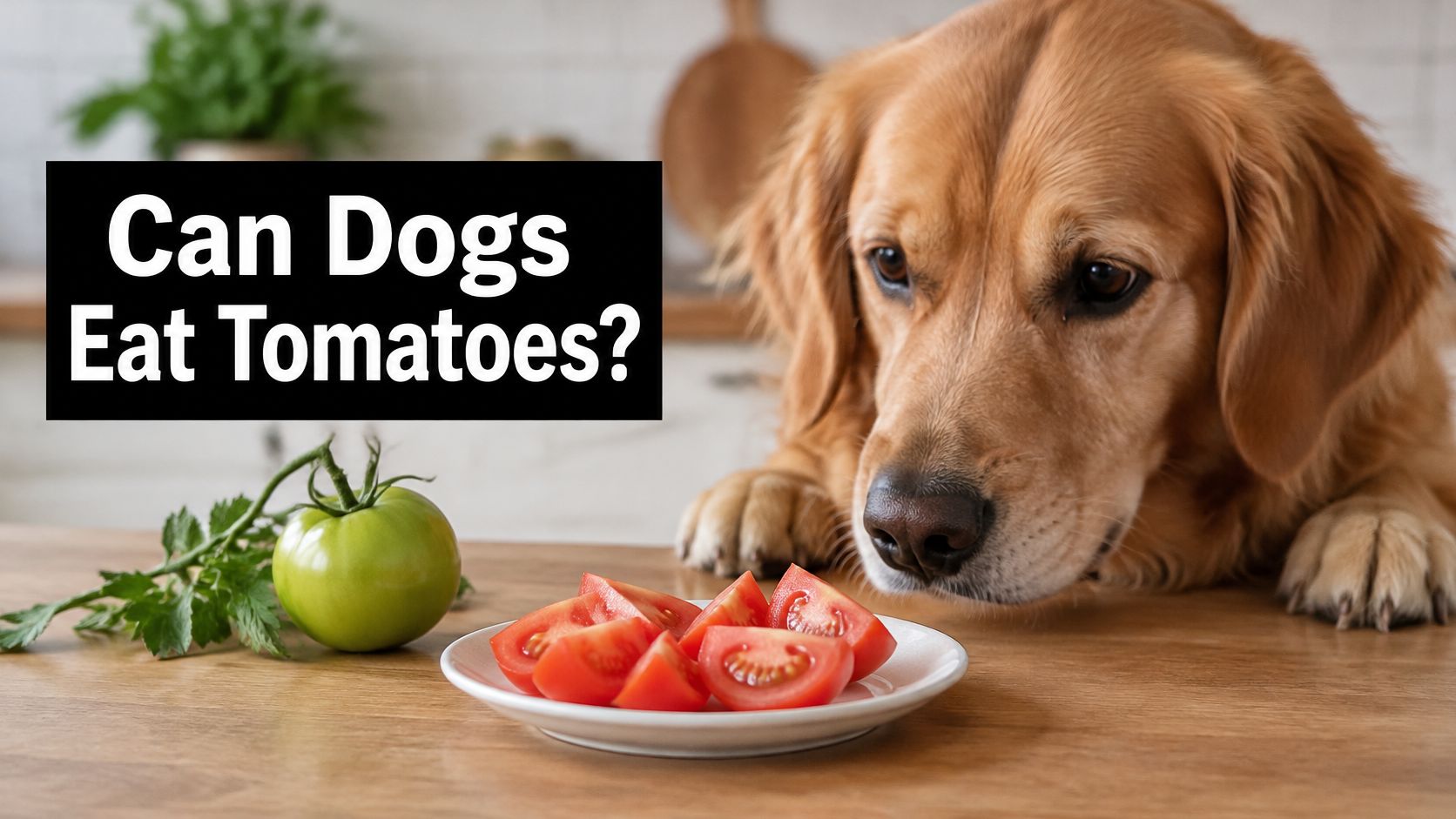
Dogs can eat small amounts of fully ripe, red tomato flesh. Green fruit, leaves, stems, and vines are not safe.
If a ripe slice on the cutting board is fine, why would the same plant be a problem in the garden? People treat the word tomato as one food. Ripeness and plant part decide the risk, not the label on the produce bag. A red beefsteak, a green cherry still on the vine, and a handful of leaves can look related and still belong in different categories. One is an occasional plain bite. The other is plant material a dog should not chew.
That split shows up in the kitchen and away from home. A dog that noses a dropped fruit at a rest stop, or pulls a green tomato off a neighbor's bed, is not facing the same bite you diced for a salad.
Table of Contents
- Which Tomatoes Are Safe for Dogs
- Why Ripeness and Plant Parts Change the Risk
- How to Serve Ripe Tomatoes to Your Dog Safely
- Garden, Travel and Stray Plant Exposure
- Symptoms That Need a Vet and What to Do
- Your Safe Tomato Plan for Your Dog
Which Tomatoes Are Safe for Dogs
Ripe, red tomato flesh is generally safe in a small amount. The danger sits in the plant part and the stage of ripeness, not in the word tomato. The ASPCA classifies the tomato plant as toxic to dogs because it contains solanine, while specifically identifying ripe fruit as non-toxic.
Glycoalkaloids such as solanine and tomatine are more concentrated in green, unripe fruit and in the leaves, stems, and vines. Veterinary toxicology references associate ingestion of these green parts with gastrointestinal and systemic effects, including excessive salivation, loss of appetite, weakness, tremors, breathing difficulty, progressive paralysis, and, in severe cases, death.
That list does not set a universal toxic dose. Risk depends on the dog's body size, the amount consumed, and whether the dog ate ripe fruit or concentrated plant material. A large dog that steals one plain slice is in a different spot from a small dog that chews a vine.
| Tomato form | Safe for dogs? | Guidance |
|---|---|---|
| Ripe red tomato flesh, plain | Yes, in small amounts | Washed, with stem and leaves removed |
| Green unripe tomatoes | No | Higher solanine and tomatine concentrations |
| Leaves, stems and vines | No | Most concentrated glycoalkaloids in the plant |
| Cooked plain ripe tomato | Yes, in small amounts | No added salt, oil or seasoning |
| Tomato sauce or salsa with onion or garlic | No | Onion and garlic are unsafe for dogs |
| Ketchup or canned tomato with added salt | No | Excess salt and seasoning |
The rule at the bowl
Offer only plain, washed, ripe tomato flesh in a small quantity. Remove stems, leaves, vines, and every green portion before the bowl hits the floor. Cherry, grape, and beefsteak types follow the same split. Red and plain can be a treat. Green, attached, or seasoned cannot.
Skip sauces, salsa, and ketchup. Onion, garlic, and excess salt turn a tomato product into something else entirely. A plain cooked piece you simmered yourself, with nothing added, can sit with the ripe-flesh row. Jarred pasta sauce does not.
Practical rule: If you would not hand the dog the stem, do not hand over fruit that is still holding one.
If a dog eats a substantial amount of a tomato plant or green tomatoes, or develops vomiting, diarrhea, drooling, weakness, tremors, or unusual behavior, contact a veterinarian promptly. Do not induce vomiting at home. The mix-up is common during moves, boarding, and outdoor stops, when unfamiliar gardens and dropped produce put plant material in reach.
Why Ripeness and Plant Parts Change the Risk
Tomatoes belong to the nightshade family, Solanaceae. Members of that family can contain toxic glycoalkaloids, compounds the plant uses as a natural defense. Those compounds are not spread evenly through a ripe salad tomato. They concentrate in leaves, shoots, vines, and unripe green fruit, and they drop sharply once the flesh turns fully red.
The Merck Veterinary Manual lists Solanum nightshades across North America and identifies solanine in leaves, shoots, and unripe berries. Documented clinical effects include acute hemorrhagic gastroenteritis, weakness, excessive salivation, breathing difficulty, trembling, progressive paralysis, prostration, and death.

The same reference describes this plant group as broadly distributed in North American fencerows, waste areas, grain and hay fields, and pastures. Accidental exposure is a widespread concern, not a rare greenhouse accident.
Modern veterinary guidance refines the old warning. Ripe fruit holds very little of the relevant compounds. Green fruit and vegetative parts hold more. Published veterinary references do not give a single universally safe serving size, and there is no reliable percentage that guarantees safety for every dog. Body size, amount eaten, and which part was eaten set the risk.
Ripe fruit can be an occasional treat at the bowl. Tomato plants and unripe fruit stay out of reach in the garden and on walks.
Introduce any new food gradually, keep the portion small, and call a veterinarian after green plant parts are eaten or if signs appear. The same judgment applies to household pets, traveling dogs, and animals moving between homes.
How to Serve Ripe Tomatoes to Your Dog Safely
A safe serving is a few small pieces of plain red flesh, given now and then, not a meal and not a sauce. Work through the fruit before it reaches the bowl.

Pick fully red fruit. Choose tomatoes with no green shoulders or pale patches. Those patches still hold more of the compounds you are trying to avoid. The common slip is grabbing the first fruit off the counter because it looks mostly red.
Rinse under running water. Dirt, garden soil, and surface residue come off with a thorough wash. A quick wipe on a shirt does not do that job, especially on fruit picked outdoors.
Strip every green bit. Pull the stem, leaves, and any vine, then cut away green sections of flesh. These are the concentrated parts. Handing over a garden tomato still attached to its vine is the mistake that undoes the wash.
Cut to the dog. A small dog gets a few bites, not a whole fruit. A large dog gets no more than a few small slices. Whole cherry tomatoes are a choking risk for little dogs, so quarter them. Matching the piece to the mouth matters more than filling a bowl.
Serve it plain. No salt, oil, onion, garlic, or seasoning, and never stir it into sauce. Sharing a bite of a tomato sandwich is the usual slip, because the bread carries onion and salt along with the fruit.
Start tiny and watch. Offer one or two pieces, then watch for about 24 hours. Any new food can upset a stomach even when the food itself is appropriate. Loose stool or gas on that first day means you stop, not that you try a bigger piece tomorrow.
Keep it occasional. Tomato is a treat, not a staple, and you stop at the first sign of distress. A daily handful turns a small experiment into a habit the stomach did not agree to. The same gradual approach used for other plain vegetables, including the guidance in can dogs eat cauliflower, applies here. New foods stay small, plain, and watched.
After the bowl is down
Leftover pieces should not sit out. Ants find pet bowls fast in warm weather, and a tomato bite left on the floor is an easy target. Learning how to protect pet food from ants keeps the treat from becoming a pest problem beside the water dish. Pick up uneaten bits, wash the bowl, and put the rest of the fruit back in the fridge for people, not for a second unsupervised serving.
What a safe serving looks like is simple. A few small pieces of washed, fully red flesh, stem and green gone, nothing sprinkled on top, offered once in a while and then cleared away.
Garden, Travel and Stray Plant Exposure
Most trouble starts when nobody is watching the mouth. A dog pulls a green tomato off a vine, chews a fallen fruit in a neighbor's bed, or nibbles leaves along a fence on an evening walk. The kitchen rule never gets a chance to apply, because the dog already chose the plant.
Unfamiliar ground raises that chance. A rest-stop picnic table, a boarding kennel garden, or a yard at a relocation stop can hide dropped produce and low vines. You packed the leash and forgot the beds. The dog did not.
Before the leash comes off
- Lead near beds: Keep the dog on a lead beside vegetable rows, community gardens, and any fence lined with vines.
- Pick up fallen fruit: Clear green and split tomatoes before the dog is turned out, including fruit under the leaves.
- Scan the yard first: Walk the space and look for tomato plants, volunteers, and nightshade lookalikes before free time starts.
- Pack a known snack: A familiar treat gives the dog something to take instead of scavenging at a stop.
- Brief every caregiver: Tell sitters, neighbors, walkers, and kennel staff that green fruit and vines are off limits, not just "no people food."
The same habits apply during moves, boarding, and transport. A plant that is obvious at home is invisible in a borrowed yard. Broader habits for new places sit alongside these checks in our pet safety tips. Flowering weeds in a lawn can also hide lookalike growth, and seasonal clues for flowering lawn weeds help you spot what does not belong before a dog samples it.
A two-minute lap of the yard beats a phone call from the vet after the dog has already eaten.
Run that short list before each outing or stop. Leash, fallen fruit, plant check, packed snack, and a clear note for whoever is watching the dog.
Symptoms That Need a Vet and What to Do
If a dog eats a substantial amount of tomato plant or green tomatoes, contact a veterinarian promptly. Do not wait to see whether signs show up. Early stomach upset and later trouble are not the same phone call, and guessing at home wastes the window a clinic can use.
| Sign | Why it matters | Action |
|---|---|---|
| Vomiting or diarrhea | Early gastrointestinal reaction | Call your vet promptly |
| Excessive drooling | Reported after green plant ingestion | Call your vet promptly |
| Loss of appetite or weakness | Can signal systemic effects | Call your vet promptly |
| Tremors or unusual behavior | Neurological warning sign | Call your vet now |
| Breathing difficulty or progressive paralysis | Severe reaction that can be fatal | Emergency vet visit immediately |
Why you should not induce vomiting yourself
Inducing vomiting at home can injure the throat, send material into the lungs, or delay real care. A veterinarian decides whether vomiting is appropriate after hearing what was eaten and how the dog looks. Reference descriptions of severe cases include death, so timing is part of the treatment. Mild drooling still earns a call. Labored breathing or a dog that cannot stand earns an emergency visit, not a watch-and-wait evening.
What to have ready on the call
- Plant part: Ripe flesh, green fruit, leaves, stems, or a mix.
- Approximate amount: One cherry, a whole fruit, or a chewed vine.
- Dog's weight: The number your clinic already has, or your best current estimate.
- Time of ingestion: When you saw it, or the last moment you know the dog was fine.
- Current signs: Vomiting, drool, weakness, tremors, breathing changes, or none yet.
Save any remaining plant so you can describe it. If the dog ate a packaged sauce, read the ingredient list for onion, garlic, and salt and repeat those words to the clinic. Stay on the line until you have a clear next step, whether that is monitoring at home or leaving for the hospital now.
Your Safe Tomato Plan for Your Dog
Give ripe, plain, red tomato flesh only as an occasional small treat. Never give green fruit, plant material, or seasoned products.
Write that down so the whole household follows one version.
- Allowed foods: Plain ripe red flesh only, washed, with stem and green removed.
- Portion: A few small pieces scaled to the dog, not a whole fruit and not every day.
- Call signs: Vomiting, drooling, tremors, weakness, or any change in behavior.
- Emergency number: The nearest clinic, written where sitters can see it.
Share the page with anyone who feeds or supervises the dog, including sitters, neighbors, walkers, and boarding staff. A tomato sandwich, a garden tomato, and a sauced leftover should all get the same no. When you travel or change homes, put the plan in the travel folder and pack a known snack so the dog is less likely to scavenge at stops. A steady pet feeding schedule makes that snack predictable instead of a scramble at each stop.
Before we book a trip, we ask for the pet's age, breed, size, mobility, medical conditions, and medications, plus behavior around people and other animals, feeding instructions, and any history of anxiety, biting, or escape attempts. Those notes are where a tomato rule belongs, next to the regular meals.
Today's action is small. Offer one piece of plain ripe tomato, watch for 24 hours, and call the veterinarian if vomiting, drooling, tremors, or any behavior change appears.
Precious Pets Transport Services, LLC moves dogs and cats door to door across the continental United States, and can coordinate international trips from Virginia, Washington, D.C., Maryland, and nearby states, with feeding kept to each pet's normal home schedule. A written tomato plan travels with that routine, so caregivers on the road know ripe flesh is optional and green plants are off limits. Visit Precious Pets Transport Services, LLC to request an estimate and share your pet's feeding notes before the next move.
Leave a Reply