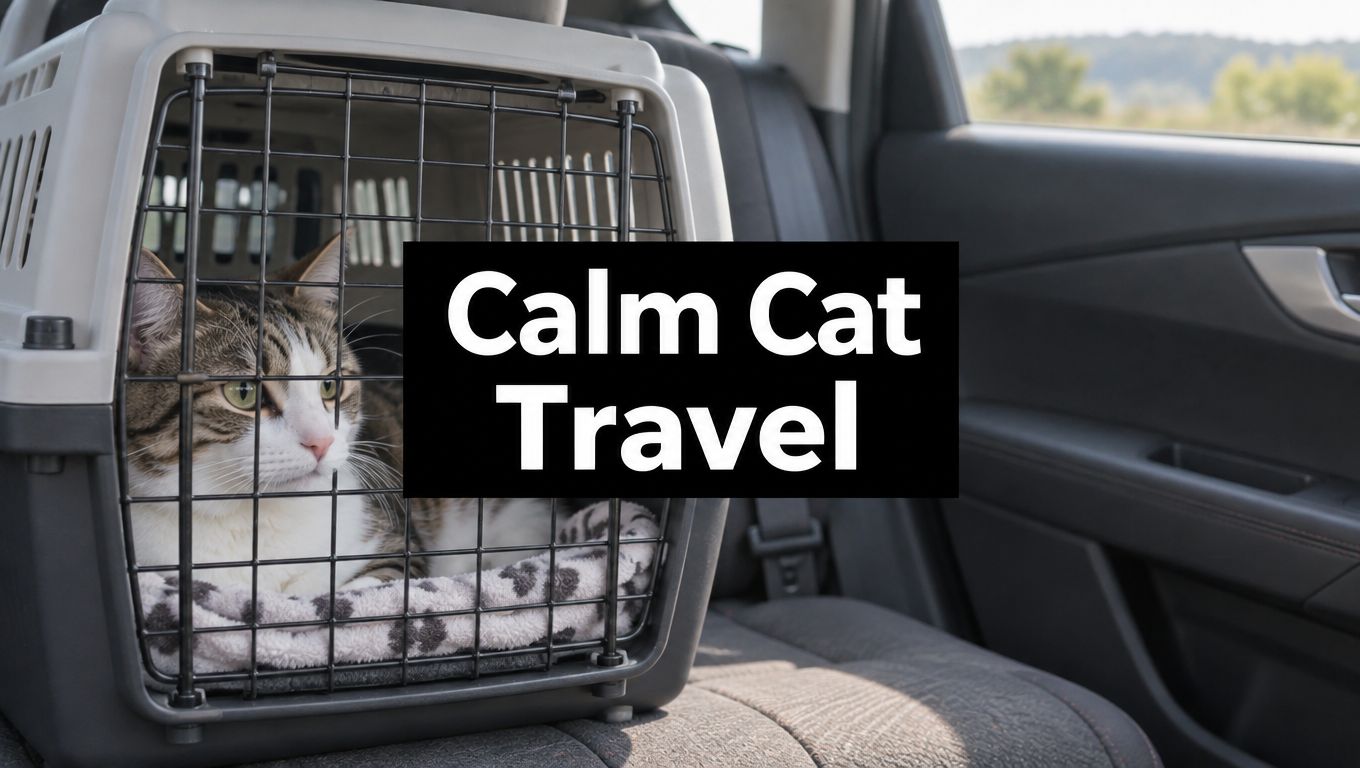
The carrier is in the garage under a stack of coats, and the move is in eleven days. That's the situation most cat owners describe when they call about transport, and it's the one thing I'd change if I could. Cats don't fail at travel because the journey is too long or the car too small. They struggle because the carrier and the vehicle are the two most unfamiliar objects in their lives, and they meet both on the morning everything else is already chaotic.
Calming cats during travel is mostly a scheduling problem before it's a chemical one. The cat that walks into its carrier unprompted in week three is the cat that rides with ease on moving day, and the work between those two points is short, repetitive and boring in exactly the way cats find reassuring. What follows is the timeline I'd use, the signs I'd trust, and the honest limits of what medication does and doesn't fix.
Table of Contents
- A Pre-Trip Countdown for Calmer Journeys
- Train the Carrier Step by Step, Even on a Tight Deadline
- Medication Options and Questions for Your Vet
- Telling Calm Apart from Sedated or Unsafe in Transit
- Pheromones, Bedding and Feeding on the Road
- Confirm Your Cat's Travel Plan Before You Book
A Pre-Trip Countdown for Calmer Journeys
A cat that walks into the carrier but panics when it moves needs a different timeline from one that hides at the sight of it. Work backward from departure, and use your cat's behavior at each checkpoint to decide whether to progress or repeat a stage.
| When | Task | Ready sign |
|---|---|---|
| 3-4 weeks before | Leave the carrier open at home with a familiar towel inside and treats nearby | Walks in on its own |
| 2-3 weeks before | Practice stationary sits with the engine off, then short drives | Rests with relaxed posture while the car is still |
| 1-2 weeks before | Arrange a veterinary travel check and discuss whether medication is appropriate | Clear plan from the vet |
| 3-5 days before | Practice a longer drive and follow the vet's instructions for any prescribed medication | Eats, drinks and settles normally |
| Travel day | Offer a light meal 3-4 hours before travel; secure the carrier with familiar bedding inside | Remains alert and settles after loading |
The early stages build familiarity. A longer practice drive can reveal stress that a brief trip misses, giving you time to discuss changes with your vet before departure.
Keep packing from disrupting your cat's routine. If your cat follows you from room to room or cries when doors close, predictable daily routines can also help reduce separation anxiety in cats.
Keep the carrier accessible: Leave it in a room your cat uses, not stored away until travel day. Regular access gives your cat time to approach it without the pressure of an imminent trip.
If your cat still bolts when you touch the carrier handle three days before departure, delay the drive or ask your vet for a realistic plan.
Train the Carrier Step by Step, Even on a Tight Deadline
A carrier door closing should not be the first surprise. Start with the carrier open in a familiar room, with a towel that smells of home inside. Let your cat investigate without coaxing.
Once the cat approaches comfortably, place treats near the entrance, then just inside. Reward voluntary sniffing or entry. When your cat settles inside, close the door for a few seconds, reward, and open it again. Build time gradually, moving on only while your cat stays relaxed.
A first successful car sit can be brief: the cat enters voluntarily, stays in the carrier with the door closed, and spends a short time in the parked car with the engine off. End the session while the cat is still settled. Add a short drive only after that step goes well. The aim is to build tolerance in small increments, not to complete every stage on a deadline.
A 2023 review of feline transport stress identifies carrier acclimatization and positive-reinforcement training as methods associated with reduced behavioral stress during car travel.

Forcing a cat into an unfamiliar carrier just before departure can undo gradual training. Other common setbacks include adding time too quickly, opening the carrier in an unsecured area, and removing familiar bedding or scent cues. If your cat resists, return to the last step it could manage calmly rather than pushing ahead.
The compressed plan when the move is days away
A few days is not enough to guarantee carrier comfort. Use the time to build familiarity without forcing contact.
- Day one: Put the carrier in the main room with familiar bedding. Serve a meal beside it, then inside if your cat is willing to eat there.
- Evenings two and three: Try brief, door-closed sessions with rewards. Keep each one short enough that your cat remains relaxed.
- Day four onward: Try a parked-car sit only if the earlier steps are going calmly. Add a short drive only if your cat tolerates the car sit.
If your cat panics, stop the session and ask your vet how to adjust the plan. Voluntary entry, a relaxed posture, normal responsiveness, and tolerance of gradually longer sessions are useful signs of progress. If those signs are missing, discuss the timing and options with your vet rather than forcing the carrier on departure day.
Medication Options and Questions for Your Vet
Sedation can leave a cat still but disoriented, unable to balance, and less able to regulate body temperature. For air travel, AVMA travel guidance says sedation is generally not recommended because it can increase cardiac and respiratory risks, as well as vulnerability to hypothermia, dehydration, and injury. Airlines may also prohibit or restrict sedated animals, so check the carrier's policy before booking.
Medication decisions depend on your cat's health history and itinerary. Arrange a veterinary appointment well before departure, share the travel details and any history of motion sickness, and ask whether anxiety or motion sickness needs treatment. Carrier training may be enough for some cats.
If your vet prescribes medication, follow the prescribed drug and dose. Do not combine medications or give human drugs. Ask your vet whether to try the medication at home before travel, and follow their instructions for doing so. Use the transit table in the next section to distinguish calm, alert behavior from signs that a cat may be impaired or unsafe.
Bring four questions to the appointment: Is my cat a suitable candidate? What dose fits their weight and health history? What effects should I expect, and when? Which symptoms mean I should stop the trip and call a vet?
Telling Calm Apart from Sedated or Unsafe in Transit
A cat in transit should be calm but alert, able to shift its weight and balance. Check at every stop. Quiet alone does not show that a cat is safe to travel.
A controlled study found that a 100 mg dose given 90 minutes before transportation significantly reduced stress-related behaviors compared with placebo, as reported in feline transport research. That result does not mean the same dose suits every cat. Medication also cannot address motion sickness, overheating, dehydration, litter needs, or fear of an unfamiliar place.
Use this check at every stop. If you see a warning sign in the right column, stop and call a vet.
| Observation | Acceptable | Stop and call vet |
|---|---|---|
| Posture | Sitting or lying, shifts weight to stay balanced | Cannot stand, leans or collapses |
| Breathing | Slow, quiet and even | Open-mouth or labored breathing, pale or blue gums |
| Temperature | Warm ears and body, no panting | Cold to the touch or panting heavily |
| Responsiveness | Turns head or responds to a voice | No response to voice or touch, or unusually weak |
| Drinking and vomiting | Accepts water, settles after one episode | Refuses water or vomits repeatedly |
Calm and alert is the target; still and impaired is the warning. The same check matters if a cat wears a jacket or harness for part of the trip. Before relying on either, learn about how a cat in a jacket may move and respond.
During travel, secure the carrier so it stays level and cannot slide or bounce. Partially cover it to reduce visual stimulation, and keep the temperature steady. Never let a cat loose in a moving vehicle. At a stop, open the carrier only with the vehicle doors closed and the cat secured.
Pheromones, Bedding and Feeding on the Road
A familiar scent can make a carrier feel less unfamiliar. If you use a pheromone product, try it at home before travel and keep it in the plan only if your cat appears to settle. Avoid introducing new products on departure morning.
Put a worn T-shirt or familiar blanket in the carrier, and keep the same items with your cat during stops and handoffs. In an unfamiliar room, familiar bedding gives your cat a consistent scent to investigate.
Food, water and litter on a long drive
Use the travel-day meal timing from the countdown plan. Keep your cat's usual food for the journey, and offer the first post-trip meal once your cat is settled in a secure, quiet space. A small serving makes it easier to see whether your cat is ready to eat.
In my experience, many cats refuse food for the first few hours in a moving car. Track water intake and litter use instead. Bring water from home, offer it at stops in a spill-proof bowl, and record what your cat drinks and eliminates. If your cat stops drinking entirely for a full day, call a vet.
Bring the litter your cat already uses. A disposable, low-sided tray with an absorbent pad underneath is easier to manage in a confined space than a full-size box. Plan for litter breaks inside the vehicle with the doors shut, never on open ground where a startled cat could bolt.
If packing and moving have disrupted your cat's routine, a predictable pet feeding schedule can help restore regular mealtimes before travel.

Packing, in order of what gets used first: carrier with a secure latch, familiar bedding, ID tag and microchip record, vet paperwork, food and water, litter tray and scoop, prescribed medication only, and a light towel to cover the carrier.
For air travel, confirm the airline's cabin policy, carrier dimensions and approval before booking. Ask whether your cat will travel in the cabin or as cargo, since an airline may refuse a sedated animal. On multi-leg trips, keep familiar scent items and the same feeding, litter and handling routines at each handoff and overnight stop. Log food and water intake so you can give a vet an accurate account.
Confirm Your Cat's Travel Plan Before You Book
A cat that is quiet in its carrier may be calm, frozen with fear, or sedated. Before you book, make sure you can tell the difference and explain what your cat needs at each stage of the trip.
Three questions decide whether you're ready, and you can answer each one before your vet appointment:
- Has your cat entered the carrier voluntarily and stayed relaxed in a parked car?
- Have you identified the signs that mean your cat is distressed or unsafe? Use the transit table above to check.
- Can you give the driver clear instructions for your cat's routine and handling?
If you cannot answer yes to each, pause before setting the date. Refer to the medication section for the vet's guidance on medication and any supervised trial.
Then confirm the route-specific logistics. For air travel, check the carrier dimensions, approval process, and cabin or cargo rules with the airline you plan to use. The guide to cats traveling on planes explains what to ask before booking.
For ground travel, share your cat's behavior around people and other animals, feeding instructions, and any history of anxiety, biting, or escape attempts. Give the transport provider details about your cat's age, breed, size, mobility, medical conditions, and medications, too. These details help the team plan pickup, routing, care stops, and delivery around your cat's needs.
If you are considering the Petmate Sky Kennel, confirm that its size and configuration meet the requirements for your specific trip. A product name alone does not establish airline approval.
Keep the written travel and care instructions with your packing list so each handler has the same information. A plan you can explain and monitor gives you a clearer way to respond if your cat's behavior changes.
Precious Pets Transport Services, LLC provides ground transportation for dogs and cats across the continental United States, with private or shared door-to-door rides. When requesting an estimate, share your cat's behavior, feeding instructions, and care needs so the company can plan the trip accordingly. Request a written estimate through Precious Pets Transport Services, LLC.
Leave a Reply