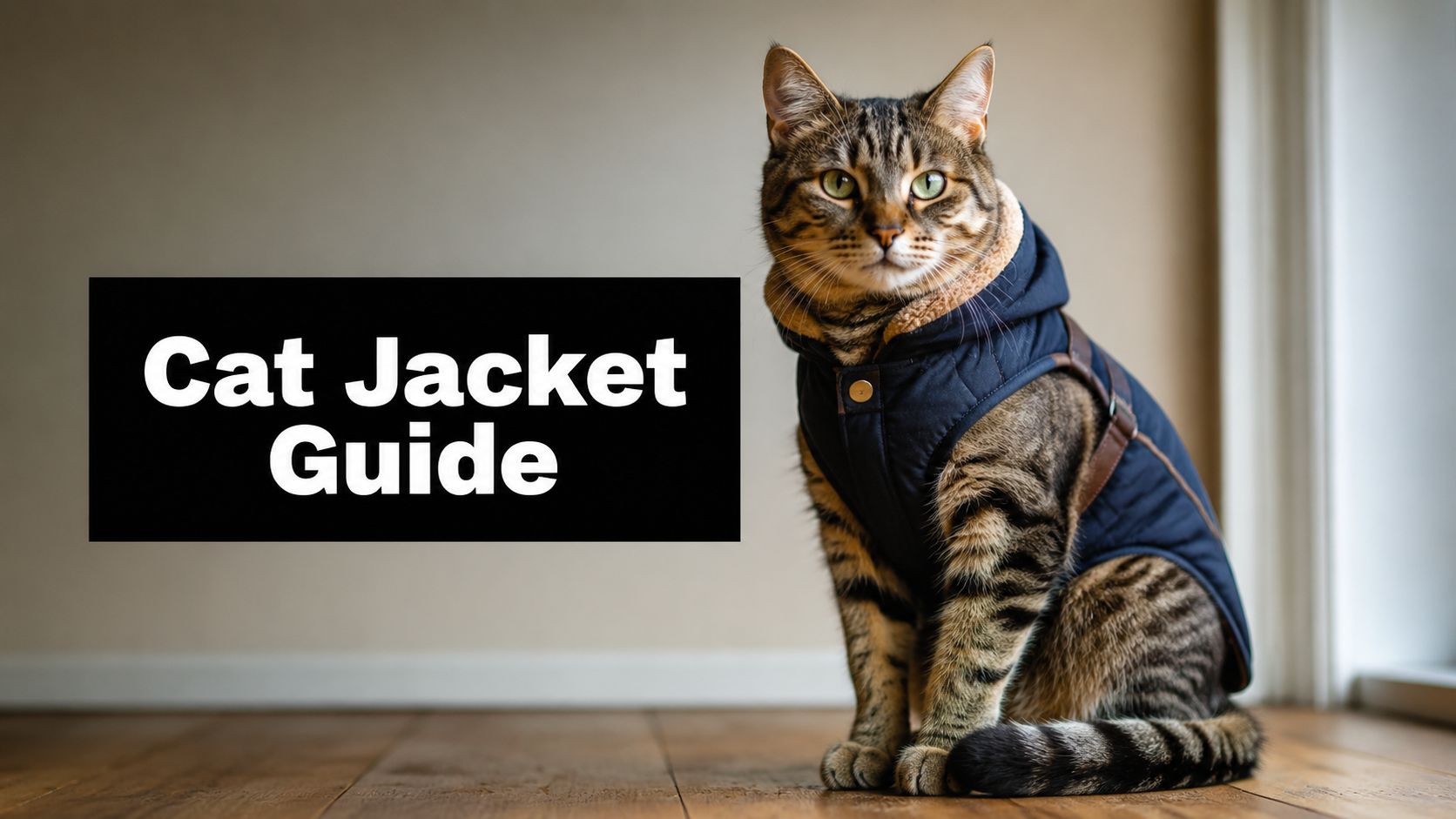
Moving day is already underway. The carrier is open, the doors are being packed, and your cat has disappeared beneath the bed. You bring out a new jacket, hoping it will keep them warm or make the journey calmer, but the fabric touches their back and they freeze, flop, or thrash.
That reaction isn't stubbornness. A cat with a jacket is responding to unfamiliar pressure, texture, sound, heat, and restricted movement. After coordinating cat relocations across long road journeys and air travel, the practical lesson is clear: a jacket is useful only when the individual cat tolerates it and the garment improves safety without adding distress.
Table of Contents
- Why Some Cats Tolerate Jackets and Others Do Not
- Choosing the Right Size and Material for Your Cat
- Gradual Acclimation Steps Before Travel Day
- When a Jacket or Calming Vest Actually Helps During Travel
- Hygiene and Allergen Transfer Risks With Cat Clothing
- Deciding Whether Your Cat Should Wear a Jacket
Why Some Cats Tolerate Jackets and Others Do Not
I once watched a confident cat walk into a carrier, accept a soft wrap, and settle beside a familiar blanket. In the same household, a timid tabby reacted to a similar garment by flattening herself against the floor and trying to reverse out of it. The owners hadn't done anything cruel or careless. They had assumed that a jacket designed for comfort would feel comfortable to both cats.
Cats process clothing as a bundle of sensations. A light, quiet fabric may provide reassuring contact around the torso for one animal. Another may interpret that pressure as restraint, especially if the garment catches under the legs or shifts when they walk. Early handling, baseline anxiety, coat density, and sensitivity to rustling fabric all influence the response.

Individual tolerance matters more than appearance
A garment that looks soft in a product photograph may feel hot, stiff, noisy, or oddly restrictive to your cat. Textile preference also isn't stable enough for blanket advice. A 2026 study involving 36 domestic cats found that only 2 showed a stable preference for one textile across repeated days, which supports assessing the individual cat rather than assuming all cats prefer soft clothing (the study on feline textile preferences). The source link supplied in the brief contains the relevant study, but its URL includes a different access code than the one above.
Before buying a jacket, place a lightweight towel over your cat's shoulders for a few seconds while they remain on familiar ground. Watch the whole body, not just whether they stay still:
- Relaxed movement: The cat walks, turns, sniffs, or accepts food normally.
- Possible tolerance: The cat pauses briefly but recovers when the towel is removed.
- Stop signal: The cat freezes, crouches, pulls away, bites at the fabric, or shows escalating agitation.
If your cat refuses the towel, don't treat a jacket as a necessary upgrade. A cat moving guide for relocation preparation may be more useful than adding clothing to an already unfamiliar travel routine. A secure carrier, familiar bedding, and calm handling often solve the actual problem without placing anything on the cat.
Choosing the Right Size and Material for Your Cat
Fit is the first welfare check. A loose jacket can rotate sideways, catch a front leg, or create an escape route. A tight one can interfere with shoulder movement and make a nervous cat feel trapped.
Use a soft measuring tape and record two measurements:
- Neck girth: Measure around the base of the neck, where the garment will sit, rather than high under the jaw.
- Chest girth: Measure around the rib cage just behind the front legs.
Compare both measurements with the manufacturer's chart. Size labels aren't standardized across brands, so “small” is not a reliable measurement. A cat may match one brand's chest range but need a different size because of neck shape, coat thickness, or shoulder construction.
Check the garment on the body
Once fastened, the jacket should sit snugly without pressing into the throat, armpits, or spine. You should be able to slide two flat fingers beneath each secured area, while the fabric should remain close enough that the cat can't back out through a gap.
Look for these practical details:
- Shoulder clearance: The front legs should swing freely when the cat walks and turns.
- Flat seams: Stitching shouldn't rub the skin or mat long fur.
- Quiet closures: Loud hook-and-loop fasteners can frighten a sensitive cat before the garment is even secured.
- No dangling decoration: Hardware near the chin or mouth creates a snag and chewing risk.
- Stable construction: If a jacket includes a leash attachment, treat it as a handling aid only after confirming the manufacturer's safety specifications. Don't rely on a decorative ring to restrain a cat.
Material choice should follow the journey, not the photograph. Breathable mesh or light cotton blends are generally easier for indoor practice and warm conditions. Fleece or insulated soft-shell fabric may suit cold environments, but it adds bulk, can interfere with carrier doors, and may hold heat in a stationary car.

The same inspection applies to a calming vest. A useful pet travel gear guide should support safe containment rather than encourage extra equipment for its own sake. If you're also planning for unexpected veterinary needs, Spot Pet Insurance provides customizable accident and illness coverage for dogs and cats, with flexible reimbursement options, multi-pet discounts, and access to any licensed veterinarian, according to the supplied product information.
Gradual Acclimation Steps Before Travel Day
Never make the first jacket session happen on the morning of a flight or during loading for a cross-country drive. Your cat already has to process the carrier, changed household smells, unfamiliar people, vehicle movement, and altered routines. Adding a new garment at that moment can turn a manageable trip into a struggle.
Start well before departure and keep each session short. The objective isn't to make the cat tolerate increasing discomfort. It's to learn whether the jacket can become a neutral or positive cue without suppressing normal movement.
Build the association in layers
Begin with the garment lying flat near a familiar resting or feeding area. Let your cat investigate without bringing it toward them. If they sniff and walk away, leave the jacket where it is and try again later.
Then progress through the sequence below:
- Contact without fastening: Drape the jacket lightly over the back for a brief moment, remove it, and offer a valued treat.
- Partial fastening: Secure one section while your cat eats or engages with a favorite activity. Remove it before tension rises.
- Short full wear: Fasten the garment and observe walking, turning, grooming, sitting, and jumping onto a low familiar surface.
- Calm movement: Keep the session indoors while you move slowly and speak softly. Stop while the cat is still coping well.
- Carrier introduction: Once normal movement is consistent, place the jacketed cat inside the open carrier for a short period. Later, close the door briefly and reopen it before distress builds.
The infographic URL above differs from the exact URL provided in the brief, which was ` I cannot include both because the instructions require the exact asset URL and prohibit duplicate image use.
Read the cat, not the schedule
Flattened ears, enlarged pupils, repeated attempts to bite or escape, sudden stillness, or frantic grooming mean the session has moved too quickly. Return to the previous stage and use shorter exposure. Food can help, but it shouldn't be used to force a garment onto a cat who is already panicking.
The same principle applies to the carrier. Veterinary low-stress handling guidance recommends a sturdy closed carrier, securing it so it can't slide, partial visual cover without blocking ventilation, low noise, and gentle driving without abrupt braking or turns (veterinary low-stress transport guidance). The jacket should support that plan, not replace it.
When a Jacket or Calming Vest Actually Helps During Travel
A jacket-like wrap can help in a narrow set of circumstances. Some cats settle with gentle, even torso contact once they've learned the sensation at home. For those cats, a familiar vest may reduce the urge to wriggle during a controlled carrier transfer or provide a predictable tactile cue during a long journey.
That benefit isn't universal, and marketing language shouldn't decide for you. The strongest transport recommendations still prioritize a closed carrier, stable positioning, visual shielding, low noise, and smooth vehicle handling. A wearable garment is secondary.
Situations where it may be reasonable
Consider a jacket only if your cat has already worn it calmly and can walk, turn, sit, and groom without struggling. It may be useful during a transfer between a home and carrier, a multi-stage relocation, or a long road journey where the garment remains breathable and the carrier provides secure containment.
It can also offer a familiar tactile cue when the cat is moving between temporary environments, but only if the cat has learned that cue before the move. A first-use garment in a busy terminal, loading area, or unfamiliar vehicle is a poor experiment.
Situations where it adds risk
Skip the garment when the cat freezes, pants, thrashes, repeatedly grooms at the fabric, or tries to escape. Also skip thick or heat-trapping material in warm conditions, especially when the cat is inside a carrier or vehicle with limited ability to move away from the heat.
Don't transport a loose cat in a car because a jacket seems secure. Guidance for feline transport emphasizes a closed carrier because unrestrained travel increases the chance of panic and injury. For planning the broader air journey, use a specialist resource on cats traveling on planes and confirm the current requirements with the airline and your veterinarian.
Practical rule: If the jacket is doing more work than the carrier, the setup is wrong.
A covered carrier often outperforms clothing when the primary trigger is visual exposure or noise. Reduce the novel stimuli first. If the cat remains distressed, remove the jacket and return to the simplest safe arrangement.
Hygiene and Allergen Transfer Risks With Cat Clothing
A cat jacket isn't just fabric. After contact with fur, skin, saliva, bedding, floors, and carrier surfaces, it can carry material from one environment into another. That matters during relocations, foster placements, shelter transfers, and moves involving allergic household members.
Research on clothing and allergen movement found that wool sweaters increased personal exposure to cat allergen by about 11 times and mite allergen by about 10 times, while clothing washed less frequently carried more allergen overall (the PubMed record on allergen transfer through clothing). This doesn't mean every cat jacket creates the same exposure. It does mean outerwear deserves attention as a transfer surface rather than being treated as disposable fashion.
Wash the jacket after use if it has touched the cat during travel, especially before entering a new home with allergic residents or resident animals. Follow the care label, use a fragrance-free cleaner that rinses thoroughly, and avoid fabric softeners or strongly scented additives that may irritate the cat or create another unfamiliar smell. For broader household cleaning, this guide on how to choose hypoallergenic cleaners offers a useful starting point.
Treat travel fabric as part of the hygiene plan
Keep the used jacket separate from clean bedding and the destination home's washable textiles. Wash or replace carrier liners, blankets, and other fabric items that have collected fur and dander. In foster or shelter settings, don't move a garment between cats without laundering it first, and follow the organization's disease-control procedures for any suspected illness.
There isn't a universal replacement timeline for a jacket. Retire it when seams fray, closures fail, odors persist after washing, or the fabric holds embedded hair that can't be removed. If your cat has a skin condition, respiratory issue, or known allergy, ask the veterinarian whether the material and detergent are appropriate before using the garment.
Deciding Whether Your Cat Should Wear a Jacket
The decision becomes simpler when you separate the purpose from the appearance. Ask whether the jacket is needed for warmth, calming contact, handling support, or another specific reason. If the answer is mainly that it looks adorable in photographs, welfare should still determine whether your cat wears it. A practical cat apparel guide can help with design ideas, but fashion shouldn't override behavior.
Use this moving-day check:
- Proceed carefully if your cat has completed gradual acclimation, moves normally, accepts the fit, and remains comfortable in the expected temperature.
- Choose the carrier alone if the jacket causes freezing, struggling, repeated grooming, or escape attempts.
- Remove it immediately if you notice panting, increased breathing effort, overheating, panic, or a sudden inability to walk naturally.
- Reassess the setup if the garment shifts, leaves gaps, rubs the skin, restricts the shoulders, or interferes with carrier access.
- Prioritize hygiene when the jacket will cross between homes, vehicles, foster settings, shelters, or households with allergies.
A cat with a jacket isn't automatically safer or calmer. Some cats benefit from a familiar, breathable wrap, while others do better with a covered carrier, reduced handling, quiet surroundings, and a stable journey. Skipping the jacket is a responsible welfare decision when your cat's behavior says the garment is making travel harder.
Precious Pets Transport Services, LLC provides domestic and international pet relocation, including door-to-door ground transportation with climate-controlled vans, sanitized kennels, regular cat litter access, and trained drivers who remain with pets overnight. If your cat needs a carefully managed move, visit Precious Pets Transport Services, LLC to request an estimate and discuss the carrier, clothing, hygiene, and handling plan before travel day.
Leave a Reply