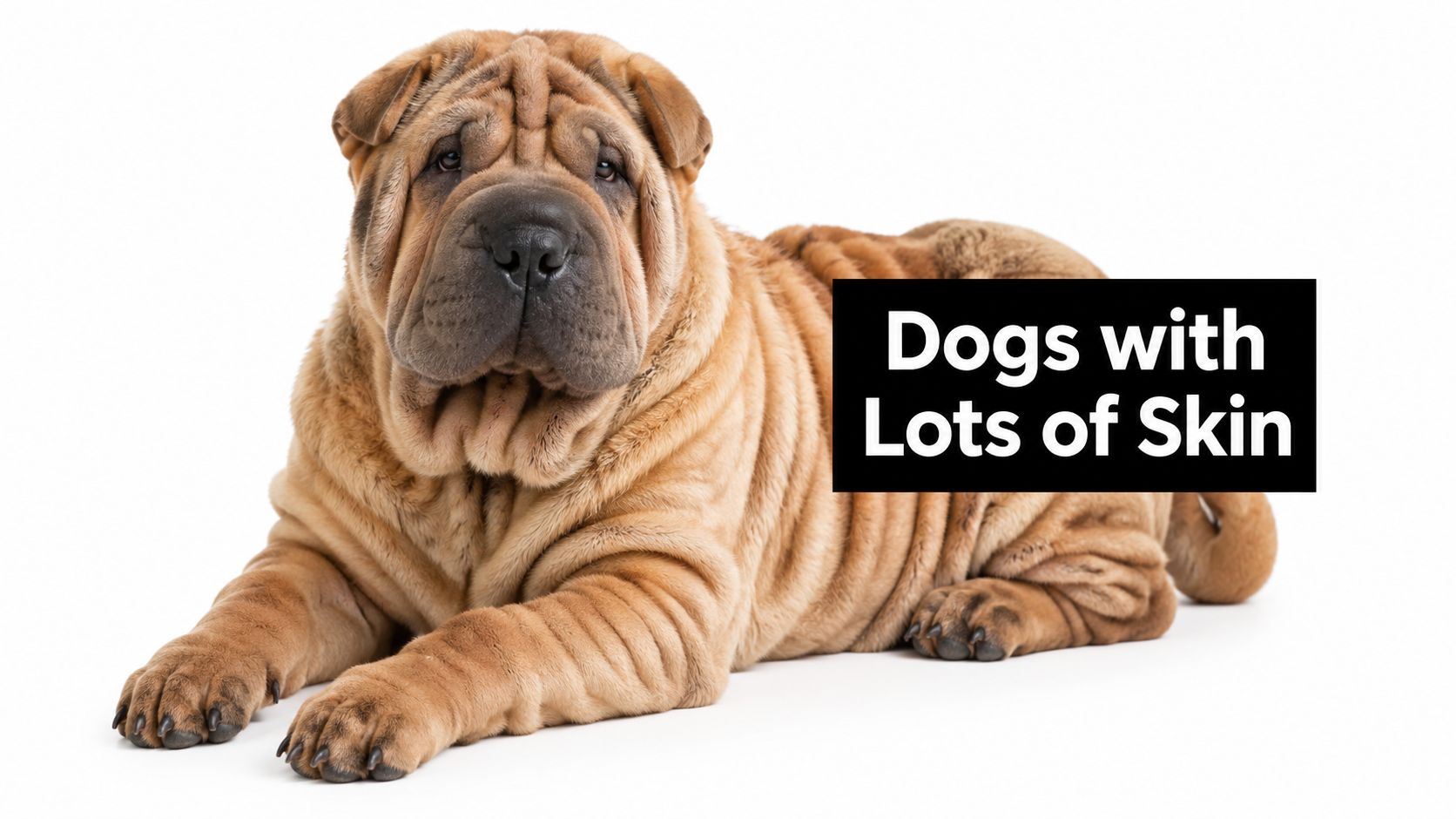
You wipe the folds, dry them carefully, and still notice a familiar odor by the end of the day. Perhaps your dog rubs one eye, shakes their head, or develops a red patch beneath the chin after a warm walk. Life with a wrinkled dog can be wonderfully affectionate, but it also requires you to understand what those folds are doing to the skin, eyes, ears, and travel routine.
Dogs with lots of skin aren't all built the same way. Some have a loose coat that gathers when they sit or move, while others have deep structural folds that stay pressed together. That difference matters. A fold isn't just extra surface area. It can hold moisture, create friction, reduce airflow, and make routine hygiene part of your dog's long-term welfare.
Table of Contents
- Understanding Why Some Dogs Have Extra Skin
- Top Breeds Known for Abundant Skin Folds
- Daily Hygiene and Preventing Skin Fold Dermatitis
- Hidden Welfare Concerns Beyond the Wrinkles
- When Loose Skin Signals an Underlying Medical Issue
- Travel and Relocation Considerations for Wrinkled Breeds
- Building a Long-Term Care and Monitoring Routine
Understanding Why Some Dogs Have Extra Skin
A Bloodhound may look as though their skin is several sizes too large when they lower their head to sniff. A Shar-Pei puppy can appear almost wrapped in wrinkles, while an adult may carry a more restrained version of the same trait. Owners often notice the practical consequences first: a damp fold after drinking, a musty smell after rain, or a cleaning routine that takes more care than expected.

Loose skin can have a historical purpose
Loose skin developed in different breeds for different reasons. In some working dogs, extra skin may have offered a degree of protection when the dog hunted, guarded, or confronted another animal. A dog with mobile skin could be harder for an opponent to grip securely, and loose skin around the neck or shoulders could help protect more vulnerable areas.
Selective breeding later preserved and intensified these traits. The Chinese Shar-Pei is a particularly clear example. Historical records place the breed in southern China by around 200 B.C., with stronger evidence of its presence by the 1200s. VCA Animal Hospitals describes the breed's historical use as a farm guard, wild boar hunter, and fighting dog in the early 1900s, while its abundant loose skin became a defining feature recognized around the world. This history is summarized in this overview of sagging skin in dogs.
That background helps explain why a Shar-Pei's folds aren't a temporary puppy feature or a styling choice. They are part of the dog's inherited structure. The same principle applies to the deep facial folds of a Bloodhound or the hanging skin and ears of a Basset Hound.
Not all extra skin creates the same risk
A dog can have a loose, flexible coat without having deep folds that touch continuously. When two skin surfaces remain pressed together, the area behaves differently from exposed skin. Movement creates rubbing, and the fold can stay damp after water, rain, bathing, or drooling.
You can think of the anatomy in three broad categories:
- Loose skin without deep contact: The skin gathers during movement but may ventilate well when the dog is standing.
- Defined facial or body folds: Skin surfaces touch regularly and need inspection, cleaning, and careful drying.
- Extreme conformation: Folds affect the eyes, ears, movement, or ability to remain comfortable without ongoing medical care.
The important question isn't whether extra skin looks attractive or unusual. It's whether the structure stays clean, dry, pain-free, and functional. A wrinkle that remains healthy with sensible care is different from a fold that repeatedly becomes inflamed or changes how the eyelid and ear canal work.
Practical rule: Treat inherited loose skin as a permanent care responsibility, not as a cosmetic detail you can ignore between baths.
Top Breeds Known for Abundant Skin Folds
The most recognizable dogs with lots of skin include the Shar-Pei, English Bulldog, Bloodhound, and Basset Hound. They don't share identical anatomy. The Shar-Pei is known for heavy loose folds, the English Bulldog for facial wrinkles and compact conformation, the Bloodhound for hanging facial and neck skin, and the Basset Hound for loose body skin, long ears, and low-set anatomy.

Breed appearance is not a complete health assessment
A breed label gives you a useful starting point, but individual dogs can vary substantially. Two English Bulldogs may have very different fold depth and eye shape. One Shar-Pei may need careful facial monitoring, while another may have fewer visible folds but still develop ear or skin problems. A Bloodhound's long ears can reduce ventilation around the ear opening, while a Basset Hound's folds and body shape can make moisture difficult to spot.
Prospective owners should look beyond photographs. Ask how often the parents have needed treatment for skin, eyes, or ears, and ask whether the breeder keeps veterinary records. A responsible conversation focuses on function and comfort, not just how wrinkled a puppy looks.
What the population data tells us
Skin-fold disease isn't equally common across all dogs. A large epidemiological study of 905,553 dogs found a one-year period prevalence of 0.37% for skin fold dermatitis across the overall dog population, with a 95% confidence interval of 0.35 to 0.39. The study also found sharply increased odds in several heavily wrinkled breeds, including English Bulldogs at OR 49.07, French Bulldogs at OR 25.92, Pugs at OR 16.27, and Basset Hounds at OR 10.70. These figures come from the large veterinary epidemiological study of skin-fold dermatitis in dogs.
Those findings don't mean every wrinkled dog will develop dermatitis. They do show that breed conformation changes the baseline risk. An owner of a high-risk breed should plan for regular checks rather than waiting for a strong smell, a raw patch, or obvious discomfort.
| Breed example | Features to monitor | Why the baseline matters |
|---|---|---|
| Shar-Pei | Facial folds, eyes, ears, skin surface | Thickened folds can affect more than surface hygiene |
| English Bulldog | Facial folds, tail area, eyes, breathing comfort | Compact conformation may make several daily checks important |
| Bloodhound | Facial and neck skin, long ears, dampness | Hanging skin and ears can retain moisture |
| Basset Hound | Facial folds, ears, body skin, paws | Low-set anatomy can make inspection and drying more involved |
The right takeaway isn't fear. It's preparation. If a breed's anatomy creates more places for moisture, friction, or pressure to accumulate, your care plan should reflect that from the first day.
Daily Hygiene and Preventing Skin Fold Dermatitis
Skin-fold dermatitis, also called intertrigo, begins with the physical environment inside a fold. Two skin surfaces press together, airflow drops, moisture lingers, and movement creates abrasion. That warm, humid space can support overgrowth of bacteria and Malassezia yeasts, so removing moisture is as important as choosing a topical product. The PDSA guidance on skin-fold dermatitis in dogs describes this combination of friction, trapped moisture, and reduced ventilation.
A simple daily routine
Start when your dog is calm. Use a soft, clean cloth or a veterinary-approved wipe, and gently open the fold rather than pulling hard on delicate skin.
- Inspect first. Look for redness, swelling, broken skin, discharge, darkening, or a change in odor. A new smell can be an early clue that the fold is staying damp or becoming inflamed.
- Clean gently. Remove visible debris without scrubbing. Avoid household disinfectants, perfumed products, and products that sting. If your veterinarian has prescribed a cleanser, follow the instructions for that specific product.
- Dry completely. Press with a clean towel or gauze rather than rubbing. Check the deepest part of the fold, not just the outer edge. After drinking, swimming, rain, or a bath, repeat the drying step.
- Record changes. A quick note or photograph can help you compare the area over time and give your veterinary team useful information.
Don't force a painful fold open. If your dog flinches, snaps, cries, or tries to hide, stop and arrange a veterinary examination. Pain can mean the skin is already inflamed, ulcerated, or infected.
Moisture control matters more than masking odor. Fragrance may cover a smell briefly, but it doesn't remove the dampness and friction causing the problem.
Weekly care and product choices
A deeper inspection can include the skin between the toes, under the chin, around the tail, and anywhere body folds touch. Use only a solution recommended by your veterinary team for your dog's skin condition. Some products are appropriate for intact skin but unsuitable for irritated or ulcerated areas.
Bathing also needs a sensible plan. Choose a shampoo for the dog's coat and skin needs, and use a resource such as how to choose dog shampoo by coat type to understand why a product designed for one coat may not suit another. Rinse thoroughly, because residue can irritate folds, and dry every fold before your dog settles down.
If your dog has recurring infections, don't keep changing products without guidance. Recurrent yeast or bacterial overgrowth may require testing, prescription treatment, investigation of allergies, or assessment of the fold structure itself. A topical product can reduce organisms temporarily while the underlying moisture and friction remain.
Owners preparing for travel may also review Spot Pet Insurance, which provides customizable accident and illness coverage for dogs and cats. The snapshot describes flexible reimbursement options, multi-pet discounts, and access to any licensed veterinarian. Coverage terms should be reviewed carefully before relying on a policy during domestic or international travel.
Hidden Welfare Concerns Beyond the Wrinkles
Wrinkles become a welfare concern when they cause ongoing irritation, pain, restricted function, or repeated medical treatment. Cleaning a fold protects the surface, but it can't correct every structural problem. In some dogs, extra skin changes the position of the eyelids or narrows the ear canal.
Shar-Pei anatomy shows why surface care isn't enough. Pronounced folding around the eyes can contribute to entropion, in which the eyelid turns inward and eyelashes rub against the cornea with each blink. That rubbing can cause pain and corneal ulceration. Thickened folds can also narrow the ear canal and increase the risk of otitis externa, or inflammation of the outer ear canal. These mechanisms are described in this veterinary review of skin-fold dermatitis and intertrigo.

Signs that need prompt attention
A dog may continue eating, playing, and greeting you while experiencing discomfort. Watch for subtle changes rather than waiting for severe symptoms.
- Eye signs: Squinting, tearing, rubbing the face, redness, cloudiness, or reluctance to face bright light.
- Ear signs: Head shaking, scratching, odor, discharge, sensitivity when you touch the ear, or a change in hearing response.
- Skin signs: Persistent redness, moist sores, bleeding, thickening, hair loss, a strong odor, or repeated licking.
- Behavior changes: Avoiding face handling, becoming unusually irritable during cleaning, or resting more than usual.
Don't put drops, creams, or leftover medication into an eye or ear without veterinary direction. A product that helped a previous episode may be unsafe for a different problem, especially if the eardrum's condition isn't known.
Asking the welfare question
The useful question for a prospective owner isn't "How wrinkled is this breed?" Ask whether the dog's conformation allows it to see, blink, hear, breathe, move, sleep, and remain comfortable without chronic intervention. Recent reporting from the Royal Veterinary College identifies in-turned eyelids and ear disorders among the most common conditions reported in Shar-Pei, with skin infections also present. Its discussion of welfare concerns in Shar-Pei is a useful reminder that appearance shouldn't be separated from function.
When choosing a puppy or adult dog, ask for evidence of normal eyelid function and a history of skin and ear care. If you're working with a breeder, rescue, or relocation professional, USDA-licensed dog breeders can be one starting point for understanding what responsible sourcing and documentation may involve. A healthy fold should be manageable. A fold that repeatedly causes pain deserves a broader welfare discussion.
When Loose Skin Signals an Underlying Medical Issue
Breed-standard looseness usually has a recognizable pattern. A Shar-Pei has expected folds, a Bloodhound has characteristic facial and neck skin, and a Basset Hound has a familiar combination of loose skin and hanging ears. The skin tends to be part of the dog's long-standing anatomy rather than a sudden change you notice over a short period.
Generalized laxity in a dog that isn't naturally wrinkled is different. It may appear across the body, become more obvious than before, or occur alongside other physical changes. Unusual loose skin can be associated with dehydration, Cushing's syndrome, hypothyroidism, or rare connective-tissue conditions such as cutaneous asthenia. These possibilities are outlined in this veterinary explainer on unusual loose skin in dogs.
Compare the pattern, not just the appearance
| More consistent with inherited conformation | More concerning for a medical problem |
|---|---|
| Present since puppyhood or adoption | Appeared suddenly or progressed noticeably |
| Concentrated in expected breed areas | Generalized across the body |
| Skin remains intact and comfortable | Skin bruises, tears, or wounds easily |
| No major change in movement or joints | Joint looseness, pain, or unusual mobility |
| Stable appearance over time | Accompanied by thirst, weakness, coat changes, or weight changes |
The table isn't a diagnosis. It helps you decide whether routine fold care is enough or whether your dog needs an examination. A dog with generalized laxity, bruising, skin tears, unexplained wounds, or eye and joint problems should be assessed by a veterinarian.
Don't stretch the skin repeatedly to test it. Manipulation can worsen fragile tissue and won't identify the cause. Instead, take clear photographs, note when you first noticed the change, and record other symptoms such as appetite, drinking, urination, energy, and sensitivity.
When to call your veterinarian
Arrange prompt veterinary care if skin becomes fragile, tears with minor contact, bruises without a known injury, or changes across large areas of the body. Seek advice sooner if loose skin appears with pain, weakness, significant thirst, recurrent infections, eye problems, or joint instability.
The treatment plan depends on the cause. Breed-related folds call for moisture control and surveillance. A systemic illness or connective-tissue disorder requires a different investigation and may need ongoing medical management. Assuming every loose-skinned dog needs more cleaning can delay the care that addresses the problem.
Travel and Relocation Considerations for Wrinkled Breeds
A familiar fold-care routine can change quickly during a journey. After hours in a crate or vehicle, a fold that stays dry at home may hold moisture from rain, drooling, humidity, or limited movement. Stress can also make a dog resist handling that it usually accepts. Preparing before departure protects comfort and helps reveal problems before they become urgent.
Build a travel-specific care kit
Keep supplies within reach rather than buried under luggage. Pack clean cloths, absorbent towels, veterinary-approved wipes or cleanser, regular medications, medical records, and a written list of veterinary contacts near your destination. Include the products your dog already tolerates, since travel is a poor time to test a new cleanser.
Before leaving, check the eyes, ears, and folds, then photograph any area under observation. Use a climate-controlled environment and avoid sharp temperature changes. Heat, humidity, and trapped moisture can worsen irritation in heavily wrinkled breeds, while poor ventilation may increase breathing stress in dogs with crowded facial anatomy.
During transit, use a short, repeatable check:
- Face and eyes: Look for squinting, rubbing, discharge, or new redness.
- Folds: Check for dampness, odor, swelling, chafing, or sensitivity.
- Ears: Watch for head shaking, scratching, discharge, or a changed odor.
- Comfort: Observe breathing, posture, willingness to drink, and response to gentle handling.
Do not use a long journey to see whether a recurring skin or eye problem settles on its own. Ask your veterinarian about a flare-up before travel, particularly when your dog has a history of entropion, ear disease, or recurrent dermatitis. Delaying care can turn a manageable issue into a painful one far from your usual clinic.
Coordinate the move around the dog
Relocation requires more than a crate and a departure time. Give transport providers accurate information about your dog's breed, fold-care routine, medication schedule, handling preferences, and warning signs. If several people will provide care, write the routine down so each person uses the same products and drying method.
The international pet travel planning guide can help organize the broader requirements of an international move. Confirm destination rules, records, transport arrangements, and veterinary access before departure.
A calm, climate-controlled journey with planned hygiene checks is safer than a last-minute bath or hurried cleaning session. Keep familiar food, care products, sleep cues, and handling habits as consistent as possible. Continuity supports welfare when the surroundings, schedule, and caregivers change. Precious Pets Transport Services can also be included in the relocation plan when owners need help coordinating transport details.
Building a Long-Term Care and Monitoring Routine
A manageable routine starts with brief daily observation. Check the face, ears, body folds, paws, and any area that tends to stay damp. Clean only where needed, dry carefully, and record changes instead of trying to treat every normal variation.
Use a deeper weekly review to look for early signs of trouble:
- Skin: Redness, odor, moisture, hair loss, thickening, or sores.
- Eyes: Squinting, tearing, rubbing, or sensitivity.
- Ears: Head shaking, discharge, odor, or pain.
- Travel readiness: Supplies, records, medication, and destination contacts.
Arrange veterinary checks when irritation persists, returns repeatedly, or affects your dog's behavior. Don't wait for a fold to become severely painful before asking whether the anatomy, allergies, yeast, bacteria, eyes, or ears need further assessment.
For long journeys, record the dog's condition before departure and use reliable location and communication planning, including real-time pet tracking. Good records help you notice change quickly and give professionals accurate information.
Dogs with lots of skin can live comfortably when owners manage the structure rather than dismissing it as cosmetic. A few calm checks, careful drying, timely veterinary attention, and thoughtful travel planning protect both comfort and the relationship you share.
Precious Pets Transport Services, LLC provides door-to-door domestic and international pet relocation with climate-controlled ground transport, sanitized kennels, regular walks, and drivers trained in pet first aid. If your wrinkled dog needs consistent hygiene checks and careful handling during a move, visit Precious Pets Transport Services, LLC to request an estimate and discuss the journey.
Leave a Reply